Student Learning Outcomes in Digestive Systems Material via Deep Learning-Based Problem-Based Learning in High School

https://doi.org/10.51574/ijrer.v5i3.4832
Keywords:
Deep Learning, Digestive System, High School, Learning Outcomes, Problem-Based LearningAbstract
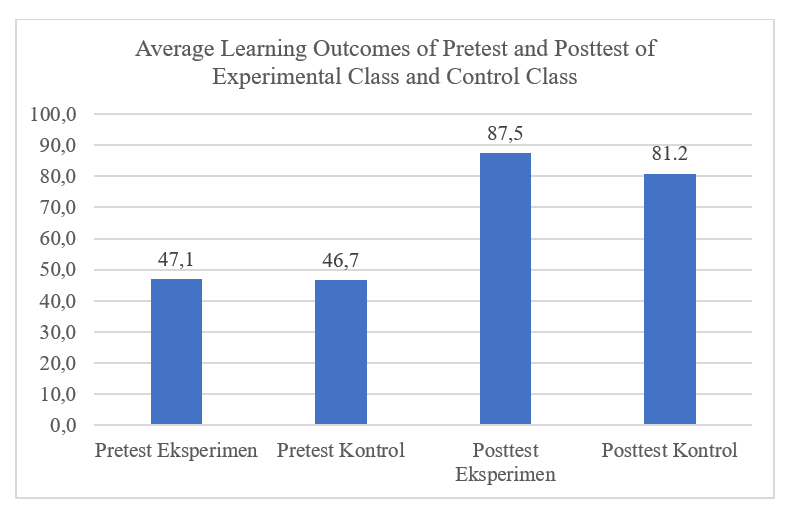
The low effectiveness of conventional learning models in improving students' in-depth understanding and learning outcomes in the digestive system often results in suboptimal learning outcomes. This study aims to determine the effect of the Problem-Based Learning (PBL) model with a deep learning approach on student learning outcomes in the digestive system. The method used was a quasi-experimental with a pretest-posttest control group design. The study population included six classes with samples consisting of two classes: Class XI C as the experimental class (PBL model with a deep learning approach) and Class XI D as the control class (direct instruction method) at High School 1 Batang Kuis. The research instruments included essay tests and student response questionnaires. Results: The findings showed an increase in the average score in the experimental class from 47.1 to 87.5 (an increase of 85.7%), higher than the control class which increased from 46.7 to 81.2 (an increase of 73.8%). The learning completion rate in the experimental class reached 34 students, surpassing the control class which consisted of 27 students. Student responses to the deep learning approach were categorized as very positive, supported by indicators of mindful learning (82%), meaningful learning (72%), and joyful learning (89%). The hypothesis test showed a significant value of 3.649 x 10⁻⁵ (<0.05), confirming a significant effect. Practically, this study proves that the integration of PBL and the deep learning approach is an effective strategy for improving learning outcomes and creating meaningful learning experiences for students in complex biology material.
References
Agra, G., Formiga, N. S., Oliveira, P. S. D., Costa, M. M. L., Fernandes, M. D. G. M., & Nóbrega, M. M. L. D. (2019). Analysis of the concept of Meaningful Learning in light of the Ausubel's Theory. Revista brasileira de enfermagem, 72, 248-255. https://doi.org/10.1590/0034-7167-2017-0691
Anggraeni, D. M., Prahani, B. K., Suprapto, N., Shofiyah, N., & Jatmiko, B. (2023). Systematic review of problem based learning research in fostering critical thinking skills. Thinking Skills and Creativity, 49, 101334. https://doi.org/10.1016/j.tsc.2023.101334
Ardhana, D., Fajrina, S., & Fitri, R. (2025). Implementasi Problem Based Learning Berbasis Deep Learning Untuk Meningkatkan Berpikir Kritis Siswa Pada Materi Sistem Ekskresi Di SMA. EDUBIOPRENA: Jurnal Ilmiah Pendidikan Biologi, Biologi, & Bioentrepreneurship, 2(2), 50-58. https://doi.org/10.26877/h7xvzr38
Feriyanto, F., & Anjariyah, D. (2024). Deep learning approach through meaningful, mindful, and joyful learning: A library research. Electronic Journal of Education, Social Economics and Technology, 5(2), 208-212. https://doi.org/10.33122/ejeset.v5i2.321
González-Pérez, L. I., & Ramírez-Montoya, M. S. (2022). Components of Education 4.0 in 21st century skills frameworks: systematic review. Sustainability, 14(3), 1493. https://doi.org/10.3390/su14031493
Haron, H., Aziz, N. H. N., & Harun, A. (2017). A conceptual model participatory engagement within e-learning community. Procedia computer science, 116, 242-250. https://doi.org/10.1016/j.procs.2017.10.046
Hasbi, M., & Fitri, F. (2023). Pre-Service Teachers with Courses in Problem-Based Learning in Mathematics. ETDC: Indonesian Journal of Research and Educational Review, 2(2), 51-60. https://doi.org/10.51574/ijrer.v2i2.588
Hassan, B., Rafiq-uz-Zaman, M., & Khan, Z. A. (2025). Beyond memorization: cultivating critical thinking skills through classic literature in secondary education for the 21st century learner. Review of Education, Administration & Law, 8(1), 115-124. https://doi.org/10.47067/real.v8i1.410
Hsbollah, H. M., & Hassan, H. (2022). Creating meaningful learning experiences with active, fun, and technology elements in the problem-based learning approach and its implications. Malaysian Journal of Learning and Instruction, 19(1), 147-181. https://doi.org/10.32890/mjli2022.19.1.6
Keiler, L. S. (2018). Teachers’ roles and identities in student-centered classrooms. International journal of STEM education, 5(1), 34. https://doi.org/10.1186/s40594-018-0131-6
Kovač, V. B., Nome, D. Ø., Jensen, A. R., & Skreland, L. L. (2025). The why, what and how of deep learning: critical analysis and additional concerns. Education Inquiry, 16(2), 237-253. https://doi.org/10.1080/20004508.2023.2194502
Li, C., Hu, Y., Li, S., Yi, X., Shao, S., Yu, W., & Li, E. (2023). Biological factors controlling starch digestibility in human digestive system. Food Science and Human Wellness, 12(2), 351-358. https://doi.org/10.1016/j.fshw.2022.07.037
Ma, Y. C. (2023). Using participatory teaching in hands-on courses: exploring the influence of teaching cases on learning motivation. Education Sciences, 13(6), 547. https://doi.org/10.3390/educsci13060547
Muawanah, R., Ridho, A. F. A., Badriyah, N., Zahro, F., & Yamin, Y. (2025). A Literature Review on the Effectiveness of Problem-Based Learning in Enhancing Biology Students’ Problem Solving Skills and Learning Outcomes. Equator Science Journal, 3(2), 72-78. https://ejournal.edukhatulistiwa.com/index.php/ESJ/article/view/207
Muganga, L., & Ssenkusu, P. (2019). Teacher-centered vs. student-centered: An examination of student teachers’ perceptions about pedagogical practices at Uganda’s Makerere University. Cultural and Pedagogical Inquiry, 11(2), 16-40. https://doi.org/10.18733/cpi29481
Muzaini, M., Hasbi, M., Ernawati, E., & Kristiawati, K. (2022). The empowerment of problem-based learning models to improve students’ quantitative reasoning. Formatif: Jurnal Ilmiah Pendidikan MIPA, 12(1), 11-24. http://dx.doi.org/10.30998/formatif.v12i1.8502
Papaneophytou, C., & Nicolaou, S. A. (2025). Promoting critical thinking in biological sciences in the era of artificial intelligence: The role of higher education. Trends in Higher Education, 4(2), 24. https://doi.org/10.3390/higheredu4020024
Peng, M. Y. P., Feng, Y., Zhao, X., & Chong, W. (2021). Use of knowledge transfer theory to improve learning outcomes of cognitive and non-cognitive skills of university students: Evidence from Taiwan. Frontiers in Psychology, 12, 583722. https://doi.org/10.3389/fpsyg.2021.583722
Sarigoz, O. (2023). Teaching the 21st Century Learning Skills with the Critical Thinking Technique Based on the Argumentation Method. Educational Policy Analysis and Strategic Research, 18(1), 196-218. https://eric.ed.gov/?id=EJ1385999
Satriani, S., Hasbi, M., & Fahirah, A. (2021). Problem-Based Learning As A Facilitator Of Students’ reading Comprehension. SOKO GURU: Jurnal Ilmu Pendidikan, 1(3), 27-34.
Shamdas, G. (2023). The relationship between academic self-efficacy and cognitive learning outcomes of high school students in biology subjects through problem-based learning model. Jurnal Penelitian Pendidikan IPA, 9(7), 5466-5473. https://doi.org/10.29303/jppipa.v9i7.3018
Shongwe, B. (2024). The effect of STEM problem-based learning on students’ mathematical problem-solving beliefs. Eurasia Journal of Mathematics, Science and Technology Education, 20(8), em2486. https://doi.org/10.29333/ejmste/14879
Suradika, A., Dewi, H. I., & Nasution, M. I. (2023). Project-based learning and problem-based learning models in critical and creative students. Jurnal Pendidikan IPA Indonesia, 12(1), 153-167. https://doi.org/10.15294/jpii.v12i1.39713
Suwono, H., Permana, T., Saefi, M., & Fachrunnisa, R. (2023). The problem-based learning (PBL) of biology for promoting health literacy in secondary school students. Journal of Biological Education, 57(1), 230-244. https://doi.org/10.1080/00219266.2021.1884586
Taye, M. M. (2023). Understanding of machine learning with deep learning: architectures, workflow, applications and future directions. Computers, 12(5), 91. https://doi.org/10.3390/computers12050091
Valsecchi, W. M., Delfino, J. M., Santos, J., & Faraj, S. E. (2024). A problem-based learning activity for enhancing inquiry skills and facilitating conceptual change in a biological chemistry course. Chemistry Education Research and Practice, 25(2), 438-457. https://doi.org/10.1039/D3RP00053B
Vogel‐Walcutt, J. J., Gebrim, J. B., Bowers, C., Carper, T. M., & Nicholson, D. (2011). Cognitive load theory vs. constructivist approaches: which best leads to efficient, deep learning?. Journal of Computer Assisted Learning, 27(2), 133-145. https://doi.org/10.1111/j.1365-2729.2010.00381.x
Weng, C., Chen, C., & Ai, X. (2023). A pedagogical study on promoting students' deep learning through design-based learning. International journal of technology and design education, 33(4), 1653-1674. https://doi.org/10.1007/s10798-022-09789-4
Yadav, B. (2025). Reimagining Classrooms: Constructivist Approaches as Catalysts for Deeper Learning. International Journal of Advanced Research and Multidisciplinary Trends (IJARMT), 2(4), 56-68. https://www.ijarmt.com/index.php/j/article/view/522
Zebua, N. (2025). Education transformation: Implementation of deep learning in 21st-century learning. Harmoni Pendidikan: Jurnal Ilmu Pendidikan, 2(2), 146-152. https://journal.lpkd.or.id/index.php/Hardik/article/view/1405
Downloads
Published
How to Cite
Issue
Section
License
Copyright (c) 2026 Isni Khotimah Br Pane, Aryeni Aryeni

This work is licensed under a Creative Commons Attribution-ShareAlike 4.0 International License.