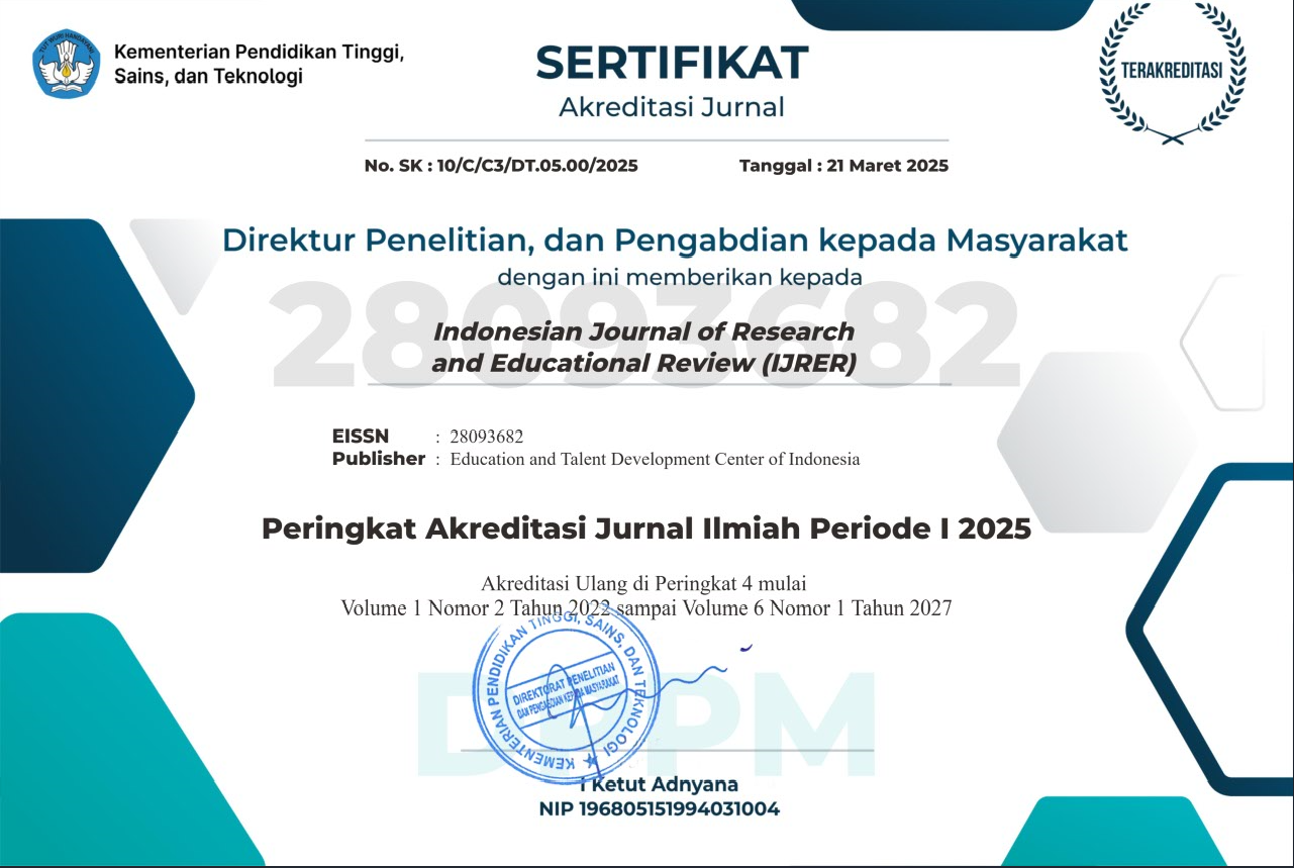
ACREDITATION
Identifying and naming the languages people use is more complicated than it may seem. The terms used to describe them, such as first language (L1), mother tongue (MT), native language (NL), second language (L2), foreign language (FL), heritage language (HL), and dominant language (DL), are often applied in overlapping or inconsistent ways. As a result, confusion can arise in research, classrooms, and policy discussions. To address this issue, 22 peer-reviewed articles published in 2025 that defined or compared these terms were reviewed. The findings show that each term has a distinct focus. For example, L1 refers to the order of acquisition. In addition, MT and HL emphasize culture and family ties. Moreover, L2 and FL differ in terms of everyday use. Finally, DL reflects social power and institutions. Clarifying these differences is important for improving research accuracy and helping schools and policies respect multilingual learners. Despite these insights, the study has limitations. It relied mainly on how terms are defined in literature and did not examine how teachers, students, and policymakers understand them in practice. Another limitation is that language practices such as translanguaging and code-switching often blur the boundaries between languages, making it difficult to place them into strict categories. For this reason, future research should examine how these practices intersect with language-related terms and to what extent they expose the limits of such labels in capturing real multilingual experiences.
Pelila, J. R. O. (2025). First, Second, Native, Foreign, Heritage, Dominant, and Mother Tongue: Clear or Confusing?. ETDC: Indonesian Journal of Research and Educational Review , 4(4), 1219–1235. https://doi.org/10.51574/ijrer.v4i4.3667
Downloads
Download data is not yet available.
- Abu-Rabiah, E. (2025). Navigating language barriers: Hebrew proficiency and self-efficacy among Muslim Arab Bedouin students in Israeli higher education. Journal of International Students, 15(3), 71–90. https://doi.org/10.32674/s08gad96
- Alsahafi, M. (2025). Exploring ethnic identity and heritage language proficiency among second-generation Hausa Saudis. Australian Journal of Applied Linguistics, 8(1), Article 102496. https://doi.org/10.29140/ajal.v8n1.102496
- Atkinson, D., Mejía-Laguna, J., Ribeiro, A. C., Cappellini, M., Kayi-Aydar, H., & Lowie, W. (2025). Relationality, interconnectedness, and identity: A process-focused approach to second. Modern Language Journal, 109, 39–63. https://doi.org/10.1111/modl.12982
- Barbaran, M. D. A., Huamán-Romaní, Y.-L., Lipa, R. C., Mamani, J. C. M., & Vásquez-Alburqueque, I.-L. (2025). The effect of mother tongue education on social performance and happiness of bilingual students in Peru. International Journal of Society, Culture and Language, 13(1), 72–82. https://doi.org/10.22034/ijscl.2024.2008405.3118
- Barnawi, O. Z., & Alzahrani, A. (2025). Englishization policy distraction in the internationalization of higher education in Saudi Arabia. Current Issues in Language Planning, 26(3), 268-291. https://doi.org/10.1080/14664208.2024.2381916
- Bayram, B., & Eryılmaz, R. (2025). The relationship between acculturation and second language learning in the context of sustainable multiculturalism: A case study of Russian immigrants and Syrian refugees in Türkiye. Sustainability, 17(1), 249. https://doi.org/10.3390/su17010249
- Bilgory-Fazakas, O., & Armon-Lotem, S. (2025). Resilient heritage language maintenance: The interplay of family, culture, and pragmatic choices. Frontiers in Psychology, 16, Article 1550704. https://doi.org/10.3389/fpsyg.2025.1550704
- Boell, S. K., & Cecez-Kecmanovic, D. (2021). A hermeneutic approach for conducting literature reviews and literature review writing. Communications of the Association for Information Systems, 48(1), 133–166. https://doi.org/10.17705/1CAIS.04807
- Brown, H. D., & Lee, H. (2025). Principles of language learning and teaching: A course in second language acquisition. Taylor & Francis.
- Chang, Y. L. (2025). Beyond Common Sense: An inquiry into Neoliberalism and English as the Medium of Instruction in Taiwanese Higher Education. Higher Education Policy, 1-21. https://doi.org/10.1057/s41307-025-00398-z
- de Rijke, M., Kanoulas, E., Zhang, Y., & Balog, K. (2022). Information retrieval in the Scopus ecosystem: Bibliometric enhancements and analysis tools. Journal of Informetrics, 16(3), 101293. https://doi.org/10.1016/j.joi.2022.101293
- Dünkel, N., Knigge, M., & Brandt, H. (2025). Language exposure within peer and family contexts and bilingual reading profiles of German–Russian and German–Turkish adolescents in Germany. International Journal of Bilingualism, 29(1), 128–146. https://doi.org/10.1177/13670069231221103
- Ghavam Rankohi, Z., Liepelt, R., Luchterhand-Dehn, J., & Sperl, L. (2025). Embodied cognition in native and foreign language–evidence from a typing task. Journal of Cognitive Psychology, 37(1), 15–38. https://doi.org/10.1080/20445911.2024.2426579
- Giménez, L., & Blanco, O. M. (2025). Factors challenging the maintenance of Spanish as a heritage language in Italy: A maternal view. Íkala, Revista de Lenguaje y Cultura, 30(1), 1–20. https://doi.org/10.17533/udea.ikala.358277
- Grigorieva, A., & Protassova, E. (2025). Integrating international foodways and the dominant language constellation approach in language studies. Education Sciences, 15(6), 765. https://doi.org/10.3390/educsci15060765
- Guo, Y., Xiong, J., & Lin, Z. (2025). Non-identity in practice: translanguaging as a tool for hybrid communication in subtitling communities. International Journal of Multilingualism, 1-20. https://doi.org/10.1080/14790718.2025.2538079
- Gupta, T., Chaudhary, B., Jain, R., & Ojha, A. (2025). From words to worlds: language, identity, and transgenerational change in Gujjars and Bakerwals, the transhumant pastoral tribe of Jammu and Kashmir. Journal of Cultural Cognitive Science, 9(1), 105-119. https://doi.org/10.1007/s41809-024-00161-7
- Hahl, K., Lehtovuori, K., & Pietarila, M. (2025). Video research in language classrooms: Activities and target language use in early language learning. Scandinavian Journal of Educational Research, 69(2), 363–375. https://doi.org/10.1080/00313831.2024.2308874
- Hallinger, P. (2013). A conceptual framework for reviewing literature in educational leadership and management. Journal of Educational Administration, 51(2), 126–149. https://doi.org/10.1108/09578231311304670
- Hamad, A. A., Mustaffa, D. B., Alnajjar, A. Z., Amro, R., Deameh, M. G., Amin, B., & Alkhawaldeh, I. M. (2025). Decolonizing medical education: A systematic review of educational language barriers in countries using foreign languages for instruction. BMC Medical Education, 25(1), Article 701. https://doi.org/10.1186/s12909-025-07251-2
- Jeon, J., Coronel-Molina, S. M., & Lee, S. (2025). Conceptualizing foreign language teachers’ translanguaging practices: A meta-ethnography of qualitative literature. International Journal of Bilingual Education and Bilingualism, 28(4), 431–448. https://doi.org/10.1080/13670050.2024.2433144
- Karpava, S., Ringblom, N., & Zabrodskaja, A. (2025). Translanguaging as a dynamic strategy for heritage language transmission. Languages, 10(2), 19. https://doi.org/10.3390/languages10020019
- Lopera, S., & Sierra, N. (2025). Students’ agency in a foreign language policy in Colombian higher education. Profile: Issues in Teachers' Professional Development, 27(1), 83–96. https://doi.org/10.15446/profile.v27n1.113292
- Martín-Martín, A., Orduna-Malea, E., Thelwall, M., & Delgado López-Cózar, E. (2021). Google Scholar, Microsoft Academic, Scopus, Dimensions, Web of Science, and OpenCitations’ COCI: A multidisciplinary comparison of coverage via citations. Scientometrics, 126, 871–906. https://doi.org/10.1007/s11192-020-03690-4
- Mendoza, C., Dervin, F., & Layne, H. (2025). ‘Doing’ interculturality through multilingual identities: Language fluidity in Finland's internationalisation of higher education. Research in Comparative and International Education, 20(2), 268–290. https://doi.org/10.1177/17454999251333523
- Mhindu, A. (2025). Shona-speaking teachers’ experiences on mother tongue education policy implementation in minority language schools in Zimbabwe. Eurasian Journal of Applied Linguistics, 11(1), 56–67. https://doi.org/10.32601/ejal.11105
- Moraru, M., Bakker, A., Akkerman, S., Zenger, L., Smit, J., & Blom, E. (2025). Translanguaging within and across learning settings: A systematic review focused on multilingual children with a migration background engaged in content learning. Review of Education, 13(2), e70069. https://doi.org/10.1002/rev3.70069
- Muliana, I. N., Sarumaha, J. F., & Gaho, R. (2025). Analysis of Japanese learners’ mother tongue interferences in speaking the English language. Journal of Language Teaching and Research, 16(1), 210–218. https://doi.org/10.17507/jltr.1601.22
- Nhac, H. T., & Nguyen, N.-H. D. (2025). Learners’ perspectives on native language usage in English-for-law classes at a Vietnamese tertiary institution. Journal of Teaching English for Specific and Academic Purposes, 12(3), 727–739. https://doi.org/10.22190/JTESAP241004054N
- Nurjaleka, L., Sanjaya, S., Yuniawan, T., Supriatnaningsih, R., & Suseno, S. R. (2025). An Indonesian family's strategies and practices for maintaining a child's Japanese in their home country. Indonesian Journal of Applied Linguistics, 14(3), 569–583. https://doi.org/10.17509/ijal.v14i3.74742
- Okoli, C. (2021). A guide to conducting a standalone systematic literature review. Communications of the Association for Information Systems, 48, 220–242. https://doi.org/10.17705/1CAIS.04808
- Ortiz-Villalobos, V., Kovelman, I., & Satterfield, T. (2025). Can the Simple View of Reading inform reading comprehension studies in young Spanish heritage language learners? Reading Research Quarterly, 60(3), Article e70013. https://doi.org/10.1002/rrq.70013
- Osimen, G. U., Ehibor, O. J., Daudu, B. O., & Alofun, G. O. (2025). Reconstructing culture and building societal values in the global era: The imperative of mother-tongue in elementary schools curriculum in Africa. Research Journal in Advanced Humanities, 6(1). https://doi.org/10.58256/t4jrq684
- Prasatyo, B. A., Wiryani, R. S., Listiana, T. A., Siagian, C. E. M., Dharmawan, Y. Y., & Manara, C. (2025). Students’ views on language diversity and heritage language maintenance in the Indonesian context. IAFOR Journal of Education, 13(1), 195–218. https://doi.org/10.22492/IJE.13.2.08
- Rokita-Jaśkow, J., & Panek, K. (2025). Proud and fearful: Polish mothers’ emotions and motivation to maintain Polish as a HL in transnational exogamous and endogamous families. Frontiers in Psychology, 16, Article 1558750. https://doi.org/10.3389/fpsyg.2025.1558750
- Saldivar, L. A., Rojas, H., & Diaz, F. Y. (2025). Implementation of a digital educational tool in the Quechua language for learning mathematics among Quechua-speaking children. International Journal of Learning, Teaching and Educational Research, 24(2), 352–374. https://doi.org/10.26803/ijlter.24.2.18
- Sato, T., & Hasegawa, M. (2023). Conceptualizing bilingual identity in multilingual education: Insights from Japanese university students. International Journal of Multilingualism, Advance online publication. https://doi.org/10.1080/14790718.2023.2228921
- Sibanda, R., & Tshehla, L. P. (2025). From mother tongue to English: A language policy shift at a multilingual township school in Gauteng. South African Journal of Childhood Education, 15(1), a1598. https://doi.org/10.4102/sajce.v15i1.1598
- Silvestri, C. (2025). Complementary schools as ‘breathing spaces’: Identity, multilingualism and critical pedagogies in heritage language education. Language and Education, 39(2), 470–488. https://doi.org/10.1080/09500782.2024.2404089
- Snyder, H. (2019). Literature reviews as a research methodology: An overview and guidelines. Journal of Business Research, 104, 333–339. https://doi.org/10.1016/j.jbusres.2019.07.039
- Tandih, F. C. (2025). Translanguaging and learning motivation: Influence on the academic achievement among English language learners at public higher education institutions in Sulu. Forum for Linguistic Studies, 7(5), 1014–1032. https://doi.org/10.30564/fls.v7i5.9444
- Wang, Y., & Zhang, J. (2025). From erosion to fluency: Reversing language shift in Chinese Australian households. Frontiers in Psychology, 16, Article 1553439. https://doi.org/10.3389/fpsyg.2025.1553439
Copyright (c) 2025 John Rey Osben Pelila

This work is licensed under a Creative Commons Attribution-ShareAlike 4.0 International License.
Most read articles by the same author(s)
- Alexee Jaezhelle C. Pugong, John Rey Osben Pelila, Matin Evony P. Moling, Jocel T. Dolo, Norhana A. Usman, A Scoping Review of Language Programs and Policies in ASEAN Countries , ETDC: Indonesian Journal of Research and Educational Review : Vol. 3 No. 2 (2024): March
- Liaa Eve Dalilis Tacio, John Rey Osben Pelila, How Do Schools and Community Influence Indigenous Youth's Perceptions of English? , ETDC: Indonesian Journal of Research and Educational Review : Vol. 4 No. 2 (2025): March
- John Rey Osben Pelila, Johnell Bringas Desalit, Bernadette Lamsis Soliba, In What Ways Do Educators Respond to Plagiarism Among Students? , ETDC: Indonesian Journal of Research and Educational Review : Vol. 3 No. 4 (2024): September
Similar Articles
- Muslimin Mus, Muh. Adnan Hudain, Hasyim Hasyim, Ilham Kamaruddin, Benny Badaru, Play Approach to Improve Learning Outcomes of Squat Style Long Jump in Elementary School Students , ETDC: Indonesian Journal of Research and Educational Review : Vol. 4 No. 3 (2025): June
- Shophianto Tarampak, Rahma M, Syakhruni Syakhruni, Pa’bussuk Music as a Vehicle for Character Education: Educational Values and Learning Processes in Secondary Schools , ETDC: Indonesian Journal of Research and Educational Review : Vol. 5 No. 4 (2026): September
- Julita Julita, Nurul Hidayah, Yudesta Erfayliana, The Frayer Learning Model Assisted by Flashcard Media: Descriptive Text Writing Skills of Islamic Elementary School Students , ETDC: Indonesian Journal of Research and Educational Review : Vol. 4 No. 4 (2025): September
- Suci Anidya Ramadhani, Edy Sabara, Supriadi Supriadi, Improving Learning Outcomes Using the Project-Based Learning Model in the Electronic Control Systems Subject , ETDC: Indonesian Journal of Research and Educational Review : Vol. 5 No. 2 (2026): March
- Dahlia Dahlia, Abdul Wahid, Wahyullah Alannasir, Think Pair Share Learning Model Based on Differentiated Instructions: Improving Civics Learning Outcomes in Elementary School Students , ETDC: Indonesian Journal of Research and Educational Review : Vol. 5 No. 3 (2026): June
- Rio Wansyah, Ida Fiteriani, Yudesta Erfayliana, Project Based Learning Model Assisted by Mind Mapping Media: Student Creativity in IPAS Lessons at Public Islamic Elementary , ETDC: Indonesian Journal of Research and Educational Review : Vol. 4 No. 4 (2025): September
- Heny Sri Astutik, Fostering Vocational Students' Self-Confidence and Learning Interest in Mathematics Through ARCS-Based Instruction , ETDC: Indonesian Journal of Research and Educational Review : Vol. 5 No. 4 (2026): September
- Avwerosuoghene Princess Okpomoh, Dania Ogbianugene Peter, Ogheneakoke Edore Clifford , Correlation among Mother Tongue, Socio-Economic Status and Academic Performance of Social Studies Students , ETDC: Indonesian Journal of Research and Educational Review : Vol. 4 No. 3 (2025): June
- Romi Yanda, Istihana Istihana, Sunarto Sunarto, Optimizing Islamic and Character Education Outcomes Through Everyone is a Teacher Here (ETH) Learning Model , ETDC: Indonesian Journal of Research and Educational Review : Vol. 5 No. 3 (2026): June
- Yuli Ayu Suwandari, Septuri Septuri, Devin Cumbuan Putri, Facilities and Infrastructure Management in Supporting the Learning Process at Islamic State Junior High School , ETDC: Indonesian Journal of Research and Educational Review : Vol. 5 No. 3 (2026): June
<< < 10 11 12 13 14 15 16 17 18 19 > >>
You may also start an advanced similarity search for this article.
Dimension Badge
Crossmark Badge

Section
Articles