Pa’bussuk Music as a Vehicle for Character Education: Educational Values and Learning Processes in Secondary Schools

https://doi.org/10.51574/ijrer.v5i4.4981
Keywords:
Character Education, Local Wisdom, Pa’bussuk Music, Toraja, Traditional ArtsAbstract
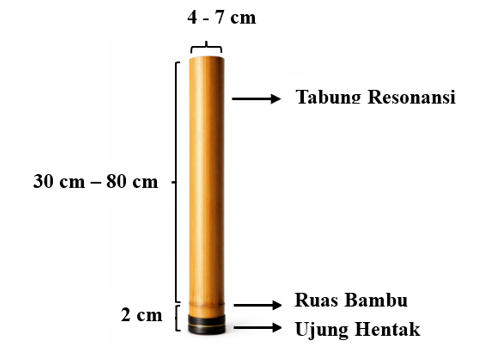
The erosion of youth engagement with traditional arts and the poor integration of local wisdom into formal curricula challenge character education in Indonesian secondary schools. This study investigates the educational values embedded in Pa’bussuk, a Torajan bamboo percussion ensemble, and examines its pedagogical transmission mechanisms at Middle School 2 Balusu, North Toraja, Indonesia. Employing a qualitative descriptive design, data were generated through two cycles of participatory observation across eight structured practice sessions, semi-structured interviews with three key informants (teachers, instructors, and students), and documentation analysis. Data validity was ensured through source and methodological triangulation. Thematic analysis, guided by the Ministry of National Education’s character framework, identified four interconnected value clusters within Pa’bussuk organology and performance: root (integrity), culm (honesty), branch (cooperation), and leaf (creativity). Results indicated that across two instructional cycles, students demonstrated progressive internalization of five core character constructs, with communicativeness and responsibility showing the most robust development. The pedagogical pathway—comprising imitation, routine rehearsal, creative variation, and public performance—effectively bridged technical musical competence with affective character formation. This study concludes that Pa’bussuk practice constitutes a potent, multi-dimensional pedagogical medium. It provides a replicable, culturally responsive model for integrating traditional arts-based character education into formal secondary school curricula.
References
Alamer, A., Robat, E. S., Shirvan, M. E., & Ryan, R. (2025). Self-determination theory and language learning: A multilevel meta-analysis. Educational Psychology Review, 37(2), 59. https://doi.org/10.1007/s10648-025-10038-y DOI: https://doi.org/10.1007/s10648-025-10038-y
Aryandari, C. (2024). Tuning modern pedagogy to the rhythm of Indonesian music tradition. Jurnal Pendidikan Progresif, 14(3), 1949-1962. https://doi.org/10.23960/jpp.v14.i3.2024132 DOI: https://doi.org/10.23960/jpp.v14.i3.2024132
Barton, G., & Riddle, S. (2022). Culturally responsive and meaningful music education: Multimodality, meaning-making, and communication in diverse learning contexts. Research Studies in Music Education, 44(2), 345-362. https://doi.org/10.1177/1321103X211009323 DOI: https://doi.org/10.1177/1321103X211009323
Bussu, A., & Mangiarulo, M. (2026). Harmony Beyond the Notes: Community Members' Perspectives on the Impact of Classical Music Ensembles on Children and Young People's Life Skills. Journal of Community & Applied Social Psychology, 36(1), e70221. https://doi.org/10.1002/casp.70221 DOI: https://doi.org/10.1002/casp.70221
Clarke, E. (2024). What does musicking afford?. Ecological Psychology, 36(2), 56-68. https://doi.org/10.1080/10407413.2024.2355894 DOI: https://doi.org/10.1080/10407413.2024.2355894
Crawford, R. (2017). Rethinking teaching and learning pedagogy for education in the twenty-first century: blended learning in music education. Music education research, 19(2), 195-213. https://doi.org/10.1080/14613808.2016.1202223 DOI: https://doi.org/10.1080/14613808.2016.1202223
Cuervo, L. (2018). Study of an interdisciplinary didactic model in a secondary education music class. Music Education Research, 20(4), 463-479. https://doi.org/10.1080/14613808.2018.1433148 DOI: https://doi.org/10.1080/14613808.2018.1433148
Do, A. T. P. N., Sugiarto, S., Rahmawati, D., & Huda, S. A. A. (2026). The Shifting Narrative of Character Education in Catholic Schools (2010–2025): A Systematic Literature Review Based on the Lickona Framework. Journal of Educational Sciences, 10(3), 988-1004. https://doi.org/10.31258/jes.10.3.p.988-1004
Elliott, D. J., & Silverman, M. (2014). Music, personhood, and eudaimonia: Implications for educative and ethical music education. TD: The Journal for Transdisciplinary Research in Southern Africa, 10(2), 57-72. https://doi.org/10.10520/EJC162140 DOI: https://doi.org/10.4102/td.v10i2.99
Fajri, S. R., Hajiriah, T. L., Fitriani, H., Sriartha, I. P., & Mudana, I. W. (2024). Analysis of The Potential Values of Character Education in The Independent Curriculum on Traditional Arts Typical of The Sasak Tribe of Lombok" Peresean". Jurnal Kependidikan: Jurnal Hasil Penelitian dan Kajian Kepustakaan di Bidang Pendidikan, Pengajaran, dan Pembelajaran, 10(1), 405-415. DOI: https://doi.org/10.33394/jk.v10i1.9796
Fernández Espinosa, V., & Domingo, V. (2025). The virtue and values education centre. Establishing a research and transference centre for virtue and character education in Spain. Cogent Education, 12(1), 2549790. https://doi.org/10.1080/2331186X.2025.2549790 DOI: https://doi.org/10.1080/2331186X.2025.2549790
Fitria, A., & Khoirunnisa, A. (2024). The Past and Present, Saparan Bekakak of Ambarketawang: a Study of Cultural Transformation. Abjad Journal of Humanities & Education, 2(3), 114-129. https://journal.clcs.or.id/index.php/abjad/article/view/55 DOI: https://doi.org/10.62079/abjad.v2i3.55
Fitriyah, C. Z., & Wardani, R. P. (2022). Paradigma kurikulum merdeka bagi guru sekolah dasar. Scholaria: Jurnal Pendidikan Dan Kebudayaan, 12(3), 236-243. https://doi.org/10.24246/j.js.2022.v12.i3.p236-243 DOI: https://doi.org/10.24246/j.js.2022.v12.i3.p236-243
Firmansyah, H., Ramadhan, I., & Wiyono, H. (2025). Enhancing historical understanding through local wisdom based learning: A case study in senior high schools. Diakronika, 25(1), 20-32. https://doi.org/10.24036/diakronika/vol25-iss1/477 DOI: https://doi.org/10.24036/diakronika/vol25-iss1/477
Ismail, A. (2025). Sounding identity in the digital age: Eastern Indonesia’s musical voices on Tiktok. Frontiers in Communication, 10, 1651788. https://doi.org/10.3389/fcomm.2025.1651788 DOI: https://doi.org/10.3389/fcomm.2025.1651788
Karsono, K. (2024). A new role in a new world: when an Osing traditional musicians become a teachers. Dewa Ruci: Jurnal Pengkajian dan Penciptaan Seni, 19(1), 60-76. https://doi.org/10.33153/dewaruci.v19i1.6021 DOI: https://doi.org/10.33153/dewaruci.v19i1.6021
Kriger, S. (2020). Music teaching and the integration of music education in the grade one curriculum (Doctoral dissertation, Stellenbosch: Stellenbosch University). http://hdl.handle.net/10019.1/109254
Leddy, T. (2024). Ethereal Things Brought to Sensuous Immediacy: Dewey's Art as Experience and the Centrality of Aesthetics to Human Nature. Journal of Aesthetic Education, 58(4), 86-98. https://doi.org/10.5406/15437809.58.4.08 DOI: https://doi.org/10.5406/15437809.58.4.08
Lind, A. R. (2023). Dewey, experience, and education for democracy: a reconstructive discussion. Educational Theory, 73(3), 299-319. https://doi.org/10.1111/edth.12567 DOI: https://doi.org/10.1111/edth.12567
Martinez, J., & Partin, J. (2023). Character education initiatives and preparation for school administrators: A review of literature. Journal for Leadership, Equity, and Research, 9(1). https://cvj.journals.publicknowledgeproject.org/cvj/index.php/cvj/article/view/237
Mattingly, C., Lutkehaus, N. C., & Throop, C. J. (2008). Bruner's search for meaning: A conversation between psychology and anthropology. Ethos, 36(1), 1-28. https://doi.org/10.1111/j.1548-1352.2008.00001.x DOI: https://doi.org/10.1111/j.1548-1352.2008.00001.x
Moller, F., Redondo-Corcobado, P., & Fuentes, J. L. (2025). Empowering students, enhancing communities: Integrating Service-Learning as a character education methodology in a Chilean school. Journal of Moral Education, 1-20. https://doi.org/10.1080/03057240.2025.2559360 DOI: https://doi.org/10.1080/03057240.2025.2559360
Ness, I. J. (2023). Zone of proximal development. The Palgrave encyclopedia of the Possible (pp. 1781-1786). Cham: Springer International Publishing. https://doi.org/10.1007/978-3-030-90913-0_60 DOI: https://doi.org/10.1007/978-3-030-90913-0_60
Nuristama, R. U. (2024). Reimagining music education: School-community partnerships for cultural sustainability in Indonesia. Harmonia: Journal of Music and Arts, 2(3), 173-184. DOI: https://doi.org/10.61978/harmonia.v2i3.1040
Rappoport, D. (2004). Ritual music and Christianization in the Toraja highlands, Sulawesi. Ethnomusicology, 48(3), 378-404. https://www.jstor.org/stable/30046286
Regelski, T. A. (2022). Musical Value and Praxical Music Education. Action, Criticism & Theory for Music Education, 21(1). https://doi.org/10.22176/act21.1.15 DOI: https://doi.org/10.22176/act21.1.15
Sakban, A., & Sundawa, D. (2023). Character education: Direction and priority for national character development in Indonesia. Jurnal Kependidikan: Jurnal Hasil Penelitian dan Kajian Kepustakaan di Bidang Pendidikan, Pengajaran, dan Pembelajaran, 9(3), 794-807. https://doi.org/10.33394/jk.v9i3.7843 DOI: https://doi.org/10.33394/jk.v9i3.7843
Saltari, R., & Kokkidou, M. (2024). Rethinking the music curriculum theories: Towards an updated comprehensive student-centred approach. Research on Preschool and Primary Education, 8-19. https://doi.org/10.55976/rppe.2202412048-19 DOI: https://doi.org/10.55976/rppe.2202412048-19
Samiya, R. (2025). Education through the cultural dimension: integration of knowledge with traditions and arts. Studies in Education Sciences, 6(3), e18432-e18432. DOI: https://doi.org/10.54019/sesv6n3-009
Septiani, S. N. P., & Mufid, N. (2025). Representasi Kebudayaan Minangkabau dalam Cerpen" Rawang Tangkulak" karya Riko Safardi: Kajian Antropologi Sastra Koentjaraningrat. Prosiding Konferensi Nasional Mahasiswa Sastra Indonesia, 2, 874-889. https://proceedings.uinsa.ac.id/index.php/konasindo/article/view/4060
Slater, M. R. (2022). Pragmatism. Encyclopedia of Religious Ethics, 405-411. https://doi.org/10.1002/9781118499528.ch50 DOI: https://doi.org/10.1002/9781118499528.ch50
Sularso, S., Jazuli, M., Djatiprambudi, D., & Hanshi, B. (2023). Revitalizing cultural heritage: Strategies for teaching Indonesian traditional music in elementary schools. International Journal of Education and Learning, 5(1), 79-88. https://doi.org/10.31763/ijele.v5i1.1016 DOI: https://doi.org/10.31763/ijele.v5i1.1016
Supryanto, T. (2023). Filosofi Pendidikan Toraja Pra Pendidikan Modern Di Toraja: Toraja Pre-Modern Education Philosophy in Toraja. MURAI: Jurnal Papua Teologi Konstekstual, 4(2), 106-115. http://ojs.stftkijne.ac.id/index.php/jmp/article/view/118 DOI: https://doi.org/10.58983/jmurai.v4i2.118
Susilo, M. J., Dewantoro, M. H., & Yuningsih, Y. (2022). Character education trend in Indonesia. Journal of Education and Learning (EduLearn), 16(2), 180-188. https://doi.org/10.11591/edulearn.v16i2.20411 DOI: https://doi.org/10.11591/edulearn.v16i2.20411
Tambunan, T., Saasa, S., & Kiptiyah, M. (2025). Traditional Musical Instruments of the Tolaki People. Journal of Law, Social Science and Management, 2(2), 31-45. https://doi.org/10.36685/jlssm.v2i2.1473 DOI: https://doi.org/10.36685/jlssm.v2i2.1473
Tan, T., & Mo, H. (2026). Compressing the Spiral Curriculum: Spiral Curriculum Design and Testing in Preschool Reading Teaching Practice in China. Reading & Writing Quarterly, 42(2), 93-113. https://doi.org/10.1080/10573569.2025.2538036 DOI: https://doi.org/10.1080/10573569.2025.2538036
Wati, H., Putri, N. Q. H., Rokhmansyah, A., & Putri, N. N. (2026). The Form of Culture in East Kalimantan Folklore Larangan Mersapik: Literary Antrhopological Study. Humanitatis: Journal of Language and Literature, 12(2), 297-310. https://doi.org/10.30812/humanitatis.v12i2.6233
Xiaowei, X., & Noordin, Z. M. (2024). The effect and relationship on learning strategies of collective piano classes in the context of preschool education. International Journal of Academic Research in Business and Social Sciences, 14(6), 939-947. DOI: https://doi.org/10.6007/IJARBSS/v14-i6/21894
Zainudin, A., Hepni, H., Nawangsari, D., & Ubaidillah, U. (2025). Analysis of the independent curriculum (independent learning, independent transformation, and independent sharing). FALASIFA: Jurnal Studi Keislaman, 16(01), 29-36. https://doi.org/10.62097/falasifa.v16i01.2054 DOI: https://doi.org/10.62097/falasifa.v16i01.2054
Zhukov, V., Popova, O., Altukhova, A., Boiarska-Khomenko, A., & Fomin, V. (2025). Moral and ethical culture of a future art teacher. Revista Romaneasca pentru Educatie Multidimensionala, 17(1), 138-158. https://doi.org/10.18662/rrem/17.1/944 DOI: https://doi.org/10.18662/rrem/17.1/944
Downloads
Published
How to Cite
Issue
Section
License
Copyright (c) 2026 Shophianto Tarampak, Rahma M, Syakhruni Syakhruni

This work is licensed under a Creative Commons Attribution-ShareAlike 4.0 International License.