Improving Learning Outcomes Using the Project-Based Learning Model in the Electronic Control Systems Subject

https://doi.org/10.51574/ijrer.v5i2.4532
Keywords:
Electronic Control Systems, Learning Outcomes, Project-Based Learning, Vocational EducationAbstract
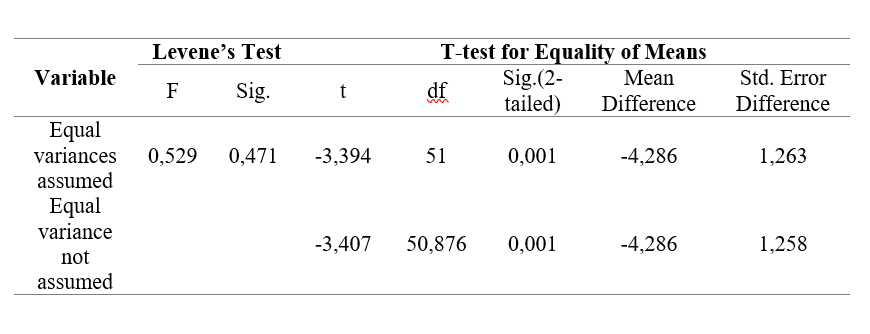
Traditional teaching methods that don't involve students in solving practical problems can lead to disengagement and a lack of critical thinking skills, which can lower electronic control system learning outcomes at Vocational School 10 Makassar. This study examines how Project-Based Learning (PjBL) improves student learning compared to conventional methods. This study is quantitative and quasi-experimental. 53 students were split into experimental (PjBL model) and control (conventional) groups. Students' activity observation sheets and pretest and posttest 20-question objective examinations were used to collect data. Data analysis included descriptive statistical tests, N-Gain tests, prerequisite tests (normality and homogeneity), and independent sample T-test hypothesis testing. The results showed that the improvement in learning outcomes in the experimental class was significantly higher than in the control class. This conclusion is evidenced by the average posttest score of the experimental class of 14.00, far exceeding the control class of 9.71. The average N-Gain value of the experimental class reached 0.51 (medium category), while the control class was only 0.17 (low category). Based on the hypothesis test, a Sig. (2-tailed) value of 0.001 < 0.05 was obtained, which confirmed the significant positive influence of the use of the PjBL model. This study provides a practical contribution for educators in vocational schools as a reference for effective innovative learning models to improve project-based technical competencies.
References
Ahmad, S. T., Watrianthos, R., Samala, A. D., Muskhir, M., & Dogara, G. (2023). Project-based learning in vocational education: A bibliometric approach. International Journal of Modern Education and Computer Science, 15(4), 43-56. https://doi.org/10.5815/ijmecs.2023.04.04
Ali, Z. R., Idawati, I., & Suardi, S. (2025). Project Based Learning (PjBL) Model: Elementary School Students' Social Studies Learning Outcomes. ETDC: Indonesian Journal of Research and Educational Review, 4(4), 1456-1465. https://doi.org/10.51574/ijrer.v4i4.3904
Almulla, M. A. (2020). The effectiveness of the project-based learning (PBL) approach as a way to engage students in learning. Sage Open, 10(3), 2158244020938702. https://doi.org/10.1177/2158244020938702
Andriyani, D. A., Prayitno, H. J., Minsih, M., Jamali, A., Damayanti, V. S., Dipsatara, T., & Pradana, F. G. (2025). Opportunities and challenges for the development of deep learning in vocational schools: drivers of learning innovation in the industrial era 4.0. Journal of Deep Learning, 95-108. https://doi.org/10.23917/jdl.v1i2.11027
Athaya, A. M., Kusmiati, M., & Faturachman, M. A. (2024). The analysis of project-based learning models implementation on student motivation and learning achievement. Curricula: Journal of Curriculum Development, 3(2), 347-362. https://doi.org/10.17509/curricula.v3i2.63535
Basri, N., Salija, K., Baa, S., & Muhammad, A. P. A. (2024). Unlocking creativity and engagement in students through project-based learning. Journal of Hunan University Natural Sciences, 51(1). https://doi.org/10.55463/issn.1674-2974.51.1.11
Budiarto, M. K. (2023). Project-based learning model to support 21st century learning: Case studies in vocational high schools. Journal of Education Research and Evaluation, 7(4), 662-670. https://doi.org/10.23887/jere.v7i4.63806
Chen, C. H., & Yang, Y. C. (2019). Revisiting the effects of project-based learning on students’ academic achievement: A meta-analysis investigating moderators. Educational Research Review, 26, 71-81. https://doi.org/10.1016/j.edurev.2018.11.001
Dewangga, A. W., & Ahmad, N. D. (2023). The effect of the project based learning model on improving the competence of practical learning of vocational students: a review. Jurnal Dinamika Vokasional Teknik Mesin, 8(2). https://doi.org/10.21831/dinamika.v8i2.66754
Fajra, M., & Novalinda, R. (2020). Project Based Learning: Innovation to improve the suitability of productive competencies in vocational high schools with the needs of the world of work. International Journal Of Multi Science, 1(08), 1-11. https://multisciencejournal.com/index.php/ijm/article/view/83
Gannar, S., & Kilani, C. (2025). Contextualized Learning and Social Constructivism: Implementing a Project-Based Approach in Information Systems Development Education. Journal of Science Learning, 8(1), 15-24. https://eric.ed.gov/?id=EJ1468663
Hadiyanto, H., Failasofah, F., Armiwati, A., Abrar, M., & Thabran, Y. (2021). Students' practices of 21st century skills between conventional learning and blended learning. Journal of University Teaching and Learning Practice, 18(3), 1-21. https://doi.org/10.3316/informit.T2024122700009801803166751
Hakim, M. N., Solihah, K. Z., Ismail, F., Salim, A., & Prasetiyo, N. T. (2024). Optimizing the Merdeka Curriculum for Developing the Pancasila Student Profile through Project-Based Learning. Munaddhomah: Jurnal Manajemen Pendidikan Islam, 5(4), 395-408. https://doi.org/10.31538/munaddhomah.v5i4.1396
Hidayat, H. R., & Widiyanti, W. (2025). Effect of Project-Based Learning on Vocational High School Student’s Cognitive and Psychomotor Competencies in CAD. Ideguru: Jurnal Karya Ilmiah Guru, 10(3), 2269-2274. https://doi.org/10.51169/ideguru.v10i3.2163
Hussein, B. (2021). Addressing collaboration challenges in project-based learning: The student’s perspective. Education Sciences, 11(8), 434. https://doi.org/10.3390/educsci11080434
Jiang, C., & Pang, Y. (2023). Enhancing design thinking in engineering students with project‐based learning. Computer Applications in Engineering Education, 31(4), 814-830. https://doi.org/10.1002/cae.22608
Laeli, N., & Wijayanto, P. A. (2025). The Effectiveness of the PjBL Model Assisted by Story Maps Media: The Creative Thinking Skills of High School Students. ETDC: Indonesian Journal of Research and Educational Review, 4(4), 1003-1012. https://doi.org/10.51574/ijrer.v4i4.3647
Lesman, I., Mulianti, M., Primawati, P., & Kassymova, G. K. (2023). Implementation of project-based learning (PjBL) model to increase students’ creativity and critical thinking skill in vocational creative product subjects. Jurnal Pendidikan Teknologi Kejuruan, 6(3), 202-215. https://doi.org/10.24036/jptk.v6i3.34023
Megayanti, T., Busono, T., & Maknun, J. (2020). Project-based learning efficacy in vocational education: Literature review. In IOP Conference Series: Materials Science and Engineering (Vol. 830, No. 4, p. 042075). IOP Publishing. https://doi.org/10.1088/1757-899X/830/4/042075
Mo, J. (2025). A Study on the Practices and Pathways for Enhancing Students' Vocational Competence in Regional Secondary Vocational Schools from the Perspective of Industry-Education Integration. Journal of Modern Educational Theory and Practice, 2(7). https://doi.org/10.70767/jmetp.v2i7.767
Mursid, R., Saragih, A. H., & Hartono, R. (2022). The Effect of the Blended Project-Based Learning Model and Creative Thinking Ability on Engineering Students' Learning Outcomes. International Journal of Education in Mathematics, Science and Technology, 10(1), 218-235. https://doi.org/10.46328/ijemst.2244
Nurhuda, A., Al Khoiron, M. F., Azami, Y. S. I., & Ni’mah, S. J. (2023). Constructivism learning theory in education: characteristics, steps and learning models. Research in Education and Rehabilitation, 6(2), 234-242. https://www.ceeol.com/search/article-detail?id=1213163
Nyale, D., Karume, S., Kipkebut, A., & Mukudi, F. (2025). Digital skills landscape: A systematic review of current academic programs, industry demands, and the digital divide’s impact on graduate competencies. Industry and Higher Education, 09504222251370105. https://doi.org/10.1177/09504222251370105
Oanh, D. T. K., & Dang, T. D. H. (2025). Effect of STEAM project-based learning on engineering students’ 21st century skills. European Journal of Educational Research, 14(3), 705-721. https://doi.org/10.12973/eu-jer.14.3.705
Rahardjanto, A., & Fauzi, A. (2019). Hybrid-PjBL: Learning Outcomes, Creative Thinking Skills, and Learning Motivation of Preservice Teacher. International Journal of Instruction, 12(2), 179-192. https://doi.org/10.29333/iji.2019.12212a
Rahimi, R. A., & Oh, G. S. (2024). Rethinking the role of educators in the 21st century: navigating globalization, technology, and pandemics. Journal of Marketing Analytics, 12(2), 182-197. https://doi.org/10.1057/s41270-024-00303-4
Rusnawati, M. D., Santyasa, I. W., & Tegeh, I. M. (2020). The effect of project based e-learning models toward learning outcomes and critical thinking skills of vocational high school students. JPP (Jurnal Pendidikan Dan Pembelajaran), 27(2), 57-64. https://journals.um.ac.id/index.php/jpp/article/view/236
Saleem, A., Kausar, H., & Deeba, F. (2021). Social constructivism: A new paradigm in teaching and learning environment. Perennial journal of history, 2(2), 403-421. https://doi.org/10.52700/pjh.v2i2.86
Siregar, T. E., Luali, N., Vinalistyosari, R. C., Hanurawan, F., & Anggraini, A. E. (2024). Implementation of Vygotsky’s constructivism learning theory through Project-Based Learning (PjBL) in elementary science education. Al Qalam: Jurnal Ilmiah Keagamaan dan Kemasyarakatan, 18(4), 2586-2607. http://dx.doi.org/10.35931/aq.v18i4.3620
Sudjimat, D. A., & Permadi, L. C. (2021). Impact of Work and Project-Based Learning Models on Learning Outcomes and Motivation of Vocational High School Students. Educational Sciences: Theory & Practice, 21(2). https://doi.org/10.12738/jestp.2021.2.009
Sugiyanto, S., Setiawan, A., & Hamidah, I. (2020). Integration of mobile learning and project-based learning in improving vocational school competence. Journal of Technical Education and Training, 12(2), 55-68. https://penerbit.uthm.edu.my/ojs/index.php/JTET/article/view/5470
Sukackė, V., Guerra, A. O. P. D. C., Ellinger, D., Carlos, V., Petronienė, S., Gaižiūnienė, L., ... & Brose, A. (2022). Towards active evidence-based learning in engineering education: A systematic literature review of PBL, PjBL, and CBL. Sustainability, 14(21), 13955. https://doi.org/10.3390/su142113955
Suryani, A., Setiawan, I., Muhdar, S., & Oktaviani, F. S. (2024). The comparison of effectiveness of PjBL and PBL models on students’ cognitive learning outcomes. Al-Ishlah: Jurnal Pendidikan, 16(1), 194-207. https://doi.org/10.35445/alishlah.v16i1.4094
Wansyah, R., Fiteriani, I., & Erfayliana, Y. (2025). Project Based Learning Model Assisted by Mind Mapping Media: Student Creativity in IPAS Lessons at Public Islamic Elementary. ETDC: Indonesian Journal of Research and Educational Review, 4(4), 1336-1351. https://doi.org/10.51574/ijrer.v4i4.3825
Wijnia, L., Noordzij, G., Arends, L. R., Rikers, R. M., & Loyens, S. M. (2024). The effects of problem-based, project-based, and case-based learning on students’ motivation: A meta-analysis. Educational Psychology Review, 36(1), 29. https://doi.org/10.1007/s10648-024-09864-3
Wu, T. T., & Wu, Y. T. (2020). Applying project-based learning and SCAMPER teaching strategies in engineering education to explore the influence of creativity on cognition, personal motivation, and personality traits. Thinking Skills and Creativity, 35, 100631. https://doi.org/10.1016/j.tsc.2020.100631
Xu, J., Wahid, A., & Binti, N. H. (2024). The Effectiveness of PjBL in the Acquisition of Skills in Higher Vocational Education: A Qualitative Approach. Pakistan Journal of Life & Social Sciences, 22(2). https://doi.org/10.57239/PJLSS-2024-22.2.001213
Zhang, L., & Ma, Y. (2023). A study of the impact of project-based learning on student learning effects: A meta-analysis study. Frontiers in psychology, 14, 1202728. https://doi.org/10.3389/fpsyg.2023.1202728
Downloads
Published
How to Cite
Issue
Section
License
Copyright (c) 2026 Suci Anidya Ramadhani, Edy Sabara, Supriadi Supriadi

This work is licensed under a Creative Commons Attribution-ShareAlike 4.0 International License.