Digital Literacy Competence: Learning Environment and Parental Support for Vocational High School Students' Learning Motivation

https://doi.org/10.51574/ijrer.v5i2.4758
Keywords:
Digital Literacy, Learning Environment, Learning Motivation, Parental Support, Vocational StudentsAbstract
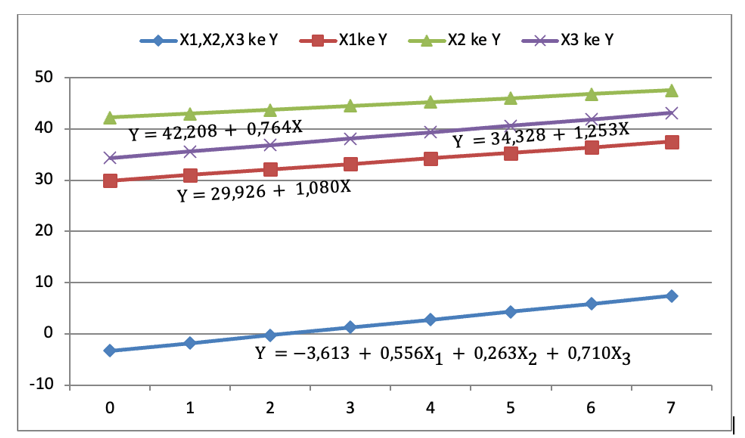
In the era of digital transformation, vocational high school students must possess strong learning motivation to master essential technical competencies. However, fluctuations in motivation are often driven by how effectively students manage digital literacy, utilize their learning environment, and receive moral support from their families. This study aims to analyze the levels of digital literacy competence, learning environment utilization, parental support, and learning motivation among vocational high school students, while examining the partial and simultaneous influences of these factors on motivation. Employing a quantitative approach with an ex post facto design, the research sampled 150 11th-grade Computer and Network Engineering students from three public vocational schools in Makassar City, selected via proportional random sampling. Data were collected using validated Likert-scale questionnaires and analyzed through descriptive and associative regression techniques. Findings indicate that all variables—digital literacy, learning environment, parental support, and learning motivation—fall within the high to very high categories (65%–80%). Partially, digital literacy (R2=0.585), learning environment (R2=0.262), and parental support (R^2=0.575) significantly affect motivation. Simultaneously, these variables contribute 71.7% to learning motivation (F_count=123.423 > F_table=2.67), with parental support emerging as the most dominant factor (β=0.781). This study underscores that enhancing vocational motivation requires a synergy between digital proficiency and active parental involvement. Consequently, schools should develop integrated digital literacy programs that foster stronger parental participation to optimize student engagement.
References
Ahmad, M. (2021). Optimization of learning effectiveness through the learning environment and learning motivation for students. Al-Ishlah: Jurnal Pendidikan, 13(3), 1546-1555. https://doi.org/10.35445/alishlah.v13i3.617
Akib, T., Wajdi, M., Natsir, M., Hasan, E., & Abidin, A. (2022). Digital Literacy and Teaching Creativity of Educators in Learning Activities: A Survey Method Review. ETDC: Indonesian Journal of Research and Educational Review, 1(3), 278-285. https://doi.org/10.51574/ijrer.v1i3.267
Areisy, H. J., & Sudira, P. (2022). Employability skills of state vocational high school students on welding engineering expertise competency. Jurnal Pendidikan Vokasi, 12(1), 53-63. https://doi.org/10.21831/jpv.v12i1.41764
Arfani, I., Nurdin, D., & Prihatin, E. (2024). The Influence of Learning Quality and School Infrastructure on Student Motivation in Automotive Engineering. Edukasi, 18(1), 1-8. https://doi.org/10.15294/edukasi.v18i1.1556
Bower, M., Lee, M. J., & Dalgarno, B. (2017). Collaborative learning across physical and virtual worlds: Factors supporting and constraining learners in a blended reality environment. British Journal of Educational Technology, 48(2), 407-430. https://doi.org/10.1111/bjet.12435
Cayubit, R. F. O. (2022). Why learning environment matters? An analysis on how the learning environment influences the academic motivation, learning strategies and engagement of college students. Learning Environments Research, 25(2), 581-599. https://doi.org/10.1007/s10984-021-09382-x
Fiitriani, F. (2025). Pengaruh Motivasi Orang Tua Terhadap Minat Peserta Didik dalam Melanjutkan Pendidikan di Kota Makassar. Jurnal Al-Qiyam, 6(1), 244-256. https://doi.org/10.33648/alqiyam.v6i1.1093
Firman, E., & Sandiarsa, K. D. (2024). The effect of learning environment on students’ motivation in learning. Jurnal Ilmiah Mandala Education, 10(4), 1047.
Guo, H., & Liu, B. (2025). The Strategic Value of Vocational Education in the Era of New Quality Productive Forces. International Educational Research, 8(6), p40-p40. https://doi.org/10.30560/ier.v8n6p40
Gusmawan, A., & Hariyadi, S. The Effect of Family Social Support on Student Engagement in Online Learning. Educational Guidance and Counseling Development Journal, 5(2), 62-70. http://dx.doi.org/10.24014/egcdj.v5i2.18429
Hafid, I. K. A. (2025). The Influence of Teacher Competence, Parental Attention, On Student Learning Motivation at Vocational Schools in Makassar. Education and Human Development Journal, 10(3), 375-388. https://doi.org/10.33086/ehdj.v10i3.8264
Jaya, I. G. N. M., Pahlevi, S. M., Susenna, A., Agustina, L., Kusumasari, D., Sukma, Y. A. A., ... & Kristiani, F. (2024). Framework for monitoring the spatiotemporal distribution and clustering of the digital society index of Indonesia. Sustainability, 16(24), 11258. https://doi.org/10.3390/su162411258
Islam, M. N., & Chakrabarty, S. (2020). A study of the relationship between familial factors and academic motivation and achievement in high school students. Psychological Studies, 65(1), 87-96. https://doi.org/10.1007/s12646-019-00500-7
Keser Aschenberger, F., Radinger, G., Brachtl, S., Ipser, C., & Oppl, S. (2023). Physical home learning environments for digitally-supported learning in academic continuing education during COVID-19 pandemic. Learning Environments Research, 26(1), 97-128. https://doi.org/10.1007/s10984-022-09406-0
Khairunnisa, S., Fatayan, A., & Fetrimen, F. (2025). Analysis of Principals' Managerial Transformational Leadership: Teachers' Digital Literacy in Elementary Schools. ETDC: Indonesian Journal of Research and Educational Review, 4(4), 1692-1705. https://doi.org/10.51574/ijrer.v4i4.3939
Khany, R., & Barzan, P. (2025). The influence of classroom environment on cognitive and emotional engagement. Journal of Cognition, Emotion & Education, 3(2), 1-17. https://doi.org/10.22034/cee.2025.532409.1039
Lamada, M. S., & Dewi, S. S. (2024). Analisis Minat Belajar Mahasiswa pada Mata Kuliah Inovasi Teknologi. Jurnal MediaTIK, 163-166. https://doi.org/10.59562/mediatik.v7i2.2742
Li, X., Pu, R., & Phakdeephirot, N. (2022). The influence of achievement motivation on college students’ employability: A chain mediation analysis of self-efficacy and academic performance. Frontiers in psychology, 13, 972910. https://doi.org/10.3389/fpsyg.2022.972910
Li, J., & Xue, E. (2023). Dynamic interaction between student learning behaviour and learning environment: Meta-analysis of student engagement and its influencing factors. Behavioral Sciences, 13(1), 59. https://doi.org/10.3390/bs13010059
Mack, A., & Honig, B. (2024). Comparing factors influencing entrepreneurial self-efficacy between vocational and academic post-secondary students. Entrepreneurship Education and Pedagogy, 7(4), 494-528. https://doi.org/10.1177/25151274231211555
Makkar, N. (2025). Parental involvement and student achievement in secondary schools: A correlational study. IJPR, 7(2), 108-114. https://doi.org/10.33545/26648903.2025.v7.i2b.101
Mardis, M. A., Ma, J., Jones, F. R., Ambavarapu, C. R., Kelleher, H. M., Spears, L. I., & McClure, C. R. (2018). Assessing alignment between information technology educational opportunities, professional requirements, and industry demands. Education and Information Technologies, 23(4), 1547-1584. https://doi.org/10.1007/s10639-017-9678-y
Mebert, L., Barnes, R., Dalley, J., Gawarecki, L., Ghazi-Nezami, F., Shafer, G., ... & Yezbick, E. (2020). Fostering student engagement through a real-world, collaborative project across disciplines and institutions. Higher Education Pedagogies, 5(1), 30-51. https://doi.org/10.1080/23752696.2020.1750306
Misbah, Z., Gulikers, J., Maulana, R., & Mulder, M. (2015). Teacher interpersonal behaviour and student motivation in competence-based vocational education: Evidence from Indonesia. Teaching and Teacher Education, 50, 79-89. https://doi.org/10.1016/j.tate.2015.04.007
Mitchall, A. M., & Jaeger, A. J. (2018). Parental influences on low-income, first-generation students’ motivation on the path to college. The Journal of Higher Education, 89(4), 582-609. https://doi.org/10.1080/00221546.2018.1437664
Ng, C. F. (2021). The physical learning environment of online distance learners in higher education–a conceptual model. Frontiers in Psychology, 12, 635117. https://doi.org/10.3389/fpsyg.2021.635117
Niittylahti, S., Annala, J., & Mäkinen, M. (2023). Student engagement profiles in vocational education and training: a longitudinal study. Journal of Vocational Education & Training, 75(2), 372-390. https://doi.org/10.1080/13636820.2021.1879902
Özyıldırım, G. (2024). Does parental involvement affect student academic motivation? A meta-analysis. Current Psychology, 43(36), 29235-29246. https://doi.org/10.1007/s12144-024-06568-3
Pat-El, R. J., de Hoog, N., Segers, M., & Vedder, P. (2024). Exploring the impact of student perceptions of Assessment for Learning on intrinsic motivation. Studies in Educational Evaluation, 83, 101420. https://doi.org/10.1016/j.stueduc.2024.101420
Poupard, M., Larrue, F., Sauzéon, H., & Tricot, A. (2025). A systematic review of immersive technologies for education: Learning performance, cognitive load and intrinsic motivation. British Journal of Educational Technology, 56(1), 5-41. https://doi.org/10.1111/bjet.13503
Raihan, V. A., Elmanora, & Jaka Marsita. (2024). Pengaruh Motivasi Belajar Terhadap Student Engagement Siswa Pada Mata Pelajaran Front Office Di SMK. Jurnal Pendidikan Dan Perhotelan (JPP), 4(2), 69–74. https://doi.org/10.21009/jppv4i2.08
Song, Y., Lv, S., Wang, M., Wang, Z., & Dong, W. (2025). The impact of digital learning competence on the academic achievement of undergraduate students. Behavioral Sciences, 15(7), 840. https://doi.org/10.3390/bs15070840
Sonni, A. F., Mau, M., Akbar, M., & Putri, V. C. C. (2025). Ai and digital literacy: Impact on information resilience in indonesian society. Journalism and Media, 6(3), 100. https://doi.org/10.3390/journalmedia6030100
Statti, A., & Torres, K. M. (2020). Digital literacy: The need for technology integration and its impact on learning and engagement in community school environments. Peabody Journal of Education, 95(1), 90-100. https://doi.org/10.1080/0161956X.2019.1702426
Vuorikari, R., Kluzer, S., Punie, Y., & Dahl, M. R. (2022). DigComp 2.2: Den Digitale Kompetenceramme for Borgerne. https://doi.org/10.2760/115376
Wahjusaputri, S., & Nastiti, T. I. (2022). Digital literacy competency indicator for Indonesian high vocational education needs. Journal of Education and Learning (EduLearn), 16(1), 85-91. https://doi.org/10.11591/edulearn.v16i1.20390
Wismansyah, A. R., Kadir, A. R., Baja, S., & Amar, M. Y. (2024). Sustainable vocational education models for industrial revolution role in development of job market absorption in Tangerang City, Indonesia. Journal of Infrastructure, Policy and Development, 8(6), 3958. https://doi.org/10.24294/jipd.v8i6.3958
Wulansari, E., Sahid, N., & Wahyudi, R. (2023). Factors Affecting Students' Interest in Continuing Study at Higher Education. International Journal of Education and Teaching Zone, 2(1), 148-155. https://jurnal.yayasannurulyakin.sch.id/index.php/ijetz/article/view/116
Zakir, S., Hoque, M. E., Susanto, P., Nisaa, V., Alam, M. K., Khatimah, H., & Mulyani, E. (2025, June). Digital literacy and academic performance: the mediating roles of digital informal learning, self-efficacy, and students’ digital competence. Frontiers in Education (Vol. 10, p. 1590274). Frontiers Media SA. https://doi.org/10.3389/feduc.2025.1590274
Downloads
Published
How to Cite
Issue
Section
License
Copyright (c) 2026 Wahdania Wahdania, Anas Arfandi, Sanatang Sanatang

This work is licensed under a Creative Commons Attribution-ShareAlike 4.0 International License.