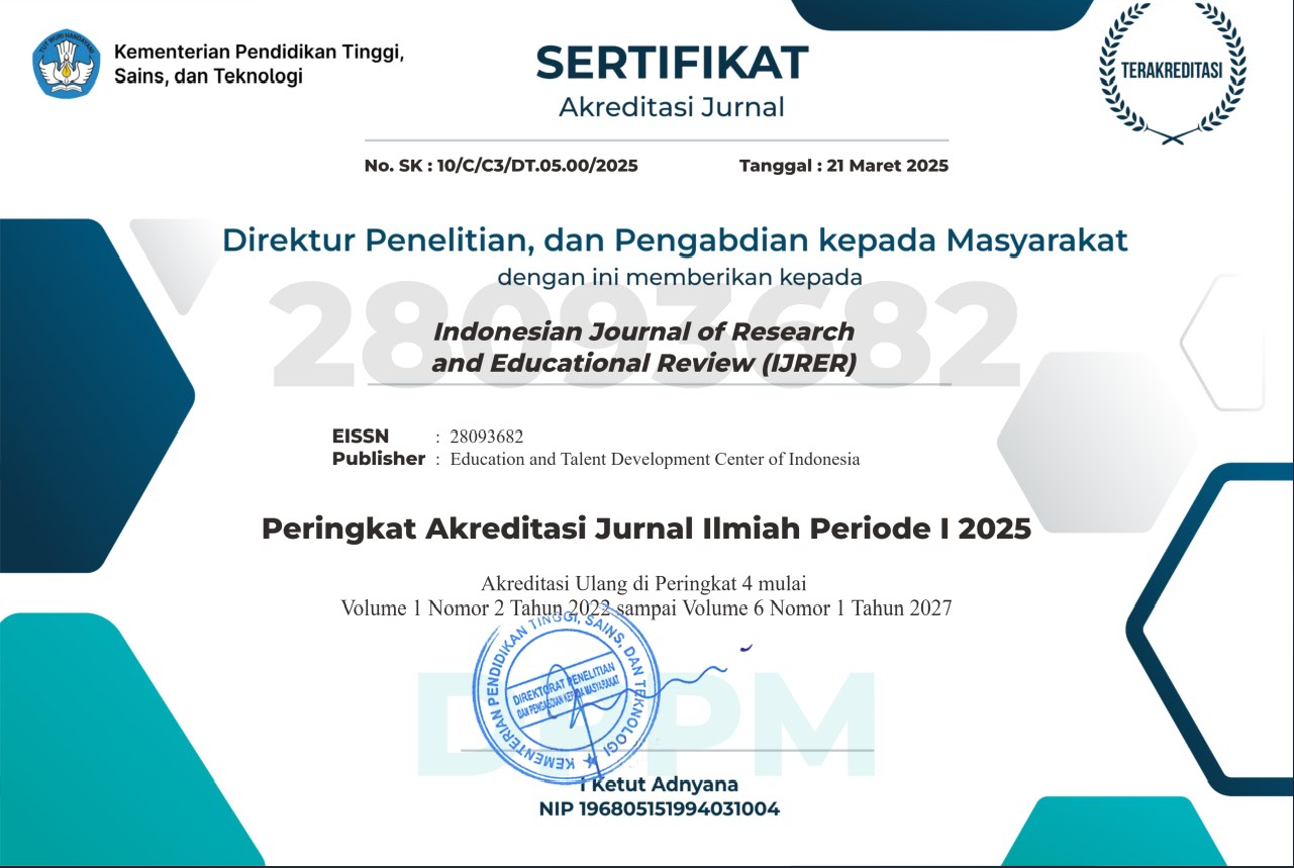
ACREDITATION
Educational change requires teachers to be more digitally literate due to rapid technology development. This adjustment is difficult for some teachers, especially elementary school teachers. This research is driven by the principal's transformative leadership and managerial talents in guiding this transition. The purpose of this study is to analyze the principal's managerial strategy, how the principal improves teachers' digital literacy, teachers' perceptions of the principal's transformational leadership style, and the obstacles faced by teachers in improving digital literacy. This study uses a qualitative approach with a case study method. The research subjects consisted of the principal, teachers at various levels, and administrative staff. Data sources were obtained through in-depth interviews, field observations, and documentation. The research instruments were interview guidelines and observation sheets. The data analysis technique used was the interactive model of Miles, who plays, which consists of data reduction, data presentation, and drawing conclusions. Data validity was maintained through triangulation techniques for data sources and methods. The findings of this study demonstrate that the principal has adopted a transformational leadership style by offering motivation, serving as a role model, and fostering collaboration among teachers. However, some teachers have encountered resistance due to age, time constraints, and a lack of confidence in using digital devices. School principals continue to make various efforts to overcome these obstacles so that teachers' digital literacy can improve sustainably.
Khairunnisa, S., Fatayan, A., & Fetrimen, F. (2025). Analysis of Principals’ Managerial Transformational Leadership: Teachers’ Digital Literacy in Elementary Schools. ETDC: Indonesian Journal of Research and Educational Review , 4(4), 1692–1705. https://doi.org/10.51574/ijrer.v4i4.3939
Downloads
Download data is not yet available.
- Agazu, B. G., Kero, C. A., & Debela, K. L. (2025). Transformational leadership and firm performance: a systematic literature review. Journal of Innovation and Entrepreneurship, 14(1), 29. https://doi.org/10.1186/s13731-025-00476-x
- Anderson, M. (2017). Transformational leadership in education: A review of existing literature. International Social Science Review, 93(1), 1-13. https://www.jstor.org/stable/90012919
- Bakker, A. B., Hetland, J., Olsen, O. K., & Espevik, R. (2023). Daily transformational leadership: a source of inspiration for follower performance?. European Management Journal, 41(5), 700-708. https://doi.org/10.1016/j.emj.2022.04.004
- Castañeda, L., Esteve-Mon, F. M., Adell, J., & Prestridge, S. (2022). International insights about a holistic model of teaching competence for a digital era: the digital teacher framework reviewed. European Journal of Teacher Education, 45(4), 493-512. https://doi.org/10.1080/02619768.2021.1991304
- Chatzipanagiotou, P., & Katsarou, E. (2023). Crisis management, school leadership in disruptive times and the recovery of schools in the post COVID-19 era: A systematic literature review. Education Sciences, 13(2), 118. https://doi.org/10.3390/educsci13020118
- Digón-Regueiro, P., Gewerc-Barujel, A., & Pérez-Crego, C. (2023). Dilemmas in the integration of technologies in a Primary school classroom: the dialogue between teacher agency, curriculum and digital technologies. Pedagogies: An International Journal, 18(3), 333-351. https://doi.org/10.1080/1554480X.2021.2013235
- Dong, C., Cao, S., & Li, H. (2022). Profiles and predictors of young children’s digital literacy and multimodal practices in central China. Early Education and Development, 33(6), 1094-1115. https://doi.org/10.1080/10409289.2021.1930937
- ElSayary, A. (2023). The impact of a professional upskilling training programme on developing teachers' digital competence. Journal of Computer Assisted Learning, 39(4), 1154-1166. https://doi.org/10.1111/jcal.12788
- Fernández-Batanero, J. M., Montenegro-Rueda, M., Fernández-Cerero, J., & García-Martínez, I. (2022). Digital competences for teacher professional development. Systematic review. European journal of teacher education, 45(4), 513-531. https://doi.org/10.1080/02619768.2020.1827389
- Fraillon, J., & Duckworth, D. (2024). Computer and information literacy framework. In IEA International Computer and Information Literacy Study 2023: Assessment framework (pp. 21-34). Cham: Springer Nature Switzerland. https://doi.org/10.1007/978-3-031-61194-0_2
- Ghorbani, A., Mohammadi, N., Rooddehghan, Z., Bakhshi, F., & Nasrabadi, A. N. (2023). Transformational leadership in development of transformative education in nursing: a qualitative study. BMC nursing, 22(1), 17. https://doi.org/10.1186/s12912-022-01154-z
- Hamka, H. (2023). The Role of Principals on Teacher Performance Improvement in a Suburban School. QALAMUNA: Jurnal Pendidikan, Sosial, Dan Agama, 15(1), 371-380. https://doi.org/10.37680/qalamuna.v15i1.2409
- Huda, M. (2018). Tugas Kepemimpinan Kepala Sekolah dalam Manajemen Berbasis Sekolah. Al-Afkar: Jounal for Islamic Studies, 1(2), 46–54. https://doi.org/10.5281/zenodo.3554832
- Karakose, T., Polat, H., & Papadakis, S. (2021). Examining teachers’ perspectives on school principals’ digital leadership roles and technology capabilities during the COVID-19 pandemic. Sustainability, 13(23), 13448. https://doi.org/10.3390/su132313448
- Karakose, T., Tülübaş, T., Papadakis, S., & Yirci, R. (2023). Evaluating the intellectual structure of the knowledge base on transformational school leadership: A bibliometric and science mapping analysis. Education Sciences, 13(7), 708. https://doi.org/10.3390/educsci13070708
- Kasperski, R., Blau, I., & Ben-Yehudah, G. (2022). Teaching digital literacy: are teachers’ perspectives consistent with actual pedagogy?. Technology, Pedagogy and Education, 31(5), 615-635. https://doi.org/10.1080/1475939X.2022.2091015
- Khan, I. U., Amin, R. U., & Saif, N. (2022). Individualized consideration and idealized influence of transformational leadership: Mediating role of inspirational motivation and intellectual stimulation. International Journal of Leadership in Education, 1-11. https://doi.org/10.1080/13603124.2022.2076286
- Ladkin, D., & Patrick, C. B. (2022). Whiteness in leadership theorizing: A critical analysis of race in Bass’ transformational leadership theory. Leadership, 18(2), 205-223. https://doi.org/10.1177/17427150211066442
- Laschou, S., Kollias, V., & Karasavvidis, I. (2018). How do transformational principals view ICT as a means for promoting educational innovations? A descriptive case study focusing on twenty-first century skills. In Research on e-Learning and ICT in Education: Technological, Pedagogical and Instructional Perspectives (pp. 43-67). Cham: Springer International Publishing. https://doi.org/10.1007/978-3-319-95059-4_3
- Legi, H., Damanik, D., Giban, Y., Kristen, A., & Wamena, D. (2023). Transforming education through technological innovation in the face of the era of society 5.0. Educenter: Jurnal Ilmiah Pendidikan, 2(2).
- Malek, M. A., & Almarri, K. (2023). The role of adaptive and transformational leadership in the successful adoption and implementation of new technologies and innovations in organizations. In European, Mediterranean, and Middle Eastern Conference on Information Systems (pp. 120-132). Cham: Springer Nature Switzerland. https://doi.org/10.1007/978-3-031-56481-9_9
- Mthanti, B. J., & Msiza, P. (2023). The roles of the school principals in the professional development of teachers for 21st century Education. Cogent Education, 10(2), 2267934.
- Müller, U., Lude, A., & Hancock, D. R. (2020). Leading schools towards sustainability. Fields of action and management strategies for principals. Sustainability, 12(7), 3031. https://doi.org/10.3390/su12073031
- Nabila, M., Ghani, A., & Rahman, A. (2022). Implementasi gaya kepemimpinan situasional kepala sekolah memasuki pembelajaran tatap muka. Jurnal Basicedu, 6(3), 5115-5123. https://doi.org/10.31004/basicedu.v6i3.3040
- Navaridas-Nalda, F., Clavel-San Emeterio, M., Fernández-Ortiz, R., & Arias-Oliva, M. (2020). The strategic influence of school principal leadership in the digital transformation of schools. Computers in Human Behavior, 112, 106481. https://doi.org/10.1016/j.chb.2020.106481
- Ndibalema, P. (2025). Digital literacy gaps in promoting 21st century skills among students in higher education institutions in Sub-Saharan Africa: a systematic review. Cogent Education, 12(1), 2452085.
- Pardosi, J., & Utari, T. I. (2022). Effective principal leadership behaviors to improve the teacher performance and the student achievement. F1000Research, 10, 465. https://doi.org/10.12688/f1000research.51549.2
- Quaicoe, J. S., & Pata, K. (2020). Teachers’ digital literacy and digital activity as digital divide components among basic schools in Ghana. Education and Information Technologies, 25(5), 4077-4095.
- Rasdiana, Wiyono, B. B., Imron, A., Rahma, L., Arifah, N., Azhari, R., ... & Maharmawan, M. A. (2024). Elevating teachers’ professional digital competence: synergies of principals’ instructional e-supervision, technology leadership and digital culture for educational excellence in digital-savvy era. Education Sciences, 14(3), 266. https://doi.org/10.3390/educsci14030266
- Ratnaningsih, S. (2016). Character education in primary school students prepare to face challenges of the 21st century. In International Conference on Ethics in Governance (ICONEG 2016) (pp. 48-53). Atlantis Press.
- Reddy, P., Chaudhary, K., & Hussein, S. (2023). A digital literacy model to narrow the digital literacy skills gap. Heliyon, 9(4).
- Riani, S. S., & Ain, S. Q. (2022). The role of school principal in implementing education quality management. Jurnal Ilmiah Sekolah Dasar, 6(2), 204-211. https://doi.org/10.23887/jisd.v6i2.45216
- Ridwan, R. (2021). The Effect of Leadership on Performance: Analysis of School Management Ability and Attitude. AKADEMIK: Jurnal Mahasiswa Ekonomi & Bisnis, 1(2), 59-67.
- Rony, Z. T., Lestari, T. S., Ismaniah, Yasin, M., & Lubis, F. M. (2023). The complexity of leadership competence in universities in the 21st century. Cogent Social Sciences, 9(2), 2276986. https://doi.org/10.1080/23311886.2023.2276986
- Rostini, D., Syam, R. Z. A., & Achmad, W. (2022). The significance of principal management on teacher performance and quality of learning. Al-Ishlah: Jurnal Pendidikan, 14(2), 2513-2520.
- Ruloff, M., & Petko, D. (2025). School principals’ educational goals and leadership styles for digital transformation: results from case studies in upper secondary schools. International Journal of Leadership in Education, 28(2), 422-440. https://doi.org/10.1080/13603124.2021.2014979
- Sánchez-Cruzado, C., Santiago Campión, R., & Sánchez-Compaña, M. T. (2021). Teacher digital literacy: The indisputable challenge after COVID-19. Sustainability, 13(4), 1858.
- Schiuma, G., Santarsiero, F., Carlucci, D., & Jarrar, Y. (2024). Transformative leadership competencies for organizational digital transformation. Business Horizons, 67(4), 425-437. https://doi.org/10.1016/j.bushor.2024.04.004
- Sharma, A., & Singh, A. (2024). Digital Literacy: An Essential Life Skill in Present Era of Education. Transforming Learning: The Power of Educational Technology, 118-125.
- Stevens, C. (2025). Teachers and teaching: pedagogy, digital skills and professional development. Open Learning: The Journal of Open, Distance and e-Learning, 40(1), 1-3. https://doi.org/10.1080/02680513.2024.2436665
- Surtini, S., & Muhtar, T. (2024). Teachers' pedagogic competence in strengthening character education of students in elementary schools: Exploring effective strategies. Jurnal Paedagogy, 11(3), 568-579.
- Tanjung, R., Hanafiah, H., Arifudin, O., & Mulyadi, D. (2022). Kompetensi Manajerial Kepala Sekolah dalam Meningkatkan Kinerja Guru. Journal of Educational Research, 1(1), 85–100. https://doi.org/10.56436/jer.v1i1.16
- Tavares, M. C., Azevedo, G., & Marques, R. P. (2022). The challenges and opportunities of era 5.0 for a more humanistic and sustainable society—a literature review. Societies, 12(6), 149. https://doi.org/10.3390/soc12060149
- Thomas, L., Tuytens, M., Devos, G., Kelchtermans, G., & Vanderlinde, R. (2020). Transformational school leadership as a key factor for teachers’ job attitudes during their first year in the profession. Educational Management Administration & Leadership, 48(1), 106-132.
- Timotheou, S., Miliou, O., Dimitriadis, Y., Sobrino, S. V., Giannoutsou, N., Cachia, R., ... & Ioannou, A. (2023). Impacts of digital technologies on education and factors influencing schools' digital capacity and transformation: A literature review. Education and information technologies, 28(6), 6695-6726. https://doi.org/10.1007/s10639-022-11431-8
- Tołwińska, B. (2021). The role of principals in learning schools to support teachers’ use of digital technologies. Technology, Knowledge and Learning, 26(4), 917-930. https://doi.org/10.1007/s10758-021-09496-4
- Yakob, M., Sahudra, T. M., & Sukirno, S. (2025). Transformational Leadership of Principals: Driving Excellence in Education Quality. Al-Ishlah: Jurnal Pendidikan, 17(1), 1658-1667. https://doi.org/10.35445/alishlah.v17i1.6887
Copyright (c) 2025 Salsabila Khairunnisa, Arum Fatayan, Fetrimen Fetrimen

This work is licensed under a Creative Commons Attribution-ShareAlike 4.0 International License.
Most read articles by the same author(s)
- Arum Fatayan, Analyzing the Impact of Google Earth on the Learning Motivation of Elementary School Students , ETDC: Indonesian Journal of Research and Educational Review : Vol. 3 No. 2 (2024): March
- Hafia Lisda, Abd. Rahman A Ghani, Arum Fatayan, The Implementation of Principal Supervision in Building Teacher Performance in Elementary Schools , ETDC: Indonesian Journal of Research and Educational Review : Vol. 4 No. 4 (2025): September
Similar Articles
- Syane Ina Darisera, Ribka L Ririhena, Zainudin Notanubun, The Use of Audio-Visual Media in Improving the Ability to Listen to Fairy Tales of Elementary School Students , ETDC: Indonesian Journal of Research and Educational Review : Vol. 5 No. 2 (2026): March
- Baso Syafaruddin, Conceptual Framework of Islamic Education in the Digital Era: Challenges, Opportunities and Strategies , ETDC: Indonesian Journal of Research and Educational Review : Vol. 3 No. 4 (2024): September
- Thomas Picarima, Ribka L. Ririhena, Musa Marsel Maipauw, Speed Reading Method to Improve Reading Comprehension Skills among Fifth-Grade Students Primary School , ETDC: Indonesian Journal of Research and Educational Review : Vol. 5 No. 1 (2025): December
- Felista Imunora, Nathalia Yohana Johannes, Leonid Ritiauw, The Implementation of Social Values in Shaping Social Behavior in Students of Grade IV at Primary School , ETDC: Indonesian Journal of Research and Educational Review : Vol. 5 No. 3 (2026): June
- Oparinde Olayiwola Raheef, Shina Olawale Olayiwola, Lawrence Oni A., Intellectual Security and Artificial Intelligence: Managing the Balance Between Positivity and Negativity , ETDC: Indonesian Journal of Research and Educational Review : Vol. 4 No. 4 (2025): September
- Rais Pagayang, Benny Badaru, Wahyuddin Wahyuddin, Muh. Adnan Hudain, Suwardi Suwardi, Sepak Takraw Sports Development Management in Improving Soft Skills and Student Achievement in Educational Units , ETDC: Indonesian Journal of Research and Educational Review : Vol. 4 No. 4 (2025): September
- Takdir Tamsilu, Rustan Rustan, Kartini Kartini, Life Skills-Based Leadership Strategy in Improving Madrasah Quality: A Case Study , ETDC: Indonesian Journal of Research and Educational Review : Vol. 4 No. 4 (2025): September
- Fadli Firdaus, Evaluating the Effectiveness of Zoning-Based Student Admission Policy: A Qualitative Study of Junior High Schools , ETDC: Indonesian Journal of Research and Educational Review : Vol. 4 No. 3 (2025): June
- Syamsul Hadi, Muh. Adnan Hudain, Ilham Kamaruddin, Ahmad Adil, Fahrizal Fahrizal, Athletics Formula 1 Games for Elementary School Students: Learning Achievement for 60 Meter Running Speed , ETDC: Indonesian Journal of Research and Educational Review : Vol. 4 No. 3 (2025): June
- Umi Muslikhatul Khazanah, Baharudin Baharudin, Yuli Yanti, Contextual Teaching and Learning Model: Explosion Box Media on Learning Activity in Elementary School Students' IPAS Subjects , ETDC: Indonesian Journal of Research and Educational Review : Vol. 5 No. 1 (2025): December
<< < 1 2 3 4 5 6 7 8 9 10 > >>
You may also start an advanced similarity search for this article.
Dimensions Badge
Crossmark Badge

Section
Articles