The Implementation of Social Values in Shaping Social Behavior in Students of Grade IV at Primary School

https://doi.org/10.51574/ijrer.v5i3.4789
Keywords:
Character Education, Fourth-Grade Students, Primary School, Social Behavior, Social ValuesAbstract
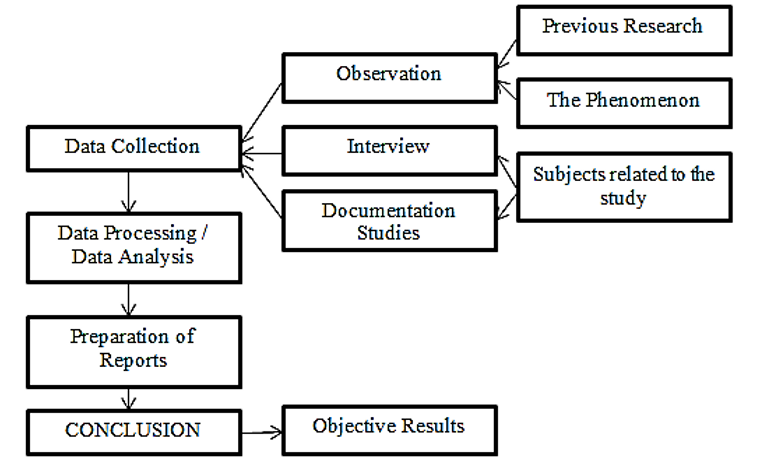
This study is motivated by the escalating challenges of the digital era and globalization, which have adversely impacted elementary students' social behavior, leading to a decline in manners and direct interpersonal interaction. The research aims to describe and analyze the implementation of social values in shaping the social behavior of fourth-grade students at Primary School 7 Ambon. Employing a descriptive qualitative approach, data was gathered through participatory observation, in-depth interviews, and documentation. The subjects, selected via purposive sampling, included the school principal, three fourth-grade teachers, and six students. Data analysis followed an interactive model involving condensation, display, and verification. The findings reveal that social values—specifically gotong royong (cooperation), responsibility, discipline, honesty, tolerance, and courtesy—were successfully integrated through three primary strategies: modeling, habituation, and positive reinforcement. Despite multidimensional challenges such as digital disruption and diverse family backgrounds, the implementation significantly improved students' prosocial behavior, fostering mutual respect and reducing peer conflict. This study contributes a strategic framework for educators to strengthen character education through contextual integration. It underscores that a cohesive synergy between school-based habituation and parental involvement is essential for the sustainable internalization of social values in contemporary education.
References
Adhari, F. N., Amalia, G., & Rustini, T. (2023). Analisis Dampak Modernisasi Terhadap Perilaku Siswa Sekolah Dasar Pada Aspek Sosial Budaya. Jurnal Bintang Pendidikan Indonesia, 2(1), 143–154. https://doi.org/10.55606/jubpi.v2i1.2496
Afandi, M., & Astuti, M. (2023). Social Development of Primary School/Madrasah Ibtidaiyah Students and Their Implications for Social Behavior in Learning. At-Thullab: Jurnal Pendidikan Guru Madrasah Ibtidaiyah, 7(1).
Aminah, A., Hairida, H., & Hartoyo, A. (2022). Penguatan Pendidikan Karakter Peserta Didik melalui Pendekatan Pembelajaran Kontekstual di Sekolah Dasar. Jurnal Basicedu, 6(5), 8349–8358. https://doi.org/10.31004/basicedu.v6i5.3791
Bharti, H. O., & Singh, C. K. (2026). An Exploration of Value Education Shaping Responsible and Socially Aware Student Behaviour. International Journal of Research & Technology, 14(1), 104-113. https://ijrt.org/j/article/view/884
Branco, A. U. (2017). Values, education and human development: the major role of social interactions’ quality within classroom cultural contexts. In Alterity, values, and socialization: Human development within educational contexts (pp. 31-50). Cham: Springer International Publishing. https://doi.org/10.1007/978-3-319-70506-4_2
Chen, B. (2023). Influence of cooperative learning on learners’ motivation: the case of Shenzhen primary school. Education 3-13, 51(4), 647-671. https://doi.org/10.1080/03004279.2021.1998179
Dahmani, F., & Brada, A. (2025). Media education and the challenges of the digital environment: towards enabling children to safely use social networking sites. Annales de l’université d’Alger, 39(2), 96-115. https://asjp.cerist.dz/en/article/270148
Dwistia, H., Tanzania, A., Anisak, S. D., & Wantika, W. (2024). Digital technology and adolescent behavior transformation: the challenges of moral education in schools. JURNAL PEDAGOGY, 17(2), 230-240. https://doi.org/10.63889/pedagogy.v17i2.240
Hanurawan, F., Suciptaningsih, O. A., & Itsnain, N. I. I. (2024). Psychological Characteristics Of Personality In Elementary School-Aged Children In Indonesia: Review And Implications. Edukasi Islami: Jurnal Pendidikan Islam, 13(04), 729-744. https://doi.org/10.30868/ei.v13i04.6636
Hidar, A., Hamdan, T. A., & Muhammad, K. (2020). Peran Keluaraga dan Media Sosial dalam Pembentukan Karakter Santun Siswa di Sekolah Dasar. Jurnal Pendidikan Karakter, 11(1), 33–48. https://doi.org/10.21831/jpk.v10i1.30588
Huang, R. X., Pagano, A., & Marengo, A. (2024). Values-based education for sustainable development (vbesd): introducing a pedagogical framework for education for sustainable development (esd) using a values-based education (vbe) approach. Sustainability, 16(9), 3562. https://doi.org/10.3390/su16093562
Husin, M. A., Utami, W., Salsabila, L. D., Rizka, G. G., & Hayati, A. A. (2026). Implementation of Collaborative Learning Model to Develop Critical Thinking Character and Learning Initiative in Elementary School Students. Jurnal Multidisiplin Sahombu, 6(02), 108-117. https://ejournal.seaninstitute.or.id/index.php/JMS/article/view/8067
Iskakova, M., Kaldygozova, S., Ussenova, A., Junissova, A., & Shomanbaeva, A. (2023). Towards holistic education: Synthesizing personality consciousness, emerging technologies, and philosophical considerations in education system evolution. Futurity Philosophy, 2(2), 17-29. https://doi.org/10.57125/FP.2023.06.30.02
Jusar, I. R., Jamaris, & Solfema. (2023). Pendidikan dalam Teori Proses Sosialisasi di Sekolah Dasar. Jurnal Basicedu, 7(1). https://doi.org/10.31004/basicedu.v7i1.4354
Khofi, M. B. (2024). The green school concept in elementary schools as an effort to form sustainable behavior and environmental awareness. Al-Adzka: Jurnal Ilmiah Pendidikan Guru Madrasah Ibtidaiyah, 14(2), 206-225. https://doi.org/10.18592/aladzkapgmi.v14i2.14412
Lessnusa, A., Ritiauw, S. P., & Rusfadir, S. A. (2024). Peran Guru Dalam Mewujudkan Sikap Sosial Siswa di Sekolah Dasar. Lucerna : Jurnal Riset Pendidikan Dan Pembelajaran, 4(1), 9–14. https://doi.org/10.56393/lucerna.v4i1.2299
Marchuk, O., Holiiad, I., Boiko, V., Ribtsun, J., Bogdan, Z., & Lukashenko, K. (2024). Holistic Education: the Unity of the Intellectual and Emotional Sphere. Revista Romaneasca Pentru Educatie Multidimensionala, 2(16), 666-677. https://lumenpublishing.com/journals/index.php/rrem/article/view/6427
Miles, M. B., Huberman, A. M., & Saldaña, J. (2014). Qualitative Data Analysis: A Methods Sourcebook (3rd ed.). SAGE Publication, Inc.
Mocior, E., & Kruse, M. (2016). Educational values and services of ecosystems and landscapes–An overview. Ecological indicators, 60, 137-151. https://doi.org/10.1016/j.ecolind.2015.06.031
Moravec, J. W., & Martínez-Bravo, M. C. (2023). Global trends in disruptive technological change: social and policy implications for education. On the Horizon: The International Journal of Learning Futures, 31(3-4), 147-173. https://doi.org/10.1108/OTH-02-2023-0007
Nuraeni, I., Novitasari, S., Arifin, M. H., & Rustini, T. (2022). Upaya Pembentukan Karakter Peduli Sosial Melalui Pembelajaran Ips Di Sekolah Dasar. ASANKA: Journal of Social Science And Education, 3(1). https://doi.org/10.21154/asanka.v3i1.3927
Nurhasanah, E., Yusnarti, M., & Aisah, S. (2024). Peran Guru Sekolah Dasar dalam Pembentukan Karakter Siswa. Jurnal Evaluasi Dan Kajian Strategis Pendidikan Dasa, 1(1), 266–271. https://doi.org/10.62159/jpt.v5i2.1564
Nurfirdaus, N., & Sutisna, A. (2021). Lingkungan Sekolah dalam Membentuk Perilaku Sosial Siswa. NATURALISTIC : Jurnal Kajian Penelitian Pendidikan Dan Pembelajaran, 5(2b), 895–902. https://doi.org/10.35568/naturalistic.v5i2b.1219
Pitaloka, D. L., Dimyati, D., & Purwanta, E. (2021). Peran Guru dalam Menanamkan Nilai Toleransi pada Anak Usia Dini di Indonesia. Jurnal Obsesi : Jurnal Pendidikan Anak Usia Dini, 5(2), 1696–1705. https://doi.org/10.31004/obsesi.v5i2.972
Rahma, S. A., Aryani, S. Z., & Wahyuningsih, Y. (2026). Analisis Pentingnya Pembelajaran Ilmu Pengetahuan Sosial untuk Membentuk Karakter Siswa Sekolah Dasar dalam Menghadapi Era Globalisasi. Jurnal Basicedu, 10(1). https://doi.org/10.31004/basicedu.v10i1.10907
Rimadhani, K. H., & Arief, C. U. (2022). Penanaman Karakter Gotong Royong dan Tanggung Jawab melalui Metode Pembiasaan di Sekolah Dasar. Jurnal Basicedu, 6(4), 6419–6427. https://doi.org/10.31004/basicedu.v6i4.3248
Sundari, Sari, A. N. A., Mustainah, S., Viftar, M., & Kalsum, N. U. (2023). Pendidikan Pancasila Berbasis Teknologi Digital Sebagai Upaya Membentuk Karakter Siswa Sekolah Dasar Di Era Digital. Journal on Education, 05(04), 11644–11648.
Syamsudin, F., & Hadi, M. S. (2025). Pengaruh Pendidikan Karakter, Keterampilan Sosial, dan Lingkungan Keluarga terhadap Perilaku Prososial Siswa Sekolah Dasar. JIIP - Jurnal Ilmiah Ilmu Pendidikan, 8(2), 1327–1332. https://doi.org/10.54371/jiip.v8i2.6869
Triana, K. A., Hendra Cipta, N., & Rokmanah, S. (2023). Pengaruh Kemajuan Teknologi terhadap Perkembangan Pendidikan Karakter Anak Sekolah Dasar. Jurnal Pendidikan Tambusai, 7, 24623–24627.
Triyanto. (2020). Peluang Dan Tantangan Pendidikan Karakter Di Era Digital. Jurnal Civics: Media Kajian Kewarganegaraan, 17(2), 721–737. https://doi.org/10.21831/jc.v17i2.35476
Downloads
Published
How to Cite
Issue
Section
License
Copyright (c) 2026 Felista Imunora, Nathalia Yohana Johannes, Leonid Ritiauw

This work is licensed under a Creative Commons Attribution-ShareAlike 4.0 International License.