Development of Interactive Learning Media with a Wordwall Platform to Improve Students' Mathematical Divergent Thinking Skills

https://doi.org/10.51574/kognitif.v6i2.3957
Keywords:
Arithmetic and Geometric Sequences , Interactive Learning Media , Mathematical Divergent Thinking , Web WordwallAbstract
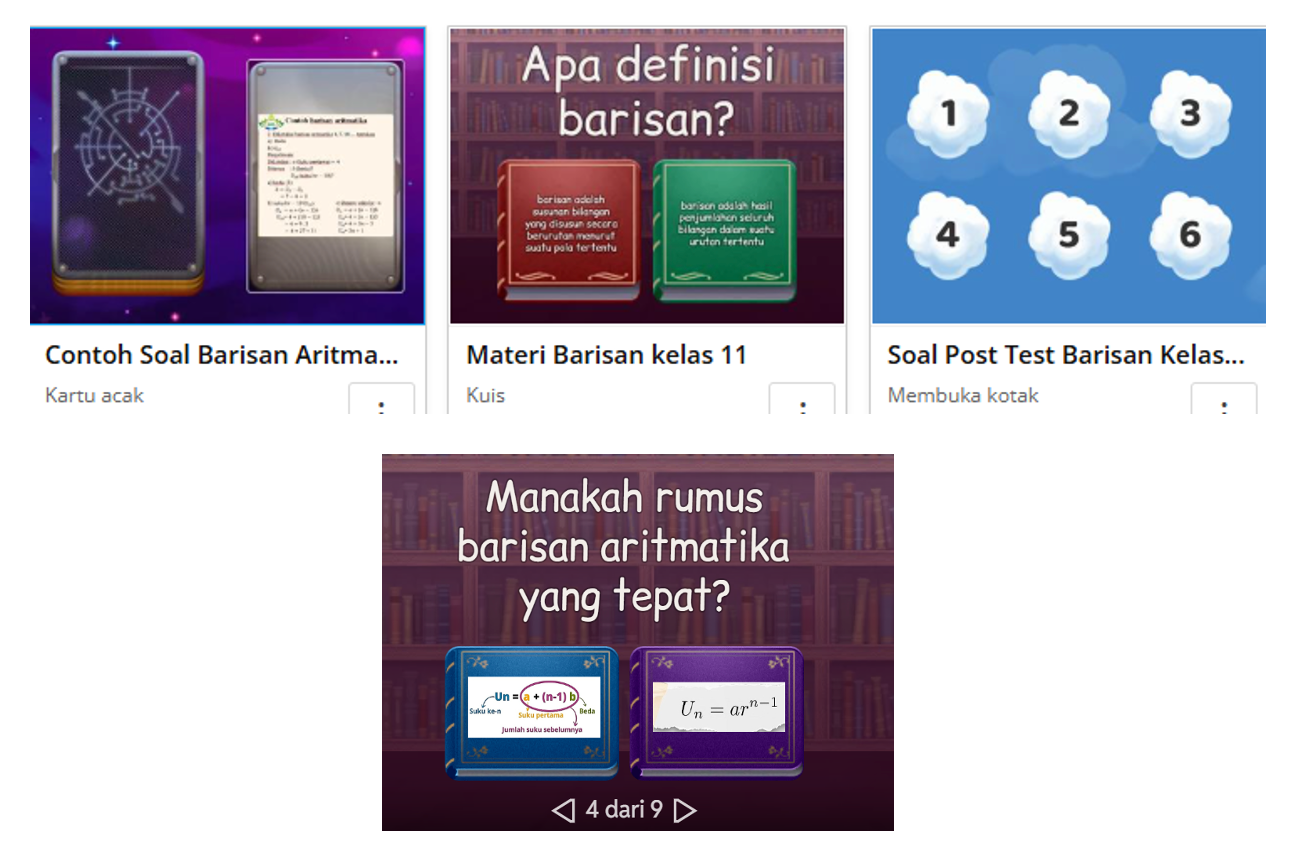
Mathematical divergent thinking ability is one of the important skills of the 21st century that plays a role in developing students' problem-solving abilities. However, the results of pre-research indicate that students still have difficulty in linking mathematical concepts to real situations and consider mathematics as a difficult subject. This condition indicates the need for innovative, interactive, and interesting learning media to stimulate students' divergent thinking abilities. This study aims to develop a web-based interactive learning media Wordwall that is feasible, interesting, and effective in improving students' mathematical divergent thinking abilities in arithmetic and geometric sequences. This study uses a Research and Development (R&D) approach with the ADDIE model which includes the stages of analysis, design, development, implementation, and evaluation. The research subjects were grade X students of SMA Ma'arif NU 5 Purbolinggo. Data were collected through interviews, questionnaires, and tests with a One Group Pretest-Posttest design. Data analysis was carried out descriptively quantitatively through feasibility, attractiveness, and effectiveness tests with N-Gain calculations. The results of the study showed that the developed media was declared feasible with an assessment of 90.17% from material experts, 97.2% from test experts, and 90.625% from media experts, with a validation of the media's feasibility reaching 96.42%. Student responses reached 92% with a very interesting category, and the N-Gain analysis of the posttest results showed an increase in the average score of students compared to the pretest with an N-Gain value of 0.53 in the small group test and 0.62 in the large group in the "Medium" category. This study recommends the Wordwall web as an innovative learning medium to foster creativity and improve divergent thinking skills.
Downloads
References
Akuba, S. F., Purnamasari, D., & Firdaus, R. (2020). Pengaruh Kemampuan Penalaran, Efikasi Diri dan Kemampuan Memecahkan Masalah Terhadap Penguasaan Konsep Matematika. JNPM (Jurnal Nasional Pendidikan Matematika, 4(1), 44. https://doi.org/10.33603/jnpm.v4i1.2827
Febriyanti, & Pratiwi, H. K. (2019). Analisis Kesulitan Belajar Matematika Siswa Ditinjau Dari Gaya Kognitif. Diskusi Panel Nasional Pendidikan Matematika, 5, 175–180. https://doi.org/10.31004/cendekia.v8i1.3063
Fitriati, & Lisa, S. (2015). Jurnal Pendidikan Matematika Jurnal Pendidikan Matematika. Jurnal Pendidikan Matematika, 2(3), 41–60.
Hasanah, S. R., & Abdussakir, A. (2024). Kemampuan Berpikir Divergen Siswa dalam Menyelesaikan Soal Open-Ended Barisan dan Deret Ditinjau dari Adversity Quotient. Jurnal Analisa, 10(1), 1–12. https://doi.org/10.15575/ja.v10i1.32597
Izzati, G. N., Waluya, S. B., & Mastur, Z. (2021). Kemampuan Berpikir Divergen Ditinjau Dari Math Anxiety Dan Gender Pada Pembelajaran Matematika. Primatika : Jurnal Pendidikan Matematika, 10(2), 69–78. https://doi.org/10.30872/primatika.v10i2.583
Listiana, T. A. I., Suneki, S., Suliyanto, J., & Poncowati, L. (2023). Analisis Dalam Menerapkan Media Interaktif Wordwall Pada Pembelajaran Tematik Di Kelas Iii Sdn Wonotingal. Didaktik : Jurnal Ilmiah PGSD STKIP Subang, 9(2), 5224–5232. https://doi.org/10.36989/didaktik.v9i2.1307
Mardiana, Y., Anggoro, B. S., & Andriani, S. (2024). Dampak Model Pembelajaran ECIR dan Adversity Quotient Terhadap Kemampuan Representasi Matematis dan Berpikir Kritis (Vol. 10, Issue 2, pp. 132–140). https://doi.org/10.52657/je.v10i2.2454
Munandar. (2009). Kemampuan Berpikir Kreatif Dalam Pembelajaran Matematika. Journal Of Education and Teaching, 4(1). https://doi.org/10.31004/cendekia.v8i1.2532
Nugraha, W., & Herdiana, D. (2024). Teori Belajar Konstruktivisme dan Implikasinya dalam Pembelajaran. Journal of Education, 1(28), 245–259. https://jurnaledu.com/index.php/je
Permana, S. P., & Kasriman, K. (2022). Pengaruh Media Pembelajaran Wordwall terhadap Motivasi Belajar IPS Kelas IV. Jurnal Basicedu, 6(5), 7831–7839. https://doi.org/10.31004/basicedu.v6i5.3616
Prayitno, E. (2016). Pengembangan Divergent Thinking (Berpikir Divergent) dan Kritis Melalui Soal Terbuka. Jurnal Kajian PendidiKan MateMatiKa, 3(1), 15–26. https://citeus.um.ac.id/cgi/viewcontent.cgi?article=1108&context=jpg
Rahmawati, F., Pamungkas, M. D., & Ardiyanto, B. (2021). No Title. In Jurnal Didactical Mathematics Pengembangan E-Modul Logika Matematika berbasis HOTS untuk Meningkatkan Divergent Thinking Skill (Vol. 3, pp. 68–74). https://doi.org/10.31949/dm.v3i2.1629
Rawlings, B. S., Chetwynd-Talbot, D., Husband, E., Nuttall, A., Quinn, E., Taggart, R., & Roome, H. E. (2025). Divergent thinking is linked with convergent thinking; implications for models of creativity. In Thinking and Reasoning. https://doi.org/10.1080/13546783.2025.2485059
Sudarsono, S., & Mulyani. (2021). Pengembangan Media Pembelajaran Game Interaktif Berbasis Aplikasi Web Wordwall Pada Pelajaran Matematika Materi Bilangan Ganjil Genap Kelas II SD. Jpgsd, 9(8), 3059–3068. https://ejournal.unesa.ac.id/index.php/jurnal-penelitian-pgsd/article/view/42148
Wafiqni, N., & Putri, F. M. (2021). Efektivitas Penggunaan Aplikasi Wordwall dalam Pembelajaran Daring (Online) Matematika pada Materi Bilangan Cacah Kelas 1 di MIN 2 Kota Tangerang Selatan. Elementar : Jurnal Pendidikan Dasar, 1(1), 68–83. https://doi.org/10.15408/elementar.v1i1.20375
Downloads
Published
How to Cite
Issue
Section
License
Copyright (c) 2026 This is an open-access under the CC-BY-SA license

This work is licensed under a Creative Commons Attribution-ShareAlike 4.0 International License.
Education and Talent Development Center of Indonesia (ETDC Indonesia)
e-mail: kognitif@gmail.com, website : https://etdc-indonesia.com

Kognitif: Jurnal Riset HOTS Pendidikan Matematika dengan Situs: https://etdci.org/journal/kognitif berlisensi Creative Commons Attribution-ShareAlike 4.0 International License






.png)