Development of AIR (Auditory, Intellectually, Repetition)- Based Ethnomathematics E-Modules to Improve Numeracy Literacy

https://doi.org/10.51574/kognitif.v5i4.3913
Keywords:
E-Module , Ethnomathematics , Numeracy Literacy , AIR Learning Mode , Plane GeometryAbstract
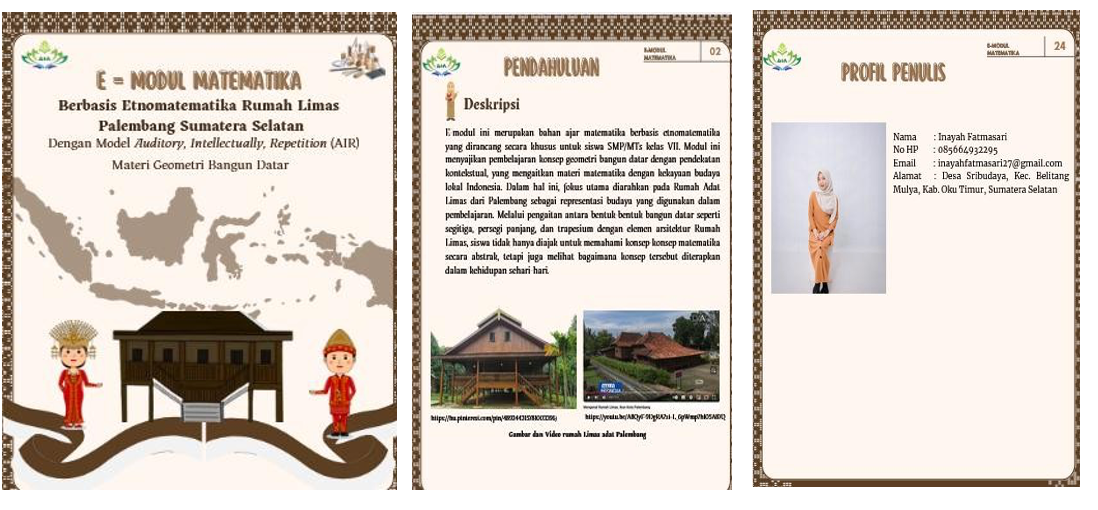
The numeracy literacy skills of Indonesian students remain relatively low, particularly in the geometry topics of two-dimensional shapes. One contributing factor is the limited availability of teaching materials that are relevant to local culture, as well as the lack of learning models that actively engage students. This study aims to develop an ethnomathematics-based mathematics e-module using the Auditory, Intellectually, Repetition (AIR) model to enhance students’ numeracy literacy. The research employed a Research and Development (R&D) design with the ADDIE model, which consists of the stages of analysis, design, development, implementation, and evaluation. The research subjects were seventh-grade students of SMP Negeri 3 Belitang Mulya and MTs Al Ihsan Kalirejo. The instruments used included expert validation questionnaires, student response questionnaires, and pretest–posttest assessments. The material expert validation produced an average score of 3.64 (very valid), and the media expert validation produced an average score of 3.84 (very valid). Student responses in both small- and large-group trials indicated a very attractive category, with average scores above 3.45. The effectiveness test showed an effect size of 0.81 (high category). These findings indicate that the ethnomathematics-based e-module using the AIR model is feasible, appealing, and effective for improving students’ numeracy literacy. This research provides an innovative teaching material alternative that is culturally relevant and can serve as a reference for developing more contextual mathematics learning.
Downloads
References
Herawati, N. S., & Muhtadi, A. (2020). Pengembangan Modul. Jurnal At-Tadbir STAI Darul Kamal NW Kembang kerang, 4(1), 57–69. http://ejournal.kopertais4.or.id/sasambo/index.php/atTadbir
Hidayati, N. A., & Darmuki, A. (2021). Penerapan Model Auditory Intellectually Repetition (AIR) untuk Meningkatkan Kemampuan Berbicara Pada Mahasiswa. Jurnal Educatio FKIP UNMA, 7(1), 252–259. https://doi.org/10.31949/educatio.v7i1.959
Info, A. (2020). Development of edutainment-based explosion box. 03(March), 57–65. https://doi.org/10.24042/ijsme.v3i1.5866
Laili, I., Ganefri, & Usmeldi. (2019). Efektivitas pengembangan e-modul project based learning pada mata pelajaran instalasi motor listrik. Jurnal Imiah Pendidikan dan Pembelajaran, 3(3), 306–315.
https://ejournal.undiksha.ac.id/index.php/JIPP/article/download/21840/13513
Lisnani, L., Indra Putri, R. I., Zulkardi, Z., & Somakim, S. (2022). Studi Etnomatematika: Rumah Limas Di Museum Negeri Sumatera Selatan Balaputera Dewa. Teorema: Teori dan Riset Matematika, 7(2), 351. https://doi.org/10.25157/teorema.v7i2.7585
Luthfiana, M., & Wahyuni, R. (2019). Penerapan Model Pembelajaran Auditory, Intellectually, Repetition (Air) terhadap Hasil Belajar Matematika Siswa. Jurnal Pendidikan Matematika (JUDIKA EDUCATION), 2(1), 50–57. https://doi.org/10.31539/judika.v2i1.701
Manurung, S. H. (2016). Upaya Meningkatkan Kreativitas Dan Hasil Belajar Siswa Dengan Menggunakan Model AIR (Auditory, Intellectually, Repetition) Pada Siswa Kelas VII MTs Negeri Rantauprapat. Jurnal EduTech, 2(1), 97–107.
Nurdyansyah, H. (2018). Pengembangan Modul Ajar Berbasis Kurikulum 2013.
Patriana, W. D., Sutama, S., & Wulandari, M. D. (2021). Pembudayaan Literasi Numerasi untuk Asesmen Kompetensi Minimum dalam Kegiatan Kurikuler pada Sekolah Dasar Muhammadiyah. Jurnal Basicedu, 5(5), 3413–3430. https://doi.org/10.31004/basicedu.v5i5.1302
Pratama, R. A., & Yelken, T. Y. (2024). Effectiveness of ethnomathematics-based learning on students’ mathematical literacy: a meta-analysis study. Discover Education, 3(1). https://doi.org/10.1007/s44217-024-00309-1
Rahmawati, N. D., Zakaria, M. H., & Endahwuri, D. (2023). Analisis Kemampuan Literasi Numerasi Dalam Menyelesaikan Masalah Program Linear Ditinjau Dari Kepribadian Siswa. JIPMat, 8(1), 113–123. https://doi.org/10.26877/jipmat.v8i1.15194
Reflina, R., & Rahma P, F. L. (2023). Analisis Kemampuan Literasi Numerasi Dalam Menyelesaikan Soal Programme for International Student Assessment (Pisa). Jurnal Karya Pendidikan Matematika, 10(1), 11. https://doi.org/10.26714/jkpm.10.1.2023.11-20
Riset, J., & Pendidikan, H. (2025a). Kognitif. 5(July), 994–1004. Riset, J., & Pendidikan, H. (2025b). Kognitif. 5(August), 1121–1131.
Sma, T., & Smk, M. A. (2023). Symmetry: Pasundan Journal of Research in Mathematics Learning and Education. Symmetry: Pasundan Journal of Research in Mathematics Learning and Education, 8(2), 216–225. https://doi.org/10.23969/symmetry.v8i2
Sulistiyowati, W. (2017). Buku Ajar Statistika Dasar. Buku Ajar Statistika Dasar, 14(1), 15–31. https://doi.org/10.21070/2017/978-979-3401-73-7
Supriadi, Sani, A., & Setiawan, I. P. (2020). Integrasi Nilai Karakter dalam Pembelajaran Keterampilan Menulis Siswa. YUME : Journal of Management, 3(3), 84–93. https://doi.org/10.2568/yum.v3i3.778
Syahid, L., Djabba, R., & Mukhlisa, N. (2021). Penerapan Model Pembelajaran Auditory Intellectually Repetition Untuk Meningkatkan Hasil Belajar Siswa Sekolah Dasar di Kabupaten Barru. Pinisi Journal of Education, 1(2), 2189–2198.
Widodo, S., Ladyani, F., Asrianto, L. O., Rusdi, Khairunnisa, Lestari, S. M. P., Wijayanti, D. R., Devriany, A., Hidayat, A., Dalfian, Nurcahyati, S., Sjahriani, T., Armi, Widya, N., & Rogayah. (2023). Metodologi Penelitian. In Cv Science Techno Direct.
Downloads
Published
How to Cite
Issue
Section
License
Copyright (c) 2025 Inayah Fatmasari, Siska Andriani, Novian Riskiana Dewi

This work is licensed under a Creative Commons Attribution-ShareAlike 4.0 International License.
Education and Talent Development Center of Indonesia (ETDC Indonesia)
e-mail: kognitif@gmail.com, website : https://etdc-indonesia.com

Kognitif: Jurnal Riset HOTS Pendidikan Matematika dengan Situs: https://etdci.org/journal/kognitif berlisensi Creative Commons Attribution-ShareAlike 4.0 International License






.png)