Standards for Facilities and Infrastructure in Building Quality Education in Senior High Schools

https://doi.org/10.51574/ijrer.v4i4.3891
Keywords:
Evaluation Model, Facilities, Inequality Evaluation, Infrastructure, Senior High SchoolsAbstract
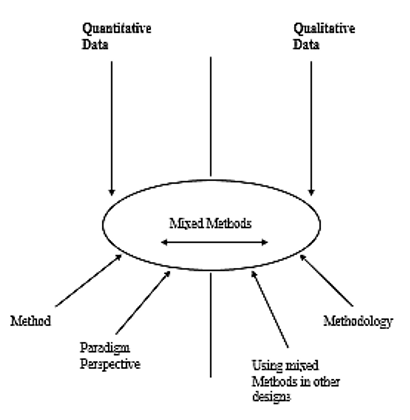
The intent of this study is to evaluate and measure the gaps in various components—design, installation, process, and product—so that it can provide information for improvement and development related to the Facilities and Infrastructure Standards in Building Educational Quality at Senior High School. The evaluation model approach used in this study is the Discrepancy Evaluation Model, developed by Malcolm Provus. This research method is a mixed method, not only qualitative, descriptive, and evaluative but also quantitative, and it combines both. The evaluation subjects were 12 people, including principals, vice principals, educators, parents, committees, and supervisors at Fatahillah Ciledug Senior High School, Tangerang City. The evaluation findings indicate that the gap or discrepancy in the design aspect is 70% according to the standard indicators of facilities and infrastructure, based on the reference criteria categorized as "High/Sufficiently Appropriate." For the installation aspect, the gap level is 75% on the standard indicators of facilities and infrastructure, which falls into the category of "High/Good." Additionally, there is a gap level of 37% on the same standard indicators, placing it in the category of "Medium/Good." For the process aspect, the gap level of 37% on the standard indicators of facilities and infrastructure with reference to the discrepancy/inequality reference criteria is included in the category of “Medium/Good,” and for the product aspect, the gap or inequality level is 39%. This rating is after consulting the reference criteria of discrepancy/inequality.
References
Agirdag, O., & Muijs, D. (2023). School leadership development and academic achievement: Effectiveness of the High Performing Schools programme. International Journal of Educational Research, 122, 102248. https://doi.org/10.1016/j.ijer.2023.102248
Al Waroi, M. N. A. L., Subroto, A., & Supriyadi, I. (2025). Indonesia's Demographics in the Digital Era: Opportunities and Challenges Towards a Golden Indonesia 2045. Asian Journal of Engineering, Social and Health, 4(1), 93-111. https://doi.org/10.46799/ajesh.v4i1.512
Bahri, S., Muhidin, S., Warta, W., Rahman, M. A., & Hayaturrohman, H. (2024). Comparative Study of Levels and Curriculum in Education Systems of Indonesia and Australia. Journal of Instructional and Development Researches, 4(6), 455-466. https://doi.org/10.53621/jider.v4i6.421
Barrett, P., Treves, A., Shmis, T., & Ambasz, D. (2019). The impact of school infrastructure on learning: A synthesis of the evidence.
Buabeng, I., & Amo-Darko, B. (2025). Curriculum reforms without foundation: The effects of inadequate preparation in curriculum reforms on Ghanaian teachers and the education system. Curriculum Perspectives, 1-15. https://doi.org/10.1007/s41297-025-00309-7
Coco, G., Lagravinese, R., & Resce, G. (2020). Beyond the weights: a multicriteria approach to evaluate inequality in education. The Journal of Economic Inequality, 18(4), 469-489. https://doi.org/10.1007/s10888-020-09449-4
Daly-Smith, A., Quarmby, T., Archbold, V. S., Corrigan, N., Wilson, D., Resaland, G. K., ... & McKenna, J. (2020). Using a multi-stakeholder experience-based design process to co-develop the Creating Active Schools Framework. International Journal of Behavioral Nutrition and Physical Activity, 17(1), 13. https://doi.org/10.1186/s12966-020-0917-z
Demerath, P., Kemper, S., Yousuf, E., & Banwo, B. (2022). A grounded model of how educators earn students’ trust in a high performing US urban high school. The Urban Review, 54(5), 703-732. https://doi.org/10.1007/s11256-022-00635-4
El Mhouti, A., Erradi, M., & Nasseh, A. (2018). Using cloud computing services in e-learning process: Benefits and challenges. Education and Information Technologies, 23(2), 893-909. https://doi.org/10.1007/s10639-017-9642-x
Fatayan, A., Ghani, A. R. A., & Safrul, S. (2023). Implementasi Tenaga Pendidik Dan Tenaga Kependidikan Untuk Menunjang Dalam Kesiapan Perbaikan Hasil Akreditasi Sekolah Di Madrasah Tsanawiyah Dan Madrasah Aliyah. JMM (Jurnal Masyarakat Mandiri), 7(3), 2166. https://doi.org/10.31764/jmm.v7i3.14360
Gil-Flores, J., Rodríguez-Santero, J., & Torres-Gordillo, J. J. (2017). Factors that explain the use of ICT in secondary-education classrooms: The role of teacher characteristics and school infrastructure. Computers in human behavior, 68, 441-449. https://doi.org/10.1016/j.chb.2016.11.057
Granatuma, H. F., & Fatayan, A. (2022). Analisis Prestasi Peserta Didik Dilihat dari Sistem Manajemen Berbasis Sekolah di Sekolah Dasar Islam. Jurnal Basicedu, 6(3), 4598–4504. https://doi.org/10.31004/basicedu.v6i3.2828
Helda, H., & Syahrani, S. (2022). National standards of education in contents standards and education process standards in Indonesia. Indonesian Journal of Education (INJOE), 2(3), 257-269. https://www.injoe.org/index.php/INJOE/article/view/32
Hwang, G. J., Wang, S. Y., & Lai, C. L. (2021). Effects of a social regulation-based online learning framework on students’ learning achievements and behaviors in mathematics. Computers and Education, 160, 104031. https://doi.org/10.1016/j.compedu.2020.104031
Ibrahim, Y. (2023). Relevance of School Facilities and Infrastructure Towards Implementing Education Policies. Journal of Social Transformation and Regional Development, 5(2), 61-67. https://penerbit.uthm.edu.my/ojs/index.php/jstard/article/view/15242
Irfansyah, M. A., Arismunandar, A., & Faridah, F. (2025). Strategi Kepemimpinan Kepala Sekolah Dalam Meningkatkan Prestasi Sekolah. PEDAGOGIKA, 16(1), 98-111. https://doi.org/10.37411/pedagogika.v16i1.3841
Khahro, S. H., & Javed, Y. (2022). Key challenges in 21st century learning: a way forward towards sustainable higher educational institutions. Sustainability, 14(23), 16080. https://doi.org/10.3390/su142316080
Khurniawan, A. W., Sailah, I., Muljono, P., Indriyanto, B., & Maarif, M. S. (2020). An analysis of implementing total quality management in education: Succes and challenging factors. International Journal of Learning and Development, 10(2), 44-59.
Leslie, H. H., Sun, Z., & Kruk, M. E. (2017). Association between infrastructure and observed quality of care in 4 healthcare services: a cross-sectional study of 4,300 facilities in 8 countries. PLoS medicine, 14(12), e1002464. https://doi.org/10.1371/journal.pmed.1002464
Masykur, Z. M. (2024). Pancasila Philosophy and Its Contribution to the Development of Golden Indonesia 2045. Jurnal DinamikA, 5(1), 81-104. https://doi.org/10.18326/dinamika.v5i1.81-104
Mogas, J., Palau, R., Fuentes, M., & Cebrián, G. (2022). Smart schools on the way: How school principals from Catalonia approach the future of education within the fourth industrial revolution. Learning Environments Research, 25(3), 875-893. https://doi.org/10.1007/s10984-021-09398-3
Mohzana, M., Murcahyanto, H., Fahrurrozi, M., & Supriadi, Y. N. (2023). Optimization of management of laboratory facilities in the process of learning science at high school. Jurnal Penelitian Pendidikan IPA, 9(10), 8226-8234. https://doi.org/10.29303/jppipa.v9i10.5249
Nabila, M., Ghani, A., & Rahman, A. (2022). Implementasi gaya kepemimpinan situasional kepala sekolah memasuki pembelajaran tatap muka. Jurnal Basicedu, 6(3), 5115-5123. https://doi.org/10.31004/basicedu.v6i3.3040
Nadeem, M. (2024). Distributed leadership in educational contexts: A catalyst for school improvement. Social Sciences & Humanities Open, 9, 100835. https://doi.org/10.1016/j.ssaho.2024.100835
Ntorukiri, T. B., Kirugua, J. M., & Kirimi, F. (2022). Policy and infrastructure challenges influencing ICT implementation in universities: a literature review. Discover Education, 1(1), 19. https://doi.org/10.1007/s44217-022-00019-6
Nurmayuli, N. (2022). The management of facilities and infrastructures in educational institution. IDARAH: Jurnal Pendidikan dan Kependidikan, 6(1), 87-102. https://journal.iainlhokseumawe.ac.id/index.php/idarah/article/view/92
Ozberk, O., Sharma, R. C., & Dagli, G. (2019). School teachers’ and administrators’ opinions about disability services, quality of schools, total quality management and quality tools. International Journal of Disability, Development and Education, 66(6), 598-609. https://doi.org/10.1080/1034912X.2019.1642455
Pasaribu, I. M., Gultom, A., & Pasaribu, N. M. (2020). School Facilities and Infrastructure Management System to Comply the National Standar for Education. In The 5th Annual International Seminar on Transformative Education and Educational Leadership (AISTEEL 2020) (pp. 447-453). Atlantis Press. https://doi.org/10.2991/assehr.k.201124.091
Pranita, D., Musthofa, B. M., Kusumastuti, H., & Haidlir, B. M. (2025). Transforming vocational higher education on the path toward Golden Indonesia 2045. Vocation, Technology & Education, 2(1). https://www.hksmp.com/journals/vte/article/view/806
Prieto, L. M., Aguero-Valverde, J., Flacke, J., & van Maarseveen, M. (2023). Evaluating school priorities for equal opportunity in admission to schools. Journal of School Choice, 17(3), 404-438. https://doi.org/10.1080/15582159.2022.2129334
Rizki, J. W. S. (2023). Social Media as Tools of Communication and Learning. QALAMUNA: Jurnal Pendidikan, Sosial, Dan Agama, 15(1), 391-404. https://doi.org/10.37680/qalamuna.v15i1.2429
Sain, Z. H., Aziz, A. L., & Agoi, M. A. (2024). Navigating Educational Challenges in Indonesia: Policy Recommendations for Future Success. Journal of Digital Learning and Distance Education, 3(4), 1038-1046. https://doi.org/10.56778/jdlde.v3i4.339
Scheider, S., Rosenfeld, S., Bink, S., & Lecina, N. (2023). Educational inequality due to lack of validity: A methodological critique of the Dutch school system. International Journal of Educational Research, 117, 102097. https://doi.org/10.1016/j.ijer.2022.102097
Sfakianaki, E., Matsiori, A., Giannias, D. A., & Sevdali, I. (2018). Educational leadership and total quality management: Investigating teacher leadership styles. International Journal of Management in Education, 12(4), 375-392. https://doi.org/10.1504/IJMIE.2018.095165
Sun, Z., Lin, C. H., Wu, M., Zhou, J., & Luo, L. (2018). A tale of two communication tools: Discussion‐forum and mobile instant‐messaging apps in collaborative learning. British Journal of Educational Technology, 49(2), 248-261. https://doi.org/10.1111/bjet.12571
Suryadi, F., Pasaribu, M. H., Siahaan, A. D., Sabri, A., & Lubis, Y. (2024). Peran manajemen pendidikan dalam mewujudkan sekolah berkualitas. Inspirasi Dunia: Jurnal Riset Pendidikan Dan Bahasa, 3(4), 92-107. https://doi.org/10.58192/insdun.v3i4.2617
Swai, C. Z., Nkaizirwa, J. P., Hugo, A. K., Mahenge, C. A., & Komba, P. S. (2022). Strengthening teacher education in Tanzania: Student-teachers’ and tutors’ satisfaction with college facilities and environment. Cogent Education, 9(1), 2070053. https://doi.org/10.1080/2331186X.2022.2070053
Tanjung, R., Hanafiah, H., Arifudin, O., & Mulyadi, D. (2022). Kompetensi Manajerial Kepala Sekolah dalam Meningkatkan Kinerja Guru. Journal of Educational Research, 1(1), 85–100. https://doi.org/10.56436/jer.v1i1.16
Timotheou, S., Miliou, O., Dimitriadis, Y., Sobrino, S. V., Giannoutsou, N., Cachia, R., ... & Ioannou, A. (2023). Impacts of digital technologies on education and factors influencing schools' digital capacity and transformation: A literature review. Education and information technologies, 28(6), 6695-6726. https://doi.org/10.1007/s10639-022-11431-8
Yanti, A. D., Syaifudin, M., Mulio, A. T., Hendra, D., & Marlina, E. (2024). Evaluasi kebijakan pendidikan: Strategi untuk meningkatkan kualitas dan keadilan dalam sistem pendidikan nasional. Journal of Islamic Education El Madani, 4(1), 47-52. https://doi.org/10.55438/jiee.v4i1.138
Zhang, Q., & Wu, F. (2016). State-of-the-art and future directions of smart learning. State-of-the-Art and Future Directions of Smart Learning (Y. Li et a, pp. 257–261). Lecture Notes in Educational Technology. https://doi. org/10.1007/978-981-287-868-7
Downloads
Published
How to Cite
Issue
Section
License
Copyright (c) 2025 Ridho Khairullah, Arum Fatayan, Moh Suryadi Syarif, Abd. Rahman A Ghani

This work is licensed under a Creative Commons Attribution-ShareAlike 4.0 International License.