Classroom Management Strategies in Creating a Joyful Learning Environment in Madrasah Tsanawiyah

https://doi.org/10.51574/ijrer.v5i2.4809
Keywords:
Class Management, Joyful Learning, Madrasah Tsanawiyah, Mixed MethodAbstract
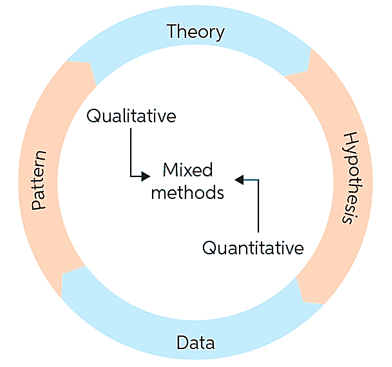
Rigid and monotonous classroom management at the Madrasah Tsanawiyah level often becomes an obstacle to achieving effective learning, which results in low student motivation and engagement in the classroom. This phenomenon requires a transformation of teacher strategies to create a more dynamic and supportive learning atmosphere. This study aims to analyze classroom management strategies implemented by teachers in creating a joyful learning environment and evaluate their impact on the academic climate at Madrasah Tsanawiyah. This study uses a mixed methods approach with a triangulation design. The research subjects involved students in grades 9.1 (n=15) and 9.2 (n=13) at MTs As'adiyah Cabenge. Quantitative data were collected through a questionnaire on student perceptions regarding learning comfort, while qualitative data were obtained through classroom observations and in-depth interviews with teachers regarding spatial arrangement techniques, interaction management, and positive reinforcement. The research findings indicate that the implementation of the Joyful Learning strategy through flexible seating arrangements, icebreaker integration, and a personalized approach can significantly increase student engagement scores in both classes. The results of the data analysis show that despite the relatively small number of students (a total of 28 students), a joy-centered classroom management approach is effective in reducing learning anxiety and increasing cohesion among students at MTs As'adiyah Cabenge. Theoretically, this study strengthens the literature on the urgency of affective-based classroom management in religious schools. Practically, this study provides strategic guidance for educators at Madrasah Tsanawiyah to design a hidden curriculum that prioritizes students' psychological well-being without neglecting academic discipline.
References
Abidin, Z., & Muhammad, N. (2024). Effective classroom management as a quick solution to improve student participation and motivation in the learning process. Zabags International Journal of Education, 2(2), 88-104. https://doi.org/10.61233/zijed.v2i2.22
Affandi, G. R., Megawati, F., Laili, N., Hadi, C., Nawangsari, N. A. F., & Rohmah, N. M. (2024). Strengthening teacher competence through joyful learning and innovative learning media training. Abdimas: Jurnal Pengabdian Masyarakat Universitas Merdeka Malang, 9(3), 661-674. https://doi.org/10.26905/abdimas.v9i3.12804
Akman, Y. (2020). The role of classroom management on confidence in teachers and educational stress. International Journal of Contemporary Educational Research, 7(1), 335-345. https://doi.org/10.33200/ijcer.687109
Andayanie, L. M., Adhantoro, M. S., Purnomo, E., & Kurniaji, G. T. (2025). Implementation of deep learning in education: Towards mindful, meaningful, and joyful learning experiences. Journal of Deep Learning, 47-56. https://doi.org/10.23917/jdl.v1i1.11157
Ashari, M. K., Rohmah, A. N., & Yudi, U. (2023). Joyful learning with app-based interactive quizzes in senior high schools in the digital era. Jurnal Cendekia Media Komunikasi Penelitian Dan Pengembangan Pendidikan Islam, 15(02), 210-228. https://doi.org/10.37850/cendekia.v15i02.528
Bentley-Edwards, K. L., Stevenson Jr, H. C., Thomas, D. E., Adams-Bass, V. N., & Coleman-King, C. (2020). Teaching scared: Pre-service teacher appraisals of racial stress, socialization and classroom management self-efficacy. Social psychology of education, 23(5), 1233-1257. https://doi.org/10.1007/s11218-020-09578-8
Bodea, A., & Trofimovich, P. (2024). ‘Transported into like another space’: second language learners’ perspectives on their experience of flow. The Language Learning Journal, 52(6), 710-722. https://doi.org/10.1080/09571736.2023.2249001
Damayanti, R. P., Rosyidah, R., Slamet, M., & Hartini, S. (2025). Penerapan Model Joyful Learning untuk Meningkatkan Motivasi Belajar. Jurnal Ilmiah Penelitian Mahasiswa, 3(5), 469-477. https://doi.org/10.61722/jipm.v3i5.1468
Di, W., Danxia, X., & Chun, L. (2019). The effects of learner factors on higher-order thinking in the smart classroom environment. Journal of Computers in Education, 6(4), 483-498. https://doi.org/10.1007/s40692-019-00146-4
Duan, S., Bissaker, K., & Xu, Z. (2024). Correlates of teachers’ classroom management self-efficacy: A systematic review and meta-analysis. Educational Psychology Review, 36(2), 43. https://doi.org/10.1007/s10648-024-09881-2
Dumitrescu, G. A. (2023). Social emotional learning for students and educators: A framework for pedagogy and classroom management. Journal of Educational Studies, 5(1), 63-99. https://publications.uadventus.ro/index.php/jes/article/view/172
Espelage, D. L., Robinson, L. E., & Valido, A. (2022). Transformative social-emotional learning and classroom management. Handbook of classroom management (pp. 375-387). Routledge. https://doi.org/10.4324/9781003275312-24
Harfitt, G. J., & Tsui, A. B. (2015). An examination of class size reduction on teaching and learning processes: A theoretical perspective. British Educational Research Journal, 41(5), 845-865. https://doi.org/10.1002/berj.3165
Hasfiana, H. (2025). Islamic Religious Education Learning Innovation: The Role and Challenges of the Joyful Learning Approach. ETDC: Indonesian Journal of Research and Educational Review, 4(4), 1168-1180. https://doi.org/10.51574/ijrer.v4i4.3764
Hod, Y. (2017). Future learning spaces in schools: Concepts and designs from the learning sciences. Journal of Formative Design in Learning, 1(2), 99-109. https://doi.org/10.1007/s41686-017-0008-y
Ismail, A. S., & Zulkurnain, N. S. Z. (2019). The Role of Environment As Third Teacher Towards The Development Of Educational Space For Dyslexic Children. International Journal of Built Environment and Sustainability, 6(2), 51-62. https://doi.org/10.11113/ijbes.v6.n2.356
Lee, J., & Choi, H. (2017). What affects learner's higher-order thinking in technology-enhanced learning environments? The effects of learner factors. Computers & Education, 115, 143-152. https://doi.org/10.1016/j.compedu.2017.06.015
Liu, J., Liu, Z., Wang, C., Li, X., & Xu, Y. (2024). Key factors and mechanisms affecting higher-order thinking skills of primary and secondary school students in the smart classroom environment. Current Psychology, 43(11), 9651-9664. https://doi.org/10.1007/s12144-023-05136-5
Lu, K., Yang, H. H., Shi, Y., & Wang, X. (2021). Examining the key influencing factors on college students’ higher-order thinking skills in the smart classroom environment. International Journal of Educational Technology in Higher Education, 18(1), 1. https://doi.org/10.1186/s41239-020-00238-7
Mahmudi, M. B., & Arief, A. (2025). Strategi Joyful Learning dalam Meningkatkan Motivasi, Keterlibatan dan Pemahaman Konsep Peserta Didik Pada Pembelajaran Pendidikan Agama Islam. QOSIM: Jurnal Pendidikan Sosial & Humaniora, 3(1), 96-103. https://doi.org/10.61104/jq.v3i1.662
Mandhana, D. M., & Caruso, V. (2023). Inducing flow in class activities to promote student engagement. Communication Education, 72(4), 348-366. https://doi.org/10.1080/03634523.2022.2158353
Murtiningsih, S., & Sujito, A. (2025). Reimagining the future of education: Inclusive pedagogies, critical intergenerational justice, and technological disruption. Policy Futures in Education, 14782103251341406. https://doi.org/10.1177/14782103251341406
Prayitno, M. A. (2023). Getting to know the term of class size reduction (CSR) and its positive impact in the world of education (historical review). Competitive: Journal of Education, 2(2), 103-112. https://doi.org/10.58355/competitive.v2i2.22
Rahimi, R. A., & Oh, G. S. (2024). Rethinking the role of educators in the 21st century: navigating globalization, technology, and pandemics. Journal of Marketing Analytics, 12(2), 182-197. https://doi.org/10.1057/s41270-024-00303-4
Ricita, D. A., Halim, A., & Sunarti, S. (2025). Exploring teachers’ and students’ perceptions of deep learning: Integrating meaningful, mindful, and joyful learning in ELT classrooms. Borneo Educational Journal (Borju), 7(2), 323-347. https://doi.org/10.24903/bej.v7i2.2078
Safitri, D., & Nurfuadi, N. (2025). The impact of good classroom management on students' attitudes in Islamic Religious Education learning. Attaqwa: Jurnal Ilmu Pendidikan Islam, 21(2), 121-133. https://doi.org/10.54069/attaqwa.v21i2.974
Scott, T. M., & Nakamura, J. (2022). Effective instruction as the basis for classroom management. In Handbook of classroom management (pp. 15-30). Routledge. https://doi.org/10.4324/9781003275312-4
Sholichah, B., & Fikri, M. A. (2024). Effective Strategies in Classroom Management for Islamic Religious Education to Enhance Student Discipline and Participation. Civic Engagement and Social Education Journal, 1(1), 496-500. https://journalakasha.com/cesej/article/view/281
Sutrina, D., Alim, J. A., & Anggriani, M. D. (2025). Konsep Joyful Learning dalam Meningkatkan Kualitas Pembelajaran. Journal Educational Research and Development| E-ISSN: 3063-9158, 2(1), 611-616. https://jurnal.globalscients.com/index.php/jerd/article/view/686
Ulfah, M., Dewi, F. A., & Yulianti, D. W. (2020). Teachers' Perspective Toward the Classroom Management of English Teaching-Learning Process in Big Class. Journal of Teaching dan Learning Research, 2(1), 7-16. https://doi.org/10.24256/jtlr.v2i1.1122
Wiyanti, E. T., Rochim, R., & Chisbulloh, C. (2025). Joyful learning dalam meningkatkan minat belajar pada siswa madrasah ibtidaiyah. Jurnal Ilmiah Penelitian Mahasiswa, 3(5), 702-714. https://doi.org/10.61722/jipm.v3i5.1520
Wolff, C. E., Jarodzka, H., & Boshuizen, H. P. (2017). See and tell: Differences between expert and novice teachers’ interpretations of problematic classroom management events. Teaching and teacher education, 66, 295-308. https://doi.org/10.1016/j.tate.2017.04.015
Yuniar, L. E., & Suwandari, L. (2026). Classroom Management to Overcome Physical Violence Based On Joyful Learning. At Turots: Jurnal Pendidikan Islam, 338-344. https://journal.stitmadani.ac.id/index.php/JPI/article/view/1130
Downloads
Published
How to Cite
Issue
Section
License
Copyright (c) 2026 Fitri Fitri, Muhammad Hasbi, Ratna Ratna, Nadia Sudirman, Muh. Syakur, Dirmansyah Dirmansyah, Husnul Khatimah Annisa, Zahriyani Zahriyani, Muh. Fahri Khaeruddin

This work is licensed under a Creative Commons Attribution-ShareAlike 4.0 International License.