Effect of Culturally Responsive Teaching through The Garut Dodol Context on Mathematical Problem-Solving Ability

https://doi.org/10.51574/kognitif.v6i2.4780
Keywords:
Dodol Garut , Composite Functions , Culturally Responsive Teaching , Local Culture , Mathematical Problem SolvingAbstract
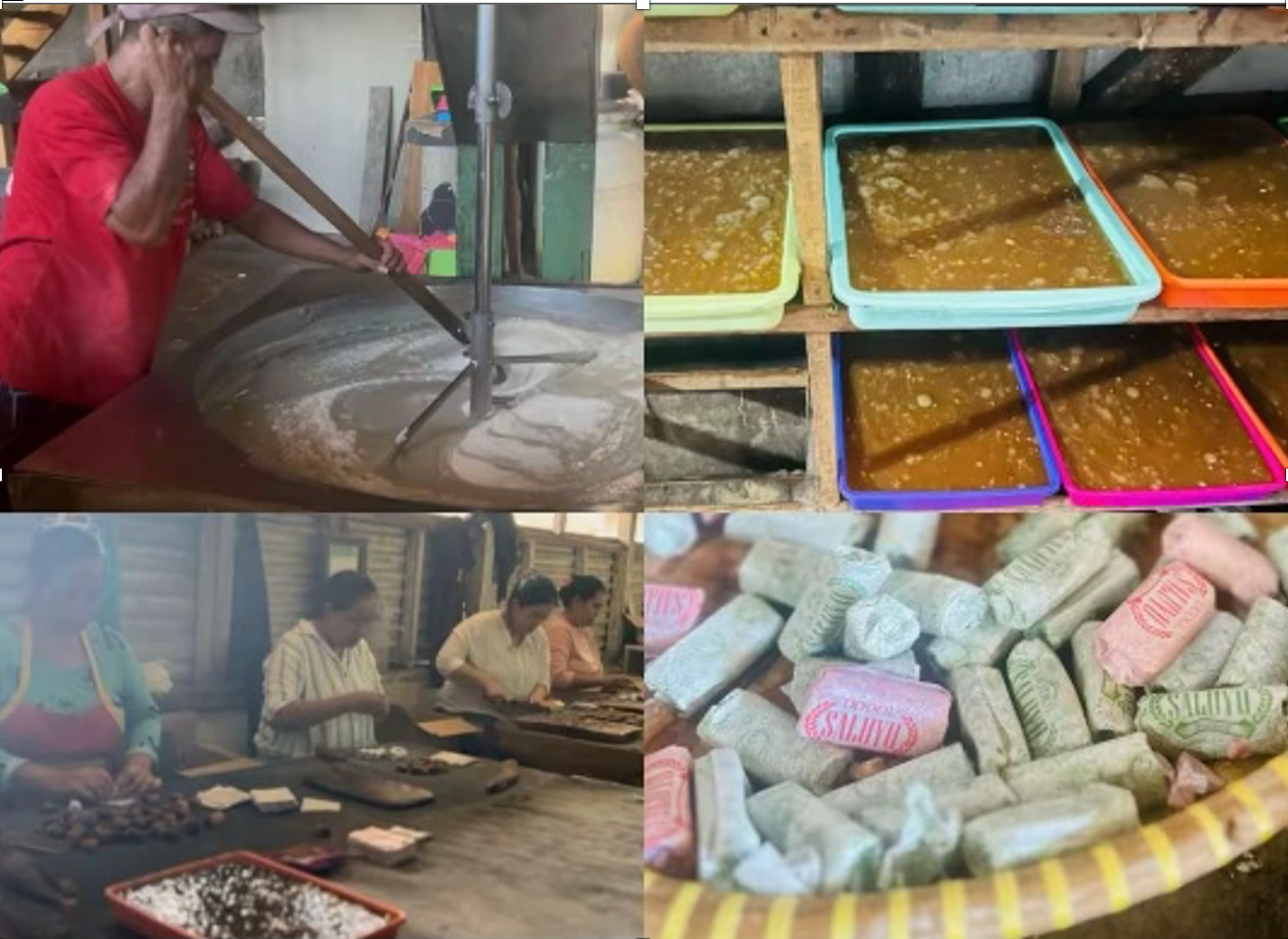
The low level of students’ mathematical problem solving ability remains a significant challenge in mathematics education, particularly when instructional processes are abstract and fail to connect mathematical concepts with cultural contexts relevant to students’ daily lives. In this regard, the traditional food Dodol Garut is utilized as an ethnomathematical context, as its production process involves sequential and interrelated stages that represent the concept of composite functions and align with students’ real-life experiences. This study aims to examine: (1) the effect of the Culturally Responsive Teaching (CRT) approach through the context of Dodol Garut on students’ mathematical problem solving ability, and (2) the percentage distribution of students’ mathematical problem solving ability across high, medium, and low categories after the implementation of the CRT approach.This research employed a quasi-experimental method with a Posttest-Only Control Group Design. The population consisted of eleventh-grade students at SMAN 18 Garut. Using cluster random sampling, two classes were selected: class XI-4 as the experimental group and class XI-5 as the control group. The research instrument was a mathematical problem-solving test based on the indicators proposed by Krulik and Rudnick, which had been validated in terms of content validity and reliability. Data were analyzed using the Shapiro–Wilk normality test, the Mann–Whitney U test, and effect size calculation. The results indicated a Z value of 2.149 with an effect size (η²) of 0.0624, which falls into the medium category. Descriptively, 67.57% of students were categorized as high, 29.73% as medium, and 2.70% as low in their mathematical problem solving ability. The novelty of this study lies in the integration of traditional food context within CRT-based mathematics learning.
Downloads
References
Asri, A., Kurniati, N., Triutami, T. W., & Turmuzi, M. (2023). Analisis Kemampuan Pemecahan Masalah Pada Soal Cerita Matematika Materi Sistem Persamaan Linier Dua Variabel ( SPLDV ) Ditinjau dari Minat Belajar Siswa Kelas VIII SMPN 1 Masbagik Tahun Ajaran 2022 / 2023. Jurnal Ilmiah Profesi Pendidikan, 8(1b), 742–751. https://doi.org/10.29303/jipp.v8i1b.1305
Astutik, S. R. P., Siswanto, J., & Kaltsum, U. (2022). Pengembangan Asesmen Literasi Saintifik pada Pokok Bahasan Dinamika Hukum Newton. Jurnal Lontar Physics Today, 1(2), 66–74. https://doi.org/10.26877/lpt.v1i2.10282
Balqis, A. S., Badarudin, & Mulyani, W. D. (2025). Penerapan model Inquiry learning Dengan Pendekatan Crt Dan Gaya Belajar Untuk Meningkatkan Hasil Belajar Ipas Kelas V. Pendas : Jurnal Ilmiah Pendidikan Dasar, 10(02), 2548–6950. https://doi.org/10.23969/jp.v10i02.27697
Cohen, J. (1988). Statistical power analysis for the behavioral sciences (2nd ed.). Lawrence Erlbaum Associates.
Cyntya, G. W., Amirul, B., & Putra, A. S. G. (2025). Penerapan Pendekatan Culturally Responsif Teaching dalam Pembelajaran Berbasis Proyek untuk Meningkatkan Hasil Belajar Siswa. PTK: Jurnal Tindakan Kelas, 5(2), 514–525. https://doi.org/10.53624/ptk.v5i2.588
Gay, G. (2010). Culturally Responsive Teaching Theory, Research, and Practice (2nd ed.).
Hernandez, C. M., Morales, A. R., & Shroyer, M. G. (2013). The development of a model of culturally responsive science and mathematics teaching. Cultural Studies of Science Education, 8(4), 803–820. https://doi.org/10.1007/s11422-013-9544-1
Krulik, S., & Rudnick, J. A. (1988). Problem-Solving: A Handbook for Elementary School Teachers. Boston : Allyn & Boston Inc.
Kurniawati, A., & Mawardi. (2024). Implementasi Pendekatan Culturally Responsive Teaching Terintegrasi Model Teams Games Tournament Untuk Meningkatkan Keterampilan Kolaborasi Pada Matematika Siswa Kelas 4 Sd. SCIENCE : Jurnal Inovasi Pendidikan Matematika Dan IPA, 4(3), 281–290. https://doi.org/10.51878/science.v4i3.3240
Mustaqfiroh, Nizaruddin, Kurniawati, A., & Muhtarom. (2024). Efektivitas Model Problem Based Learning berbasis Culturally Responsive Teaching untuk meningkatkan Kemampuan Literasi Matematis. Proximal: Jurnal Penelitian Matematika Dan Pendidikan Matematika, 7(2), 937–944. https://doi.org/10.30605/proximal.v7i2.4073
OECD. (2023). PISA 2022 Results The State of Learning and Equity in Education. In Factsheets: Vol. I. OECD Publishing. https://doi.org/10.1787/53f23881-en.
Purwaning Tyas, A. S. (2017). Identifikasi Kuliner Lokal Indonesia dalam Pembelajaran Bahasa Inggris. Jurnal Pariwisata Terapan, 1(2), 38. https://doi.org/10.22146/jpt.24970
Rachmawati, R. A., Hidayatullah, M. I., Widhyastuti, K. L., & Udayani, N. W. A. U. (2025). The Role of Philosophy of Science in Addressing the Challenges of Curriculum Misalignment and Lack of Interactive Learning Activities in Primary Schools. 1(1), 1–9. https://doi.org/10.58737/jpled.v6i1.869
Ray, S. A., Harahap, S. R., & Kartika, R. (2024). Pengaruh Pendekatan CRT Terhadap Pemahaman Konsep Matematis Siswa Pada Materi Bunga Majemuk Kelas XI. Journal on Education, 07(01), 7976–7982. https://doi.org/10.31004/joe.v7i1.7607
Rhamayanti, Y., Harahap, A. N., & Hasibuan, Y. A. W. (2025). Model Inquiry Learning: Solusi Peningkatan Pemecahan Masalah Dan Aktivitas Belajar Matematika Siswa Sma. EKSAKTA : Jurnal Penelitian Dan Pembelajaran MIPA│39, 10(2), 39–47. https://doi.org/10.31604/eksakta.v10i2.39-47
Saputri, L., & Mardianti. (2025). Desain Penelitian Quasi Eksperimen Dalam Penelitian Pendidikan : Kajian Pustaka. Jurnal Serunai Matematika, 17(2), 78–87. http:///doi.org/10.37755/jsm.v17i2.1771
Sari, I. T. ., Hermina, T., & Susilawati, W. (2020). The Influence of Promotion Mix on Consumer Buying Decision: A Case Study of Bestari Brands-Dodol Garut Producer. 117(Gcbme 2018), 28–32. https://doi.org/10.2991/aebmr.k.200131.007
Sausanti, S., Anggraini, A. E., & Saadah, H. (2024). Implementasi Etnomatematika Melalui Makanan Tradisional Berbasis Pendekatan Culturally Responsive Teaching Materi Balok Dan Kubus Kelas Iv Sdn Ciptomulyo 1 Malang. Jurnal Pembelajaran, Bimbingan, Dan Pengelolaan Pendidikan, 4(8), 6. https://doi.org/10.17977/um065.v4.i8.2024.6
Septikasari, R., & Frasandy, R. N. (2018). Keterampilan 4C Abad 21 Dalam Pembelajaran Pendidikan Dasar. Jurnal Tarbiyah Al-Awlad, 8(2), 112–122. https://ejournal.uinib.ac.id/jurnal/index.php/alawlad/article/view/1597
Sesa, S. A., Tanujaya, B., & Firmansyah, F. (2022). Analisis Kemampuan Pemecahan Masalah Matematika Siswa Smp Berdasarkan Kriteria Krulik Dan Rudnick. Jurnal THEOREMS (The Original Research of Mathematics), 6(2), 1–12. https://doi.org/10.31949/th.v6i2.3466
Sianturi. (2025). Uji Normalitas Sebagai Syarat Pengujian Hipotesis Test Normality As A Condition Of Hypothesis Testing. Jurnal Pembelajaran Dan Matematika Sigma (Jpms), 11(1), 1–14. https://doi.org/10.36987/jpms.v10i2.5881
Sihombing, S., Silalahi, H. R., Sitinjak, J. R., & Tambunan, H. (2021). Analisis Minat dan motivasi Belajar , Pemahaman Konsep dan Kreativitas Siswa terhadap hasil Belajar Selama Pembelajaran Dalam Jaringan. Jurnal Pendidikan Matematika : Judika Education, 4(1), 41–55. http:///doi.org/10.31539/judika.v4i1.2061
Solihin, D., & Hidayat, A. (2025). Pendekatan Culturally Responsive Teaching (CRT) Terhadap Kemampuan Matematis. IMEJ: Innovative Mathematics Education Journal, 1(1), 1–8. https://doi.org/10.24114/jfi.v7i1.72405
Talib, A., & Ihsan, H. (2025). Pengaruh Penerapan Model Pembelajaran Inkuiri terhadap Kemampuan Pemecahan Masalah Matematis Siswa Kelas VIII. Issues in Mathematics Education, 9(1), 51–63. https://doi.org/10.35580/imed.v9i1.6693
Tomczak, M., & Tomczak, E. (2014). The need to report effect size estimates revisited. An overview of some recommended measures of effect size. 1(21), 19–25. https://tss.awf.poznan.pl/pdf-188960-110189?filename=The need to report effect.pdf
Yulia, I., Medika, G. H., & Kunci, K. (2024). Hubungan Motivasi Terhadap Hasil Belajar Matematika Peserta Didik. EDUSAINS : Journal of Education and Science |, 2(1), 28–36. https://10.0.223.167/eduspirit.v1i1.17
Yulita, A., & Samosir, K. (2024). Kognitif. Kognitif Jurnal Riset HOTS Pendidikan Matematika, 4(1), 225–245. https://doi.org/10.51574/kognitif.v4i1.1359
Downloads
Published
How to Cite
Issue
Section
License
Copyright (c) 2026 This is an open-access under the CC-BY-SA license

This work is licensed under a Creative Commons Attribution-ShareAlike 4.0 International License.
Education and Talent Development Center of Indonesia (ETDC Indonesia)
e-mail: kognitif@gmail.com, website : https://etdc-indonesia.com

Kognitif: Jurnal Riset HOTS Pendidikan Matematika dengan Situs: https://etdci.org/journal/kognitif berlisensi Creative Commons Attribution-ShareAlike 4.0 International License






.png)