Analysis of Students' Mathematical Representation Ability in Terms of Adversity Quotient

https://doi.org/10.51574/kognitif.v6i1.3245
Keywords:
Adversity Quotient (AQ) , Mathematical Representation Ability , Climbers, Campers, QuittersAbstract
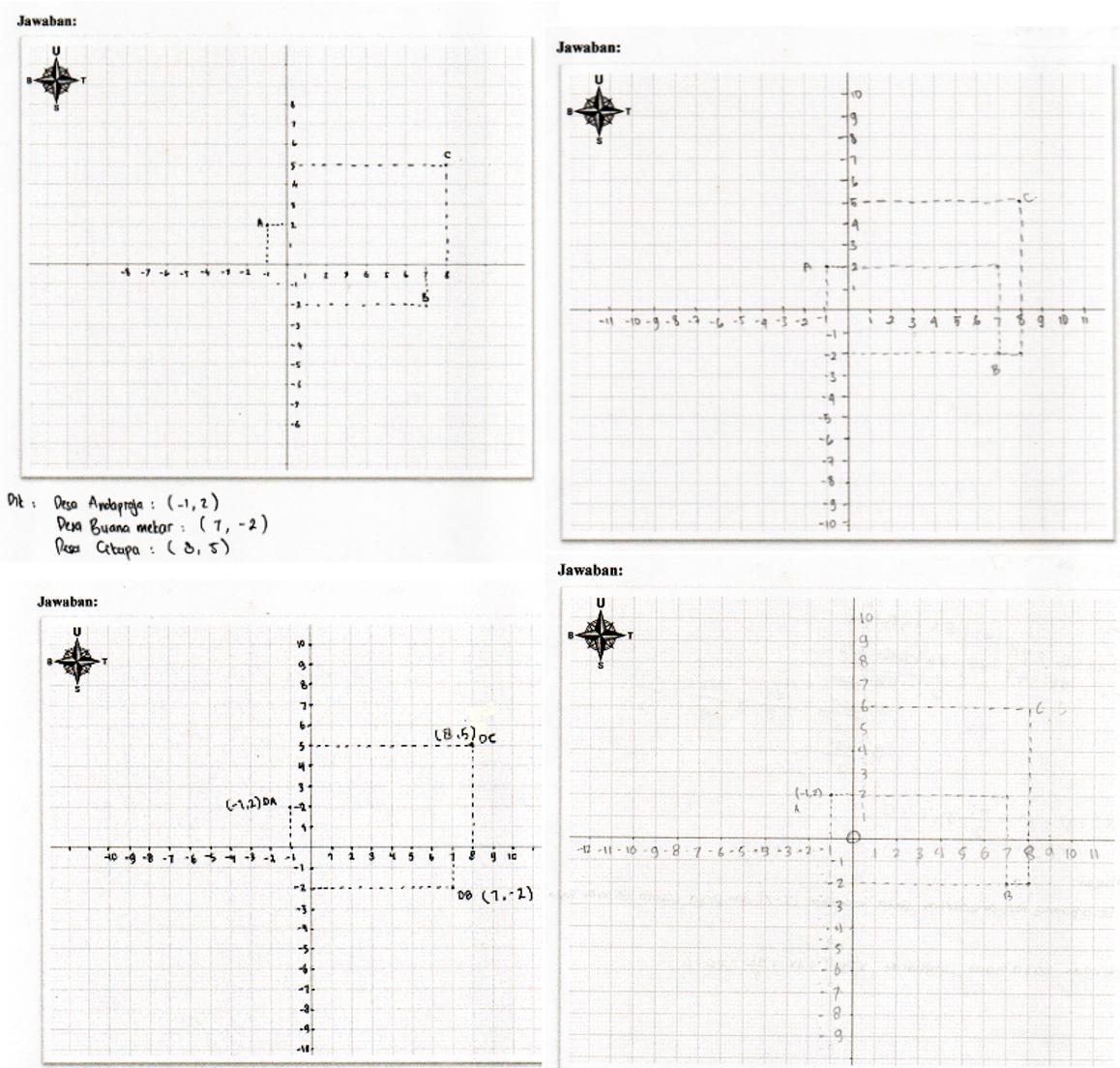
This study aims to describe students' mathematical representation abilities in terms of Adversity Quotient (AQ). The study used a qualitative method with a descriptive approach. Four students of grade XI MIPA MA Serba Bakti were selected purposively based on the results of the AQ questionnaire to represent the categories of Climbers, Campers–Climbers, Campers, and Quitters–Campers. The research instruments were an AQ questionnaire, a mathematical representation ability test, and a validated interview. Data were analyzed using the Miles and Huberman model which includes data reduction, data presentation, and conclusion drawing. The results showed that the higher the AQ category, the more complete, detailed, and correct the mathematical representation produced. Conversely, the lower the AQ category, the mathematical representation tends to be incomplete, incoherent, or produce incorrect answers. This finding confirms the relationship between AQ and mathematical representation abilities. Theoretically, this study strengthens the study of the role of non-cognitive factors in mathematics learning, while pedagogically its implications encourage teachers to consider AQ factors in designing learning strategies.
Downloads
References
Andrew J. Martin, H. W. M. (2006). Academic resilience and its psychological and educational correlates: A construct validity approach. Psychology in the Schools, 43, 267–281. https://doi.org/10.1002/pits.20149
Andriani, N. L., & Fauziyah, N. (2024). Analisis Kemampuan Representasi Matematis Siswa Ditinjau Dari Kecemasan Matematika [Analysis Of Students ’ Mathematical Representation Ability In Terms Of Math Anxiety]. 8(2), 201–212. https://doi.org/10.19166/johme.v8i2.8357
Artiah, & Untarti, R. (2017). Pengaruh Model Reciprocal Teaching terhadap Kemampuan Representasi Matematis Siswa Kelas VII SMP Negeri 6 Purwokerto. AlphaMath, 3(1), 1–11. https://doi.org/10.30595/alphamath.v3i1.1929
Atikasuri, A., & Kusaeri, A. (2024). Kognitif. 4(May), 353–367. https://doi.org/10.51574/kognitif.v4i1.1486
Charismana, D. S., Retnawati, H., & Dhewantoro, H. N. S. (2022). Motivasi Belajar Dan Prestasi Belajar Pada Mata Pelajaran Ppkn Di Indonesia: Kajian Analisis Meta. Bhineka Tunggal Ika: Kajian Teori Dan Praktik Pendidikan PKn, 9(2), 99–113. https://doi.org/10.36706/jbti.v9i2.18333
Crede, M., Tynan, M., Harms, P. D. (2017). Much ado about grit: A meta-analytic synthesis of the grit literature. https://psycnet.apa.org/doi/10.1037/pspp0000102
Creswell John W., C. J. D. (2014). Research Design, Qualitative, Quantitative, and Mixed Methods Approaches. In Writing Center Talk over Time: A Mixed-Method Study. https://doi.org/10.4324/9780429469237
Dinapoli,J., & Miller, E. K. (2022). Recognizing, supporting, and improving student perseverance in mathematical problem-solving: The role of conceptual thinking scaffolds. The Journal of Mathematical Behavior. https://doi.org/10.1016/j.jmathb.2022.100965
Duval, R. (2006). A Cognitive Analysis of Problems of Comprehension in a Learning of Mathematics. Educational Studies in Mathematics, 61, 103–131. https://doi.org/10.1007/s10649-006-0400-z
Goldin, G. (2002). Representation in Mathematical Learning and Problem Solving. ResearchGate.
Heng, T. (2024). Improving Students ’ Visual Representation and Conceptual Understanding to Overcome Learning Difficulties in Geometry. 8(2), 91–104. https://doi.org/10.12928/ijeme.v8i2.29834
Husain, D. S., Darhim, D., & Kusnandi, K. (2022). Kemampuan Representasi Matematis Ditinjau Dari Adversity Quotient Dan Self-Efficacy. AKSIOMA: Jurnal Program Studi Pendidikan Matematika, 11(4), 3684. https://doi.org/10.24127/ajpm.v11i4.5903
Kaya, S. (2022). Math Mindsets and Academic Grit : How Are They Related to Primary Math Achievement ? 10(3), 298–309. https://doi.org/10.30935/scimath/11881
Klara, B., Prihatin, I., & Haryadi, R. (2021). Analisis Kemampuan Representasi Matematis Berdasarkan Gaya Belajar Siswa Pada Materi Operasi Hitung Bentuk Aljabar Di Smp Negeri 1 Sengah Temila. Jurnal Prodi Pendidikan Matematika (JPMM), 3(2), 303–313. https://jurnal.mipatek.upgripnk.ac.id/index.php/JPPM/article/view/143
Kusgiarohmah, P. A., & Rahardjo, S. (2022). Kemampuan Representasi Simbolik Mahasiswa Calon Guru dalam Menyelesaikan Masalah Matematika Ditinjau dari Perbedaan Gender. 06(01), 560–571. https://doi.org/10.31004/cendekia.v6i1.1135
Lina, L. R. H. (2024). Analisis Kemampuan Representasi Matematis Siswa Berdasarkan Tahapan Krulik dan Rudnick Ditinjau dari Adversity Quotient. Edu Cendikia: Jurnal Ilmiah Kependidikan, 4(01), 128–135. https://doi.org/10.47709/educendikia.v4i01.4161
Marina, R., & Susanti, E. (2025). Analisis Kemampuan Representasi Matematis Siswa SMP pada Materi Perbandingan Menggunakan Konteks Jajanan Analysis of Junior High School Students ’ Mathematical Representation Abilities on Comparison Material Using the Context of Snacks. 13(1), 31–46. https://doi.org/10.29100/jp2m.v11i2.7591
Mataheru, E. E. (2024). Analisis Kemampuan Representasi dan Koneksi Matematis Peserta Didik dalam Menyelesaikan Soal Kubus dan Balok. Kognitif: Jurnal Riset HOTS Pendidikan Matematika, 4(4), 1780–1797. https://doi.org/10.51574/kognitif.v4i4.2739
NCTM, (2000). Program: The National Council of Teachers of Mathematics. The Mathematics Teacher, 43(5), 224–231. https://doi.org/10.5951/mt.43.5.0224
Nuraeni, Murtiadi Awaluddin, & Mutakallim. (2022). Adversity Quotient, Self Efficacy dan Lingkungan Bagi Kegiatan Kewirausahaan Mahasiswa Berbasis Teknologi. Al-Mashrafiyah: Jurnal Ekonomi, Keuangan, Dan Perbankan Syariah, 6(1), 81–93. https://doi.org/10.24252/al-mashrafiyah.v6i1.27973
Nuraini, I., Lubis, D. I., & Wandini, R. R. (2024). Analisis Kemampuan Representasi Visual Siswa Sekolah Dasar pada Pembelajaran Matematika. 8, 2211–2216. https://doi.org/10.31004/jptam.v8i1.12728
Program, J., & Pendidikan, S. (2024). Pre - service teachers ’ symbolic - visual representation skills in adding and subtracting fractions Universitas Negeri Malang , Malang , Indonesia. 13(3), 1064–1084. https://doi.org/10.1007/s10649-006-0400-z
Purnamasari, L. (2018). Pengelompokan Kepribadian Manusia Ditinjau Dari Adversity Quotient (Aq),Studi Kasus Mahasiswa Fasilkom Kelas Paralel Semester Ganjil Tahun Akademik 2017/2018 Sesi 10 Mata Kuliah Business Englishdalam Mengatasi Masalah Bahasa Inggris. 4(1), 47. www.dictionary.cambridg.org
R. Lesh, Thomas R. Post, M. B. (1987). Representations and translations among representations in mathematics learning and problem solving. In Problems of Representation in the Teaching and Learning of Mathematics. Experts@Minnesota, 33–40. https://experts.umn.edu/en/publications/representations-and-translations-among-representations-in-mathema/
Rahman, H. A., Bachri, B. S., & Maureen, I. Y. (2024). Instrumen Tes untuk Mengukur Keterampilan Berpikir Kritis pada Materi Statistika. 08, 1472–1480. https://doi.org/10.31004/cendekia.v8i2.3343
Rif, M., & Imama, K. (2024). Role of visual abilities in mathematics learning : An analysis of conceptual representation. 15(1), 87–97. https://doi.org/10.24042/ajpm.v15i1.22406
Septianingtyas, N., & Jusra, H. (2020). Kemampuan Pemecahan Masalah Matematis Peserta Didik Berdasarkan Adversity Quotient. Jurnal Cendekia : Jurnal Pendidikan Matematika, 4(2), 657–672. https://doi.org/10.31004/cendekia.v4i2.263
Soegiyono. (2015). Metode Penelitian Kuantitatif Kualitatif dan R&D (pp. 1–346).
Stoltz, P. G. (2005). The Most Important Factor iin Achieving Success.,Adversity Quotient, Turning Obstacles into Opportunities.
Sugiarti, T., Suwito, A., & Ummah, F. R. (2022). Representasi Matematis Siswa dalam Menyelesaikan PISA Konten Space and Shape ditinjau dari Adversity Quotient. PYTHAGORAS : Jurnal Matematika dan Pendidikan Matematika, 17(2), 441-450. https://doi.org/10.21831/pythagoras.v17i2.47686
Downloads
Published
How to Cite
Issue
Section
License
Copyright (c) 2026 Tyas Rahayu Wijayani, Ipah Muzdalipah, Depi Setialesmana

This work is licensed under a Creative Commons Attribution-ShareAlike 4.0 International License.
Education and Talent Development Center of Indonesia (ETDC Indonesia)
e-mail: kognitif@gmail.com, website : https://etdc-indonesia.com

Kognitif: Jurnal Riset HOTS Pendidikan Matematika dengan Situs: https://etdci.org/journal/kognitif berlisensi Creative Commons Attribution-ShareAlike 4.0 International License






.png)