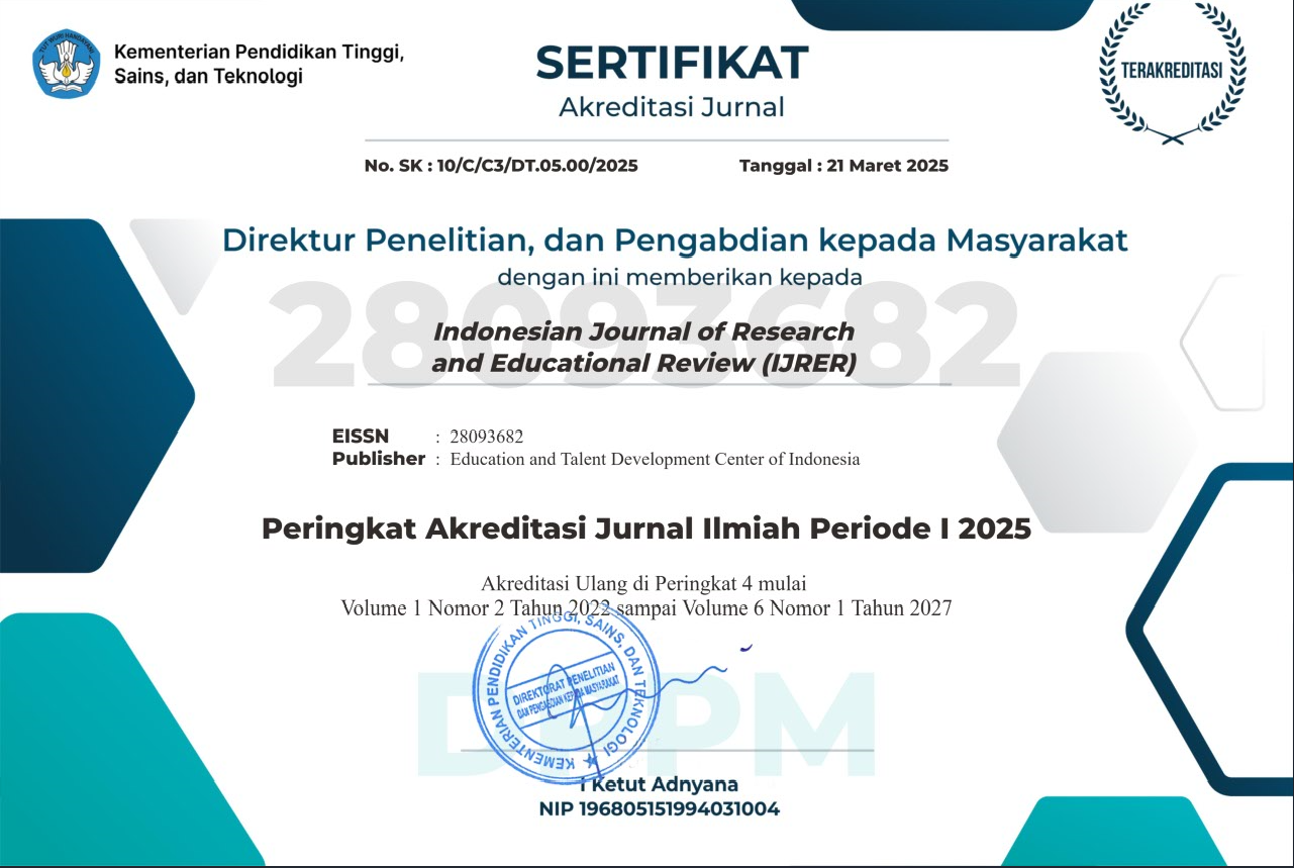
ACREDITATION
Online learning is becoming increasingly important for several reasons. Especially during the pandemic, since pandemic COVID-19, the teaching and learning process has changed from the traditional face-to-face classroom into online distance learning. Online education is a definite trend that will continue to grow in the years ahead. Online teaching and learning methods can be divided into two groups: synchronous and asynchronous learning. In this case, we will explain the differences and provide some advantages and disadvantages of synchronous and asynchronous learning. Synchronous learning is a learning-oriented interaction that is facilitated by direct, real-time instructions and usually scheduling. Synchronous online learning is commonly facilitated by media such as video conferencing, telecom, live chat, and live streaming. Asynchronous learning means that the learning activity isn't done directly between teachers and learners. The materials have been prepared by the teachers to be accessible to the students. Asynchronous online learning methods involve independent curriculum, streaming video, virtual libraries, and college posts. Synchronous and asynchronous learning use electronic devices, particularly computers and the Internet.
Fadhilah, M., Sutrisna, S. ., Muslimah, S. N., & Ihsan, M. T. . (2021). An Exploring Methods in Online Learning: Synchronous and Asynchronous. ETDC: Indonesian Journal of Research and Educational Review , 1(1), 74–81. https://doi.org/10.51574/ijrer.v1i1.55
Downloads
Download data is not yet available.
- Ahmed, V., & Opoku, A. (2021). Technology supported learning and pedagogy in times of crisis: the case of COVID-19 pandemic. Education and Information Technologies, 1-41. https://doi.org/10.1007/s10639-021-10706-w
- Adiyoso, W. (2021). Social distancing intentions to reduce the spread of COVID-19: The extended theory of planned behavior. BMC public health, 21(1), 1-12. https://doi.org/10.1186/s12889-021-11884-5
- Boghian, I., Cojocariu, V. M., Popescu, C. V., & Mâţӑ, L. (2019). Game-based learning. Using board games in adult education. Journal of Educational Sciences & Psychology, 9(1).
- Choi, J. J., Robb, C. A., Mifli, M., & Zainuddin, Z. (2021). University students’ perception to online class delivery methods during the COVID-19 pandemic: A focus on hospitality education in Korea and Malaysia. Journal of Hospitality, Leisure, Sport & Tourism Education, 29, 100336. https://doi.org/10.1016/j.jhlste.2021.100336
- Chen, N. S., Ko, H. C., Kinshuk*, & Lin, T. (2005). A model for synchronous learning using the Internet. Innovations in Education and Teaching International, 42(2), 181-194. https://doi.org/10.1080/14703290500062599
- Chou, C. (2003). Interactivity and interactive functions in web‐based learning systems: a technical framework for designers. British journal of educational technology, 34(3), 265-279. https://doi.org/10.1111/1467-8535.00326
- De Vos, J. (2020). The effect of COVID-19 and subsequent social distancing on travel behavior. Transportation Research Interdisciplinary Perspectives, 5, 100121. https://doi.org/10.1016/j.trip.2020.100121
- Den Otter, A., & Emmitt, S. (2007). Exploring effectiveness of team communication: Balancing synchronous and asynchronous communication in design teams. Engineering, Construction and Architectural Management. https://doi.org/10.1108/09699980710780728
- Gaur, A., & Kumar, M. (2018). A systematic approach to conducting review studies: An assessment of content analysis in 25 years of IB research. Journal of World Business, 53(2), 280-289. https://doi.org/10.1016/j.jwb.2017.11.003
- Hrastinski, S. (2008). Asynchronous and synchronous e-learning. Educause quarterly, 31(4), 51-55.
- Huynh, T. L. D. (2020). Does culture matter social distancing under the COVID-19 pandemic?. Safety Science, 130, 104872. https://doi.org/10.1016/j.ssci.2020.104872
- Khan, B. H. (2001). A framework for web-based learning. Web-based training, 75-98.
- Ko, S., & Rossen, S. (2017). Teaching online: A practical guide. Routledge.
- Kunin, M., Julliard, K. N., & Rodriguez, T. E. (2014). Comparing face‐to‐face, synchronous, and asynchronous learning: postgraduate dental resident preferences. Journal of dental education, 78(6), 856-866.
- Lim, F. P. (2017). An analysis of synchronous and asynchronous communication tools in e-learning. Advanced Science and Technology Letters, 143(46), 230-234.
- Limcaoco, R. S. G., Mateos, E. M., Fernandez, J. M., & Roncero, C. (2020). Anxiety, worry and perceived stress in the world due to the COVID-19 pandemic, March 2020. Preliminary results. MedRxiv. https://doi.org/10.1101/2020.04.03.20043992
- Moorhouse, B. L., & Wong, K. M. (2021). Blending asynchronous and synchronous digital technologies and instructional approaches to facilitate remote learning. Journal of Computers in Education, 1-20. https://doi.org/10.1007/s40692-021-00195-8
- Norberg, A., Dziuban, C. D., & Moskal, P. D. (2011). A time-based blended learning model. On the Horizon, 19(3), 207–216. https://doi.org/10.1108/10748121111163913.
- Oviawe, J. I. (2020). Technical education lecturers’ knowledge of students’ engagement in application of interactive instructional strategies. Journal of Technology and Humanities, 1(1), 1-10. https://doi.org/10.53797/jthkkss.v1i1.1.2020
- Ozuorcun, N. C., & Tabak, F. (2012). Is m-learning versus e-learning or are they supporting each other?. Procedia-Social and Behavioral Sciences, 46, 299-305.
- Riwayatiningsih, R., & Sulistyani, S. (2020). The Implementation of Synchronous and Asynchronous E-Language Learning in EFL Setting: A Case Study. JURNAL BASIS, 7(2), 309-318. https://doi.org/10.33884/basisupb.v7i2.2484
- Roblyer, M. D., Freeman, J., Donaldson, M. B., & Maddox, M. (2007). A comparison of outcomes of virtual school courses offered in synchronous and asynchronous formats. The Internet and Higher Education, 10(4), 261-268. https://doi.org/10.1016/j.iheduc.2007.08.003
- Saadat, S., Rawtani, D., & Hussain, C. M. (2020). Environmental perspective of COVID-19. Science of the Total environment, 728, 138870. https://doi.org/10.1016/j.scitotenv.2020.138870
- Seresi, M. (2021). Teaching consecutive interpreting online using asynchronous methods. Department of Translation and Interpreting, ELTE, 90.
- Shahabadi, M. M., & Uplane, M. (2015). Synchronous and asynchronous e-learning styles and academic performance of e-learners. Procedia-Social and Behavioral Sciences, 176, 129-138. https://doi.org/10.1016 / j.sbspro.2015.01.453
- Simamora, R. M. (2020). The Challenges of online learning during the COVID-19 pandemic: An essay analysis of performing arts education students. Studies in Learning and Teaching, 1(2), 86-103.
- Stojan, J., Haas, M., Thammasitboon, S., Lander, L., Evans, S., Pawlik, C., ... & Daniel, M. (2021). Online learning developments in undergraduate medical education in response to the COVID-19 pandemic: A BEME systematic review: BEME Guide No. 69. Medical Teacher, 1-21. https://doi.org/10.1080/0142159X.2021.1992373
- Wang, Y. H. (2020). Design-based research on integrating learning technology tools into higher education classes to achieve active learning. Computers & Education, 156, 103935. https://doi.org/10.1016/j.compedu.2020.103935
- Ying, Y. H., Siang, W. E. W., & Mohamad, M. (2021). The Challenges of Learning English Skills and the Integration of Social Media and Video Conferencing Tools to Help ESL Learners Coping with the Challenges during COVID-19 Pandemic: A Literature Review. Creative Education, 12(7), 1503-1516. https://doi.org/10.4236/ce.2021.127115
- Yuliejantiningsih, Y. (2020). The implementation of online learning in early childhood education during the Covid-19 Pandemic. Jurnal Pendidikan Usia Dini, 14(2), 247-261.
Most read articles by the same author(s)
- Adelia Adelia, Miftahurrahmah Miftahurrahmah, Nurpathonah Nurpathonah, Yoan Zaindanu, Muhammad Taufik Ihsan, The Role of Google Form As An Assessment Tool in ELT: Critical Review of The Literature , ETDC: Indonesian Journal of Research and Educational Review : Vol. 1 No. 1 (2021): December
- Dian Pajarwati, Hikmatul Mardiah, Ronitama Parsaulian Harahap, Rusliani Octavia Siagian, Muhammad Taufik Ihsan, Curriculum Reform in Indonesia: English Education Toward The Global Competitiveness , ETDC: Indonesian Journal of Research and Educational Review : Vol. 1 No. 1 (2021): December
- Lydia Nurjannah, Mita Afrianti, Rafi Nazly, Yuslia Safitri, Muhammad Taufik Ihsan, A Review of Literature on Using Social Media to Learn English in A Relaxed and Convenient Manner , ETDC: Indonesian Journal of Research and Educational Review : Vol. 1 No. 1 (2021): December
- Khofifah Harahap, Miftahu Rizqoh, Susmitra Muhammad Effendi, Weli Andriani, Muhammad Taufik Ihsan, The Advantage of Using Edmodo in English Instruction , ETDC: Indonesian Journal of Research and Educational Review : Vol. 1 No. 1 (2021): December
Similar Articles
- Nurul Laeli, Pradika Adi Wijayanto, The Effectiveness of the PjBL Model Assisted by Story Maps Media: The Creative Thinking Skills of High School Students , ETDC: Indonesian Journal of Research and Educational Review : Vol. 4 No. 4 (2025): September
- Muhammad Hasbi, Fitri Fitri, Pre-Service Teachers with Courses in Problem-Based Learning in Mathematics , ETDC: Indonesian Journal of Research and Educational Review : Vol. 2 No. 2 (2023): March
- Endang Ratnawati, Ahmad Yusuf Sobri, Imron Arifin, Differentiated Learning Management in Improving Children's Cognitive Development and Creativity in Kindergarten , ETDC: Indonesian Journal of Research and Educational Review : Vol. 5 No. 1 (2025): December
- Lia Nurma Widi Astuti, Ahmad Sodiq, Yuli Yanti, Students' Analytical Thinking Skills in Social Science Subjects in Elementary Schools: CORE Learning Model , ETDC: Indonesian Journal of Research and Educational Review : Vol. 4 No. 3 (2025): June
- Yulfah Masruroh, Iskandar Iskandar, Elly Fatmasari, English Language Learning Achievement in Public Middle-School 1 Kertanegara: The Effects of "Jigsaw" Method , ETDC: Indonesian Journal of Research and Educational Review : Vol. 1 No. 4 (2022): September
- Asri A, Ahmad Adil, Fahrizal Fahrizal, Suwardi Suwardi, Muh. Adnan Hudain, Drill Methods in Sepak Takraw Learning for Middle School Students: A Study of Sepak Sila Ability , ETDC: Indonesian Journal of Research and Educational Review : Vol. 4 No. 2 (2025): March
- Yosua Marasi Parningotan Siagian, Thematic Approach in Social Studies Learning to Increase Elementary School Student Activeness , ETDC: Indonesian Journal of Research and Educational Review : Vol. 4 No. 4 (2025): September
- Andi Yuyung, Project Based Learning in Physics Learning Material to Form Students' Islamic Character: A Systematic Literature Review , ETDC: Indonesian Journal of Research and Educational Review : Vol. 4 No. 4 (2025): September
- Siti Wakhidatul Jannah, Deden Makbuloh, M. Indra Saputra, Focus-Explore-Reflect-Apply (FERA) Learning Model: Aqidah Akhlaq Learning Outcomes at Islamic Lower Secondary School , ETDC: Indonesian Journal of Research and Educational Review : Vol. 5 No. 4 (2026): September
- Fitri Fitri, Muhammad Hasbi, Ratna Ratna, Nadia Sudirman, Muh. Syakur, Dirmansyah Dirmansyah, Husnul Khatimah Annisa, Zahriyani Zahriyani, Muh. Fahri Khaeruddin, Classroom Management Strategies in Creating a Joyful Learning Environment in Madrasah Tsanawiyah , ETDC: Indonesian Journal of Research and Educational Review : Vol. 5 No. 2 (2026): March
<< < 7 8 9 10 11 12 13 14 15 16 > >>
You may also start an advanced similarity search for this article.
Dimension Badge
Crossmark Badge

Section
Articles
Keywords