
Ethnomathematics Exploration of West Tulang Bawang Tikew Woven

https://doi.org/10.51574/kognitif.v6i1.3981
Keywords:
Exploration , Ethnomathematics , Geometry , WovenAbstract
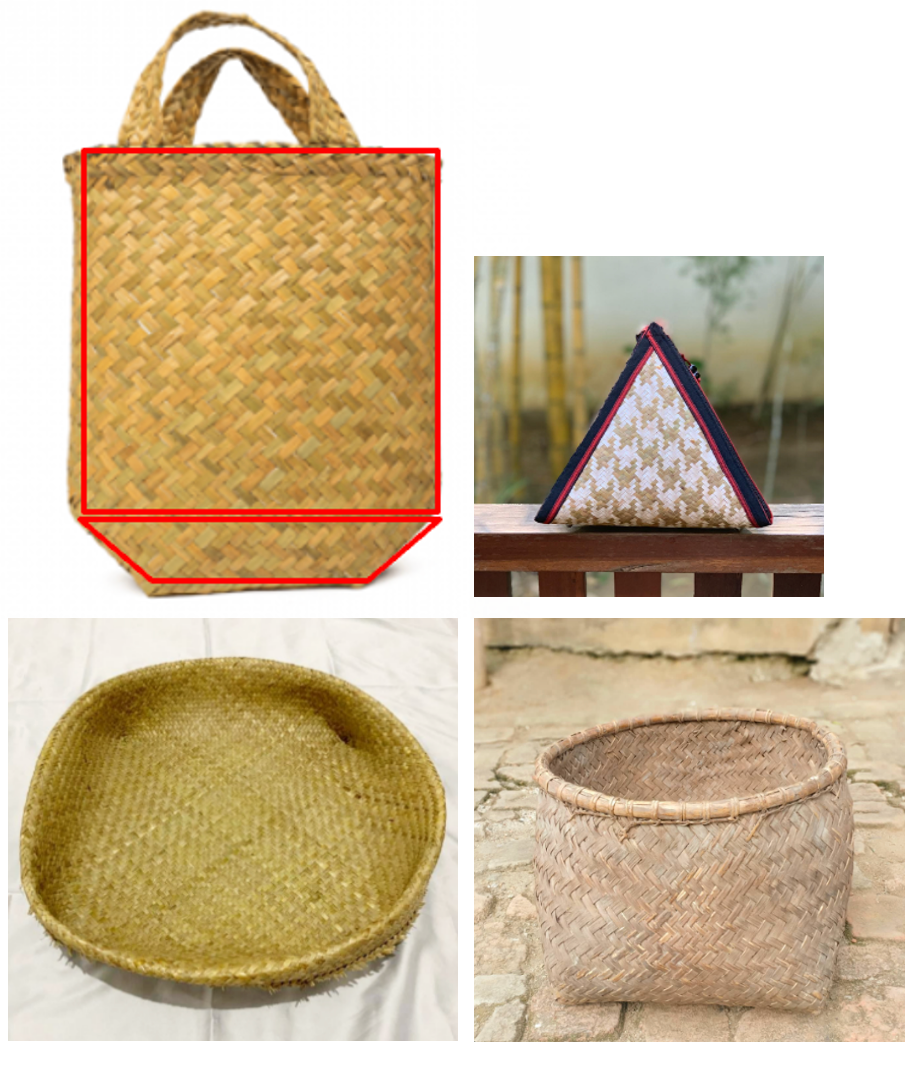
This study explores ethnomathematical elements embedded in Tikew weaving, a traditional craft of the Lampung culture. To date, no ethnomathematics research has specifically examined Tikew weaving in West Tulang Bawang, indicating a gap in the literature regarding the mathematical and cultural values inherent in this local practice. Therefore, this study aims to identify mathematical concepts from an ethnomathematical perspective and to examine the cultural values reflected in Tikew weaving. This research employed a qualitative ethnographic approach using a multidisciplinary perspective. Data were collected through observations, interviews, and documentation. The research instruments consisted of interview guidelines and observation protocols. Data analysis was conducted using the Miles and Huberman interactive model, which includes data reduction, data display, and conclusion drawing. The findings reveal that Tikew weaving reflects Lampung cultural values while simultaneously exhibiting meaningful mathematical patterns, particularly geometric concepts. These concepts include plane geometry and three-dimensional forms manifested in the structural patterns of Tikew woven products. The results demonstrate that Tikew weaving can serve as a rich source of contextual mathematical ideas grounded in local culture. This study contributes to the enrichment of ethnomathematics literature by documenting mathematical concepts rooted in indigenous cultural practices. In addition, it supports cultural preservation and offers alternative instructional media for mathematics learning based on local culture. By integrating local cultural contexts, mathematics learning can become more meaningful, contextual, and engaging, while also fostering students’ appreciation of cultural heritage.
Downloads
References
Adelia, R., & Sarassanti, Y. (2025). Ethnomathematics in mat weaving in the Padang Mat community. Ar-Riyadhiyyat: Journal of Mathematics Education, 5(2), 21–33. https://doi.org/10.47766/arriyadhiyyat.v5i2.4652
Bahrisy, DH, Prayogi, R., & Riadi, B. (2024). The Cultural Value of Tikew Crafts as a Form of Local Wisdom of the Gedung Ratu Tiyuh. BLAZE : Jurnal Bahasa Dan Sastra Dalam Pendidikan Linguistik dan Pengembangan, 2(4), 204–213. https://doi.org/10.59841/blaze.v2i4.2013
Dhiki, YY, & Bantas, MGD (2021). Exploration of Ethnomathematics as a Resource for Learning Mathematics in Ende Regency. AKSIOMA: Journal of the Mathematics Education Study Program, 10(4), 2698. https://doi.org/10.24127/ajpm.v10i4.4254
Dhiki, YY, & Bantas, MGD (2022). Ethnomathematic Exploration of Ende Woven Forms. Jupika: Journal of Mathematics Education, 5(1), 61–67. https://doi.org/10.37478/jupika.v5i1.1732
Ethnomathematics, E., & Bari, R. (2025). Cognitive. 5(May), 481–493.
Fauzi, A., & Lu'luilmaknun, U. (2019). Ethnomathematics in Dengklaq games as a medium for learning mathematics. AKSIOMA: Journal of Mathematics Education Study Program, 8(3), 408–419. https://doi.org/10.24127/ajpm.v8i3.2303
Hakim, AR, & Darojat, J. (2023). Multicultural Education in Shaping National Character and Identity. Scientific Journal of Educational Professions, 8(3), 1337–1346. https://doi.org/10.29303/jipp.v8i3.1470
Hartoyo, A., & Siregar, N. (2023). Exploration of Mathematical Concepts of Anya Products. 04(1), 1–10. https://www.researchgate.net/publication/367158384_Ethnomathematics_Exploration_The_Beads_Basket_Craft_Context_for_Mathematics_Learning
Kupang, AK (2025). Cognitive. 5(June), 910–922.
Lestari, F., Asyhara, SA, Matematika, P., Lampung, UM, Adat, R., & Belitang, K. (2024). Traditional house of the Tanjung Raya Belitang palace: ethnomathematics exploration. 5(2). https://doi.org/10.32332/exjdny09
Manik, SAR, Humairoh, AP, Annisa, S., Mailani, E., & Ketaren, MA (2024). The Role of Visual Media in Improving Elementary School Students' Geometry Understanding. AR-RUMMAN: Journal of Education and Learning Evaluation, 1(2), 759–763. https://doi.org/10.57235/arrumman.v1i2.4425
Marian, F., & Saputra, DR (2023). Ethnomathematics at the Siger Tower in Lampung as a Mathematics Learning Material. JIPMat, 8(2), 191–200. https://doi.org/10.26877/jipmat.v8i2.16017
Mauliyana, H., Rustam, R., & Sayu, S. (2023). Ethnomathematics in Pandanus Mat Weaving Crafts. AlphaEuclidEdu Journal, 4(2), 163. https://doi.org/10.26418/ja.v4i2.74211
Noprisa, N., Fitria Lestari, Desrina Hardianti, Dwi Desmayanasari, Suryatul Aini Asyhara, Deni Efendi, Dopy Rizko, & Elsa Kurnia. (2024). Traditional House of Lampung Kedatun Keagungan: Ethnomathematics Exploration. Inomatika, 6(1), 1–18. https://doi.org/10.35438/inomatika.v6i1.417
Rindi Fatmawati, & Yahfizham Yahfizham. (2024). Systematic Literature Review: Utilization of Geogebra Applications in Geometric Transformation Material. International Journal of Mathematics and Science Education, 1(2), 01–11. https://doi.org/10.62951/ijmse.v1i2.17
Solihin, A., & Rahmawati, I. (2024). Ethnomathematics-QR Exploration Cards for Fourth Grade Elementary School Flat Shape Material. Journal of Elementary Education Review: Journal of Educational Studies and Research Results, 10(1), 64–79. https://doi.org/10.26740/jrpd.v10n1.p64-79
Sugiyono. (2018). Qualitative Data Analysis. Research Gate, March, 1–9.
Sulistyani, AP, Windasari, V., Rodiyah, IW, & Muliawati, NE (2019). Ethnomathematics Exploration of the Joglo Traditional House of Tulungagung. Mathematics Education Media, 7(1), 22. https://doi.org/10.33394/mpm.v7i1.1537
Zaini, PM, Zaini, PM, Saputra, N., Penerbit, Y., Zaini, M., Lawang, KA, & Susilo, A. (2023). Qualitative Research Methodology. https://www.researchgate.net/publication/370561417_Metodologi_Penelitian_Kualitatif
Downloads
Published
How to Cite
Issue
Section
License
Copyright (c) 2026 Novellia Hendriawati, Fitria Lestari, Noprisa

This work is licensed under a Creative Commons Attribution-ShareAlike 4.0 International License.
Education and Talent Development Center of Indonesia (ETDC Indonesia)
e-mail: kognitif@gmail.com, website : https://etdc-indonesia.com

Kognitif: Jurnal Riset HOTS Pendidikan Matematika dengan Situs: https://etdci.org/journal/kognitif berlisensi Creative Commons Attribution-ShareAlike 4.0 International License






.png)


