Experiencing Citizenship: How Immersive Pedagogies Transform Student Interest and Academic Achievement in Pancasila Education

https://doi.org/10.51574/ijrer.v5i4.5087
Keywords:
Academic Achievement, Civic Education, Experiential Learning, Learning Interest, Role-Playing MethodAbstract
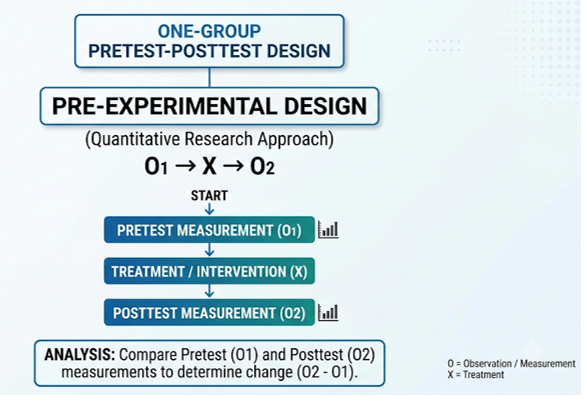
Civic education in the twenty-first century faces substantial pedagogical challenges, particularly the dominance of teacher-centered instruction that constrains active student participation. In Indonesia, Pancasila Education is frequently delivered through conventional lecture-based methods, resulting in diminished learning motivation and suboptimal academic achievement among elementary school students. This empirical study examines the effect of combining Role-Playing and Experimental methods on the learning interest and academic outcomes of sixth-grade students at Elementary School 239 Inpres Nipa, Maros Regency, Indonesia. Employing a quantitative pre-experimental design with a One-Group Pretest-Posttest format, the research involved 20 sixth-grade students recruited through total (saturated) sampling. Data were collected via cognitive achievement tests, a Likert-scale learning interest questionnaire, structured observation sheets, and documentary records. The gathered data were analyzed descriptively and through analysis-of-variance (ANOVA) procedures using SPSS version 26. Findings revealed significant improvements post-intervention: the mean student learning outcome score rose from 45.00 to 82.50, while the mean learning interest score increased from 49.80 to 81.13. ANOVA results confirmed a highly statistically significant main effect (F = 309.932, p = 0.000 < 0.05). The integrated application of Role-Playing and Experimental methods fosters an interactive, experiential learning environment that strengthens students' deep comprehension of Pancasila values and active engagement in civic education. Ultimately, these methods constitute a viable instructional alternative for supporting the implementation of the Merdeka Curriculum in primary elementary schools.
References
Alifa, N. O., Alannasir, W., & Rahmawati, R. (2024). Pengaruh Self Efficacy Dan Minat Belajar Terhadap Hasil Belajar Matematika Siswa Kelas Iv A Sd Negeri Daya 1. ALENA: Journal of Elementary Education, 2(1), 9-26. https://doi.org/10.59638/jee.v2i1.84
Astiwi, K. P. T., Antara, P. A., & Agustiana, I. G. A. T. (2020). Pengembangan instrumen penilaian kemampuan berpikir kritis siswa sd pada mata pelajaran ppkn. Jurnal Ilmiah Pendidikan Profesi Guru, 3(3), 459-467. https://doi.org/10.23887/jippg.v3i3.29457
Chen, C. H., & Syu, J. Y. (2024). Effects of integrating a role‐playing game into a virtual reality‐based learning approach on students' perceptions of immersion, self‐efficacy, learning motivation and achievements. British Journal of Educational Technology, 55(5), 2339-2356. https://doi.org/10.1111/bjet.13436
Choudhary, A., & Bakshi, R. (2025). Shaping the future: Strategies for cultivating values among secondary school students. MIER Journal of Educational Studies Trends and Practices, 260-276. https://doi.org/10.52634/mier/2025/v15/i1/2835
Costello, M., Cantillon, P., Geoghegan, R., Byrne, D., Lowery, A., & Walsh, S. M. (2022). Experience‐based learning: how a crisis solution informed fundamental change in a clinical education curriculum. The Clinical Teacher, 19(1), 42-47. https://doi.org/10.1111/tct.13441
Dahlia, D., Wahid, A., & Alannasir, W. (2026). Think Pair Share Learning Model Based on Differentiated Instructions: Improving Civics Learning Outcomes in Elementary School Students. ETDC: Indonesian Journal of Research and Educational Review, 5(3), 2029-2040. https://doi.org/10.51574/ijrer.v5i3.5078
Dorożyński, P., & Dorożyńska, K. (2022). The role-playing game to increase students' activity and engagement in the teaching process–A pilot study of research & development campaign. Currents in Pharmacy Teaching and Learning, 14(8), 1046-1052. https://doi.org/10.1016/j.cptl.2022.07.015
El-Sabagh, H. A. (2021). Adaptive e-learning environment based on learning styles and its impact on development students' engagement. International Journal of Educational Technology in Higher Education, 18(1), 53. https://doi.org/10.1186/s41239-021-00289-4
Hendawati, Y., & Kurniati, C. (2017). Penerapan metode eksperimen terhadap pemahaman konsep siswa kelas V pada materi gaya dan pemanfatannya. Metodik Didaktik, 13(1), 15-25. https://doi.org/10.17509/md.v13i1.7689
Khairiyah, N. (2025). Phenomenological Analysis of Civic Engagement Education Transformation in Indonesia's Post-Covid-19 Democracy System. ETDC: Indonesian Journal of Research and Educational Review, 4(3), 813-823. https://doi.org/10.51574/ijrer.v4i3.3390
Kim, M. (2023). Promoting civic engagement competence through emotional geography-based spatial story making in community participation projects. Journal of Geography, 122(2), 43-53. https://doi.org/10.1080/00221341.2023.2196522
Lubis, C., & Nasution, S. (2024). Pengaruh Metode Role Playing Terhadap Peningkatkan Keterampilan Berbicara Siswa Pada Mata Pelajaran Bahasa Indonesia kelas V di Madrasah Ibtidaiyah. Didaktika: Jurnal Kependidikan, 13(2 Mei), 2017-2028.
Lumapuy, O., Gaite, T., & Abdurrachman, O. (2026). The Role of Civic and Pancasila Education Teachers in Enhancing Student Learning Motivation at Primary School. ETDC: Indonesian Journal of Research and Educational Review, 5(2), 1215-1230. https://doi.org/10.51574/ijrer.v5i2.4528
Maghsoodi, E., Alikhah, H., Rezaiy, S. G., Partash, N., & Hosseinian, E. (2025). Exploring the impact of role-playing in enhancing nursing education: A systematic review of pedagogical outcomes and student competency development. Nurse Education Today, 152, 106763. https://doi.org/10.1016/j.nedt.2025.106763
Mahendra, W., Yuliatin, Y., Alqadri, B., & Zubair, M. (2024). Implementation of Independent Curriculum in Civics Education and Pancasila Subjects at SMA Negeri 1 Pringgabaya. Journal of Educational Sciences, 8(2), 222-238. https://doi.org/10.31258/jes.8.2.p.222-238
Nisa, W. F., & Efendi, N. (2023). Pengaruh Metode Eksperimen Terhadap Hasil Belajar Kognitif Siswa Pada Pembelajaran IPA Kelas 3 SD. VOX EDUKASI: Jurnal Ilmiah Ilmu Pendidikan, 14(2), 254-267. https://doi.org/10.31932/ve.v14i2.2744
Pradeep, K., Sulur Anbalagan, R., Thangavelu, A. P., Aswathy, S., Jisha, V. G., & Vaisakhi, V. S. (2024). Neuroeducation: Understanding neural dynamics in learning and teaching. Frontiers in Education (Vol. 9, p. 1437418). Frontiers Media SA. https://doi.org/10.3389/feduc.2024.1437418
Rahmawati, T., & Sanoto, H. (2025). The Effectiveness of Class Management-Based Role-Playing Method on The Learning Outcomes of Fifth-Grade Elementary School Students In Pancasila Education. Eduvest-Journal of Universal Studies, 5(3), 3056-3071. https://doi.org/10.59188/eduvest.v5i3.51000
Setyanto, A. E. (2006). Memperkenalkan kembali metode eksperimen dalam kajian komunikasi. Jurnal ilmu komunikasi, 3(1). https://doi.org/10.24002/jik.v3i1.239
Shree, S. (2025). A catharsis-based approach to learning retention: a theoretical framework integrating emotional engagement and cognitive load. Industrial and Commercial Training, 57(4), 603-616. https://doi.org/10.1108/ICT-02-2025-0021
Taheri, A., & Aguayo, C. (2022). XR technologies and experience-based learning. Pacific Journal of Technology Enhanced Learning, 4(1), 44-45.
Tikader, B., & Mandal, B. (2025). Educating the heart and mind: Linking value-based education for psychological wellbeing. International Journal of Multidisciplinary Research in Arts, Science and Technology, 3(5), 34-50. https://doi.org/10.61778/ijmrast.v3i5.136
Younas, M., & Imran, M. (2025). Multiple modalities of teaching civic education awareness among students: a pragmatic approach-based case study. Cogent Education, 12(1), 2460967. https://doi.org/10.1080/2331186X.2025.2460967
Zajda, J. (2021). Constructivist learning theory and creating effective learning environments. In Globalisation and education reforms: Creating effective learning environments (pp. 35-50). Cham: Springer International Publishing. https://doi.org/10.1007/978-3-030-71575-5_3
Downloads
Published
How to Cite
Issue
Section
License
Copyright (c) 2026 Neliana Neliana, Mulyadi Mulyadi, Badaruddin Kaddas

This work is licensed under a Creative Commons Attribution-ShareAlike 4.0 International License.