
Mathematical Communication Skills of Students with Adversity Quotient Personality in Solving Story Problems Reviewed from Information Processing Theory

https://doi.org/10.51574/kognitif.v6i3.4982
Keywords:
Communication skills, Mathematics, Story problems, adversity quotient, Information Processing TheoryAbstract
This study investigates the cognitive mechanisms underlying students' mathematical communication in solving story problems by integrating Adversity Quotient (AQ) and Information Processing Theory. Although mathematical communication has been widely recognized as a key component of mathematical proficiency, limited research has explained how students' resilience-related dispositions shape the cognitive processes through which mathematical ideas are understood, organized, and communicated. A qualitative case study was conducted with 32 eighth-grade students at SMP Negeri 2 Halmahera Barat, Indonesia. Data were collected through validated open-ended story-problem tasks, AQ classification, students' written work, and semi-structured interviews. The analysis combined descriptive categorization of mathematical communication with thematic analysis based on four cognitive processing stages: attention, perception, retrieval, and encoding. The findings show that students' mathematical communication was generally low, with 17 students in the very low category. Cross-case analysis revealed distinct patterns across AQ profiles. Climbers demonstrated relatively complete cognitive processing cycles and coherent mathematical explanations. Campers showed partial processing, especially in strategy formulation, retrieval accuracy, and justification. Quitters experienced breakdowns from the attention stage, resulting in fragmented or absent mathematical communication. This study proposes a conceptual model in which AQ functions as a resilience-related regulator of cognitive processing continuity, thereby shaping mathematical communication outcomes. The findings contribute to mathematics education by offering a process-based explanation of communication difficulties and by emphasizing the need for instruction that supports both cognitive processing and resilience in problem solving.
Downloads
References
Agustina, Lady. (2023). Proses Berpikir Mahasiswa Calon Guru Matematika pada Pemahaman Konsep Segiempat Berdasarkan Teori Pemrosesan Informasi. JEMS: Jurnal Edukasi Matematika Dan Sains, 11(1), 372–380. https://doi.org/10.25273/jems.v11i1.16117
Asmira Sudiman, Rusdyi Habsyi, & Rusmin R. M. Saleh. (2023). Pembelajaran Geometri Berbantuan Goegebra untuk Meningkatkan Kemampuan Komunikasi Matematis Siswa. Jurnal Pendidikan MIPA, 13(4), 1156–1161. https://doi.org/10.37630/jpm.v13i4.1390
Cahyani, C. D., Walid, W., & Susilo, B. E. (2024). Students’ mathematical communication skills viewed from mathematical resilience in probing-prompting learning with performance assessment. Union: Jurnal Ilmiah Pendidikan Matematika, 12(1), 1–13. https://doi.org/10.30738/union.v12i1.16444
Fauziah Nasution, Zahwa Nazhifah Limbeng, Khairunnisa, & M. Habib Rifki Nasution. (2023). Pendekatan Pemerosesan Informasi. PIJAR: Jurnal Pendidikan Dan Pengajaran, 1(3), 258–265. https://doi.org/10.58540/pijar.v1i3.359
Harun, F., . S., Hairun, Y., Machmud, T., & Alhaddad, I. (2021). Improving Students’ Mathematical Communication Skills through Interactive Online Learning Media Design. Journal of Technology and Humanities, 2(2), 17–23. https://doi.org/10.53797/jthkkss.v2i2.3.2021
Herlina, A., Syaifuddin, M., & Wurianto, A. B. (2025). Verbal representation abilities and processes in hots problem solving based on adversity quotient. Jurnal EduScience (JES), 12(6), 1685–1700. https://doi.org/10.36987/jes.v12i6.8070
Kuncoro, K. S., Kusumaningrum, B., Agustito, D., Meirani, F., & Lestari, E. S. (2023). Mathematical communication skills in the context of linear equations: A study on students’ proficiency and self-esteem. Psychology, Evaluation, and Technology in Educational Research, 6(1), 18–34. https://doi.org/10.33292/petier.v6i1.178
Lase, L. D. M., Lase, S., Mendrofa, R. N., & Mendrofa, N. K. (2025). Pengembangan Lembar Kerja Peserta Didik Berbasis Problem Based Learning untuk Meningkatkan Kemampuan Komunikasi Matematis Siswa. Kognitif: Jurnal Riset HOTS Pendidikan Matematika, 5(1), 225–235. https://doi.org/10.51574/kognitif.v5i1.2243
M. Anggelina, U. R. A. S. U. N. and U. L. (2023). Analisis Kemampuan Siswa Menyelesaikan Soal Matematika Berbentuk Cerita Pada Siswa Kelas X SMK Negeri 1 Pekalongan. Jurnal Ilmiah Matematika Realistik (JI-MR), 4(1), 89–95.
Pitriani, W., Muslim, S. R., & Prabawati, M. N. (2024). Efektivitas Penggunaan Media Wordwall dengan Model Brain Based Learning Terhadap Kemampuan Komunikasi Matematis Peserta Didik. Kognitif: Jurnal Riset HOTS Pendidikan Matematika, 4(3), 1059–1070. https://doi.org/10.51574/kognitif.v4i3.1765
Puspita, W. R., Herman, T., & Dahlan, J. A. (2023). Students’ Mathematical Literacy in Addressing Contextual Questions Through Adversity Quotient. Mosharafa: Jurnal Pendidikan Matematika, 12(4), 771–782. https://doi.org/10.31980/mosharafa.v12i4.1190
Rasyid, A. N., Rohati, R., & Kumalasari, A. (2025). Analisis Perseverance in Mathematical Reasoning (PiMR) Siswa dengan Tipe AQ Camper pada Materi Persamaan Linear Satu Variabel (PLSV). Kognitif: Jurnal Riset HOTS Pendidikan Matematika, 5(2), 923–934. https://doi.org/10.51574/kognitif.v5i2.3088
Rohid, N., Suryaman, S., & Rusmawati, R. D. (2019). Students’ Mathematical Communication Skills (MCS) in Solving Mathematics Problems: A Case in Indonesian Context. Anatolian Journal of Education, 4(2), 19–30. https://doi.org/10.29333/aje.2019.423a
Rusdyi, R., Rusmin R. M. Saleh, & Isman M. Nur. (2023). Proses Berpikir Kreatif Siswa Berkepribadian Adversity Quotient dalam Menyelesaikan Masalah Open-Ended Ditinjau dari Teori Pemrosesan Informasi. Jurnal Pendidikan MIPA, 13(3), 851–862. https://doi.org/10.37630/jpm.v13i3.1175
Rusmin R. M. Saleh, & Isman M. Nur. (2023). Proses Berpikir Siswa SMP Berdasarkan Gaya Kognitif Intuitif dan Sistematis dalam Menyelesaikan Masalah Invers Proporsi Ditinjau dari Teori Pemrosesan Informasi. Jurnal Pendidikan MIPA, 13(3), 751–762. https://doi.org/10.37630/jpm.v13i3.1163
Rusyda, N. A., Ahmad, D., Rusdinal, R., & Dwina, F. (2020). Analysis of students’ mathematical communication skill in calculus course. Journal of Physics: Conference Series, 1554(1), 012043. https://doi.org/10.1088/1742-6596/1554/1/012043
Samura, A. O., Nani, K. La, Negara, H. R. P., & Habsyi, R. (2024). Enhancing elementary school students’ mathematical communication skills through geometry instruction based on Van Hiele’s theory. Jurnal Pendidikan MIPA, 13(4), 1156–1161. https://doi.org/10.1063/5.0196837
Satriani, S. S., Usman, M. R., & Kristiawati, K. (2025). Kemampuan Komunikasi Matematis Siswa Ditinjau dari Perbedaan Gender. Kognitif: Jurnal Riset HOTS Pendidikan Matematika, 5(2), 899–909. https://doi.org/10.51574/kognitif.v5i2.2811
Sudiman, A., & Habsyi, R. (2024). Analisis Kemampuan Komunikasi Matematis Siswa dalam Menyelesaikan Soal-Soal Cerita ditinjau dari Teori Pemrosesan Informasi. Kognitif: Jurnal Riset HOTS Pendidikan Matematika, 4(4), 1486–1497. https://doi.org/10.51574/kognitif.v4i4.2114
Susanti, N., Juandi, D., & Tamur, M. (2020). The Effect of Problem-Based Learning (PBL) Model On Mathematical Communication Skills of Junior High School Students – A Meta-Analysis Study. JTAM (Jurnal Teori Dan Aplikasi Matematika), 4(2), 145–154. https://doi.org/10.31764/jtam.v4i2.2481
Tong, D. H., Uyen, B. P., & Van Anh Quoc, N. (2021). The improvement of 10th students’ mathematical communication skills through learning ellipse topics. Heliyon, 7(11), e08282. https://doi.org/10.1016/j.heliyon.2021.e08282
Uyen, B. P., Tong, D. H., & Tram, N. T. B. (2021). Developing Mathematical Communication Skills for Students in Grade 8 in Teaching Congruent Triangle Topics. European Journal of Educational Research, 10(3), 1287–1302. https://doi.org/10.12973/eu-jer.10.3.1287
Viyani, A. O., Utami, R. E., & Pramasdyahsari, A. S. (2022). The Profile of Students’ Mathematical Communication Ability on Statistics Based on Adversity Quotient. International Journal of Research in Education, 2(1), 47–59. https://doi.org/10.26877/ijre.v2i1.10819
Wijayani, T. R., Muzdalipah, I., & Setialesmana, D. (2026). Analysis of Students’ Mathematical Representation Ability in Terms of Adversity Quotient. Kognitif: Jurnal Riset HOTS Pendidikan Matematika, 6(1), 338–350. https://doi.org/10.51574/kognitif.v6i1.3245
Zaskiya, Z., Mahfudy, S., & Nasrullah, A. (2025). Pengaruh Self-Efficacy dan Self-Esteem terhadap Kemampuan Komunikasi Matematis Siswa. Kognitif: Jurnal Riset HOTS Pendidikan Matematika, 5(2), 567–584. https://doi.org/10.51574/kognitif.v5i2.3279
Zulkarnain, I., Kusumawati, E., & Mawaddah, S. (2021). Mathematical communication skills of students in mathematics learning using discovery learning model. Journal of Physics: Conference Series, 1760(1), 012–045. https://doi.org/10.1088/1742-6596/1760/1/012045
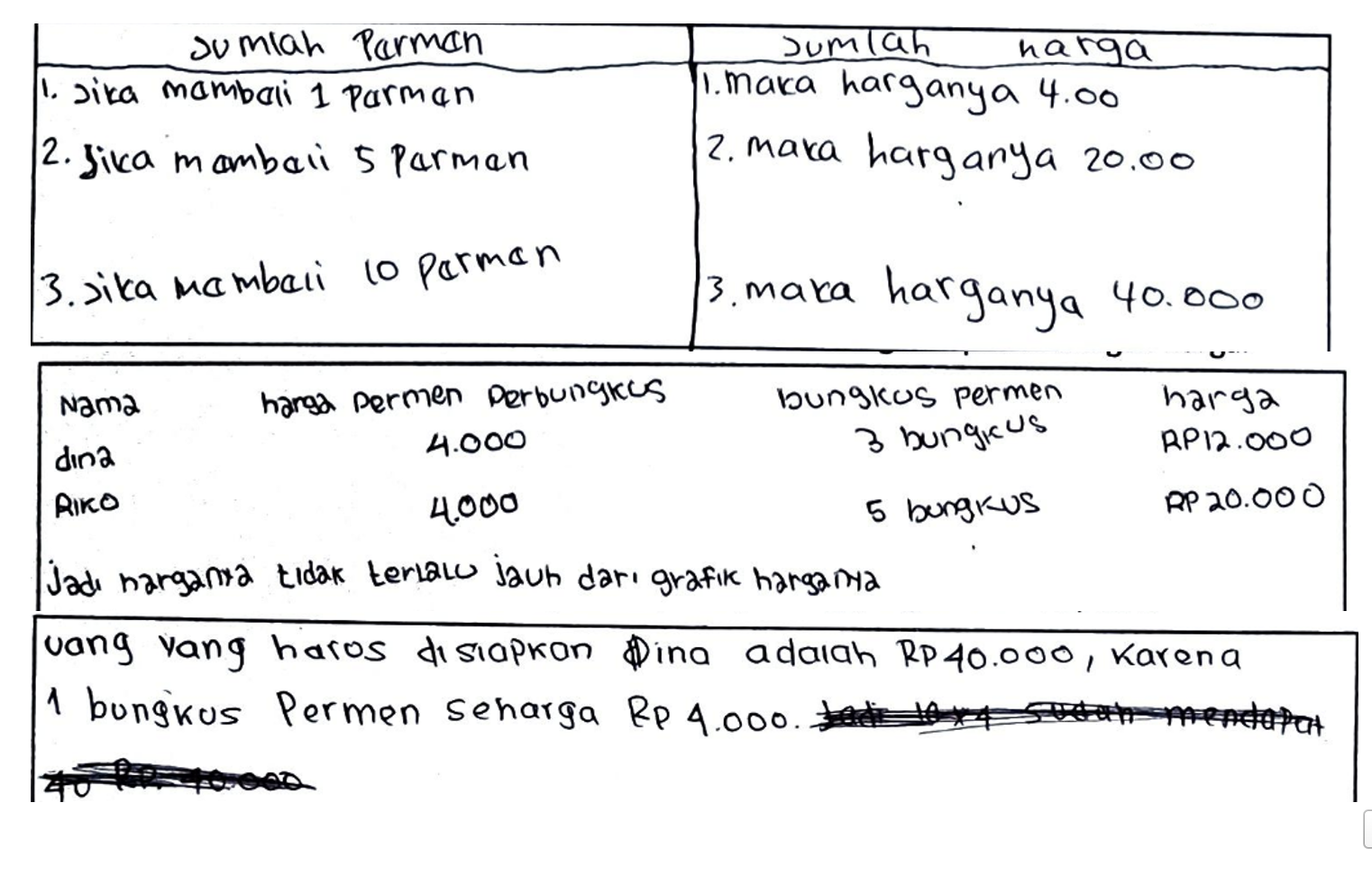
Downloads
Published
How to Cite
Issue
Section
License
Copyright (c) 2026 This is an open-access under the CC-BY-SA license

This work is licensed under a Creative Commons Attribution-ShareAlike 4.0 International License.
Education and Talent Development Center of Indonesia (ETDC Indonesia)
e-mail: kognitif@gmail.com, website : https://etdc-indonesia.com

Kognitif: Jurnal Riset HOTS Pendidikan Matematika dengan Situs: https://etdci.org/journal/kognitif berlisensi Creative Commons Attribution-ShareAlike 4.0 International License






.png)


