Developing an Ethnomathematics-Based Transformational Geometry Textbook to Enhance Students' Mathematical Literacy

https://doi.org/10.51574/kognitif.v5i4.3860
Keywords:
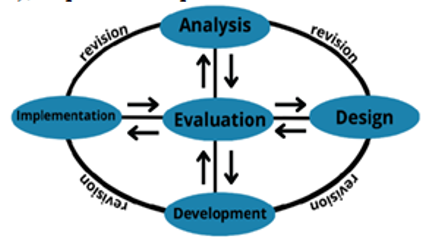
Development , Textbooks , Ethnomathematics , Math literacy , ADDIEAbstract
An ethnomathematical approach that integrates Luwu culture, especially the Rongkong batik motif, is expected to bridge abstract mathematical concepts with students’ daily lives through the use of local wisdom as a learning context. This study aims to develop ethnomathematics-based transformational geometry textbooks that are feasible, practical, and effective in improving senior high school students’ mathematical literacy. The research employed the ADDIE development model. The participants were Grade XI students and mathematics teachers at SMA Negeri 5 Luwu Utara. The instruments used included teacher and student needs analysis questionnaires, expert validation sheets, teacher and student practicality questionnaires, lesson implementation observation sheets, and a mathematical literacy test administered as a pretest and posttest. Validation by material and media experts was conducted to assess the feasibility of the textbook in terms of content, presentation, construction, and readability. The results show that the developed textbooks are classified as very feasible based on content, presentation, construction, and readability validation. The textbooks were also judged to be very practical by both teachers and students. In terms of effectiveness, there was a significant increase in students’ mathematical literacy after using the textbooks, with an average n-gain of 0.81 (high category). Inferential analysis further indicated a significant difference between students’ pretest and posttest scores. Thus, the ethnomathematics-based transformational geometry textbooks developed in this study are feasible for use in classroom instruction and effective in improving high school students’ mathematical literacy. This study recommends local culture-based textbooks as an alternative form of contextual teaching materials with multicultural characteristics.
Downloads
References
Abdullah, W. (2017). Ethnolinguistic Study of Local Wisdom in Ex-Residency of Surakarta. Jurnal Humaniora, 28(3), 279. https://doi.org/10.22146/jh.v28i3.22279
Apolonia Hendrice Ramda, Ermilinda S Mulia, Fransiskus Nendi, & Gunur, B. (2023). Interest In Learning Mathematics And Contextual Teaching And Learning With Ethnomatematics Content: Mbaru Tembong. Jurnal Pendidikan Dan Kebudayaan Missio, 15(2). https://doi.org/10.36928/jpkm.v15i2.2085
Charitas, R., Prahmana, I., Arnal-palacián, M., & Risdiyanti, I. (2023). Trivium curriculum in Ethno-RME approach : An impactful insight from ethnomathematics and realistic mathematics education. Jurnal Elemen, 9(January), 298–316.
Evin Gencel, I., & Saracaloğlu, A. S. (2018). The Effect of Layered Curriculum on Reflective Thinking and on Self-Directed Learning Readiness of Prospective Teachers. International Journal of Progressive Education, 14(1), 8–20. https://doi.org/10.29329/ijpe.2018.129.2
Freeman, B., Higgins, K. N., & Horney, M. (2020). How Students Communicate Mathematical Ideas: An Examination of Multimodal Writing Using Digital Technologies. Contemporary Educational Technology, 7(4), 281–313. https://doi.org/10.30935/cedtech/6178
Gulkilik, H., Moyer-Packenham, P. S., Ugurlu, H. H., & Yuruk, N. (2020). Characterizing the growth of one student’s mathematical understanding in a multi-representational learning environment. Journal of Mathematical Behavior, 58(March 2019), 100756. https://doi.org/10.1016/j.jmathb.2020.100756
Habibi, H., & Suparman, S. (2020). Literasi Matematika dalam Menyambut PISA 2021 Berdasarkan Kecakapan Abad 21. JKPM (Jurnal Kajian Pendidikan Matematika), 6(1), 57. https://doi.org/10.30998/jkpm.v6i1.8177
Helgevold, N., & Moen, V. (2015). The use of flipped classrooms to stimulate students’ participation in an academic course in initial teacher education. Nordic Journal of Digital Literacy, 2015(1), 29–42. https://doi.org/10.1177/1049732305276687
Heyd-Metzuyanim, E., Sharon, A. J., & Baram-Tsabari, A. (2021). Mathematical media literacy in the COVID-19 pandemic and its relation to school mathematics education. Educational Studies in Mathematics, 108(1–2). https://doi.org/10.1007/s10649-021-10075-8
Kanes, C., Morgan, C., & Tsatsaroni, A. (2014). The PISA mathematics regime : knowledge structures and practices of the self. https://doi.org/10.1007/s10649-014-9542-6
Kop, P. M. G. M., Janssen, F. J. J. M., Drijvers, P. H. M., & Driel, J. H. Van. (2017). Graphing formulas : Unraveling experts ’ recognition processes. Journal of Mathematical Behavior, 45, 167–182. https://doi.org/10.1016/j.jmathb.2017.01.002
Kop, P. M. G. M., Janssen, F. J. J. M., Drijvers, P. H. M., & van Driel, J. H. (2020). The relation between graphing formulas by hand and students’ symbol sense. Educational Studies in Mathematics, 105(2), 137–161. https://doi.org/10.1007/s10649-020-09970-3
Marufi, Ilyas, M., Winahyu, & Ikram, M. (2021). An Implementation of Ethno-STEM to Enhance Conceptual Understanding. Al-Jabar: Jurnal Pendidikan Matematika, 12(1).
Montenegro, P., Costa, C., & Lopes, B. (2018). Transformations in the Visual Representation of a Figural Pattern. Mathematical Thinking and Learning, 20(2), 91–107. https://doi.org/10.1080/10986065.2018.1441599
Muhtadi, D., Sukirwan, Warsito, & Prahmana, R. C. I. (2017). Sundanese ethnomathematics: Mathematical activities in estimating, measuring, and making patterns. In Journal on Mathematics Education (Vol. 8, Issue 2, pp. 185–198). https://doi.org/10.22342/jme.8.2.4055.185-198
Ninsiana, W. (2018). Looking through the Ethnolinguistic Perspective to Unveil the Social Facts Phenomenon of Piil Pesenggiri. Komunitas: International Journal of Indonesian Society and Culture, 10(1), 68–77. https://doi.org/10.15294/komunitas.v10i1.12831
OECD. (2018). Programme for International Students Assesment (PISA) Result From PISA 2018.
Pathuddin, H., Kamariah, & Ichsan Nawawi, M. (2021). Buginese ethnomathematics: Barongko cake explorations as mathematics learning resources. Journal on Mathematics Education, 12(2), 295–312. https://doi.org/10.22342/jme.12.2.12695.295-312
Prahmana, R. C. I., & D’Ambrosio, U. (2020). Learning geometry and values from patterns: Ethnomathematics on the batik patterns of yogyakarta, indonesia. Journal on Mathematics Education, 11(3), 439–456. https://doi.org/10.22342/jme.11.3.12949.439-456
Prahmana, R. C. I., Yunianto, W., Rosa, M., & Orey, D. C. (2021). Ethnomathematics: Pranatamangsa system and the birth-death ceremonial in yogyakarta. Journal on Mathematics Education, 12(1). https://doi.org/10.22342/JME.12.1.11745.93-112
Supiyati, S., Hanum, F., & Jailani. (2019). Ethnomathematics in sasaknese architecture. Journal on Mathematics Education, 10(1), 47–57. https://doi.org/10.22342/jme.10.1.5383.47-58
Susanta, A., Sumardi, H., Susanto, E., & Retnawati, H. (2023). Mathematics literacy task on number pattern using Bengkulu context for junior high school students. Journal on Mathematics Education, 14(1), 85–102. https://doi.org/10.22342/JME.V14I1.PP85-102
Tohir, M. (2019). Hasil PISA Indonesia Tahun 2018 Turun Dibanding Tahun 2015 (Indonesia’s PISA Results in 2018 are Lower than 2015). Open Science Framework, 2.
Tondorf, A., & Prediger, S. (2022). Connecting characterizations of equivalence of expressions: design research in Grade 5 by bridging graphical and symbolic representations. Educational Studies in Mathematics, 111(3), 399–422. https://doi.org/10.1007/s10649-022-10158-0
Utami, N. W., Sayuti, S. A., & Jailani. (2019). Math and mate in javanese primbon: Ethnomathematics study. Journal on Mathematics Education, 10(3), 341–356. https://doi.org/10.22342/jme.10.3.7611.341-356
Voigt, M., Fredriksen, H., & Rasmussen, C. (2020). Leveraging the design heuristics of realistic mathematics education and culturally responsive pedagogy to create a richer flipped classroom calculus curriculum. ZDM - Mathematics Education, 52(5), 1051–1062. https://doi.org/10.1007/s11858-019-01124-x
Wilkie, K. J., & Hopkins, S. (2024). Primary students’ relational thinking and computation strategies with concrete-to-symbolic representations of subtraction as difference. Journal of Mathematical Behavior, 73(April 2023), 101121. https://doi.org/10.1016/j.jmathb.2023.101121
Zulkardi, Meryansumayeka, Putri, R. I. I., Alwi, Z., Nusantara, D. S., Ambarita, S. M., Maharani, Y., & Puspitasari, L. (2020). How students work with pisa-like mathematical tasks using covid-19 context. Journal on Mathematics Education, 11(3), 405–416. https://doi.org/10.22342/jme.11.3.12915.405-416
Downloads
Published
How to Cite
Issue
Section
License
Copyright (c) 2025 Fitrayuddin Sam, Syamsu Alam, Patmaniar

This work is licensed under a Creative Commons Attribution-ShareAlike 4.0 International License.
Education and Talent Development Center of Indonesia (ETDC Indonesia)
e-mail: kognitif@gmail.com, website : https://etdc-indonesia.com

Kognitif: Jurnal Riset HOTS Pendidikan Matematika dengan Situs: https://etdci.org/journal/kognitif berlisensi Creative Commons Attribution-ShareAlike 4.0 International License






.png)