Effectiveness of STEM-Based Learning in Reducing Students' Math Anxiety

https://doi.org/10.51574/kognitif.v6i2.4954
Keywords:
Mathematical Anxiety , Quasi-Experiment , STEM EducationAbstract
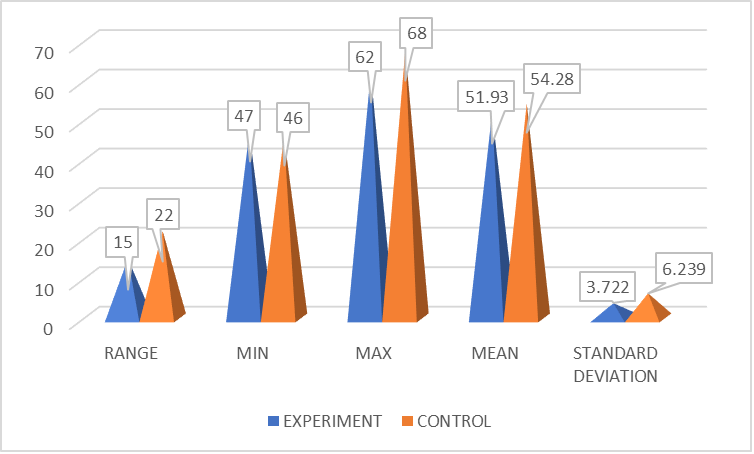
Mathematics is one of the core subjects in junior high school that plays a crucial role in improving students’ academic performance; however, it often causes anxiety, which leads to decreased motivation and learning outcomes. This study aims to examine the effectiveness of STEM-based learning in reducing students’ math anxiety. The method used in this study is a quantitative approach with a quasi-experimental design utilizing a non-equivalent control group. The sample consisted of two classes with a total of 58 students: the experimental class had 29 students, and the control class also had 29 students. STEM-based learning was implemented through a project to build miniature bridges, designed to help students understand the concept of similarity by relating it to real-life situations. Data collection utilized a mathematics anxiety questionnaire with a Likert scale administered before and after the intervention. Data analysis was performed using the N-gain test and the t-test (independent samples t-test). The results of the study indicate that STEM-based learning was able to significantly reduce students’ levels of mathematical anxiety, as evidenced by the N-gain score in the experimental class of 0.78, which falls into the high category. Meanwhile, the t-test results showed a significance value of 0.000, < 0.05, indicating a significant difference between the experimental and control classes. The implications of this study are as follows: STEM-based learning can serve as an innovative alternative teaching strategy to create a more interactive learning environment, boost students’ self-confidence, and provide a more comfortable learning setting so that students do not feel stressed or anxious when learning mathematics.
Downloads
References
Agfiyah, U. I., & Fuada, N. A. (2024). Dampak Pendekatan STEM dalam Pembelajaran Matematika. Jurnal Inovasi Pendidikan Matematika, 6(2), 82–95. https://doi.org/10.37729/jipm.v6i2.5810
Aisyah, & Galih Adirakasiwi, A. (2025). Analisis Tingkat Kecemasan Belajar Pada Pembelajaran Matematika. Al-Irsyad Journal of Mathematics Education, 4(2), 226–233. https://doi.org/10.58917/ijme.v4i2.191
Andini Ritonga, F. (2023). Pengaruh Model Pembelajaran Project Based Learning Terhadap Kecemasan Matematis Siswa. Jurnal Pendidikan Matematika, 7(1), 191–203. https://doi.org/10.31100/histogram.v7i1.2632
Astuti, A. M. (2016). Statistika Penelitian. Insan Madani Publishing Mataram.
Dinawati, E. N., & Siswono, T. Y. E. (2021). Pengaruh Kecemasan Matematika terhadap Berpikir Kreatif Siswa SMP. Jurnal Penelitian Pendidikan Matematika Dan Sains, 4(2), 82. https://doi.org/10.26740/jppms.v4n2.p82-92
Jannah, G.F,. Syarifah, K.I., Robicha, N., & Rasilah, R. (2024). Analisis Perkembangan dan Implementasi Pembelajaran Matematika Berbasis STEM di Indonesia. Cendikia Jurnal Pendidikan Dan Pengajaran, 2(10), 415–422. https://doi.org/10.572349/cendikia.v2i10.3177
Kusyanto, K., Suherman,A.,& Rahayu, S. (2022). Implementasi Pendekatan STEM untuk Meningkatkan Kemampuan Berpikir Kritis, Berpikir Kreatif dan Self –Efficacy. Pasundan Journal of Mathematics Education : Jurnal Pendidikan Matematika, 12(2), 16. https://doi.org/10.23969/pjme.v12i2.5438
Nasution, C. L., Akmal, N., & Anwar, N.(2025). "Efektivitas Strategi Scaffolding Terhadap Penurunan Kecemasan Siswa Dalam Pembelajaran Matematika MTSN 1 Lhokseumawe. Ar-Riyadhiyyat: Jurnal Pendidikan Matematika, 5(2), 1–10. https://doi.org/10.47766/arriyadhiyyat.v5i2.3502
Natsir, I., Suryani, D. S., Nur'aini, K. D. (2023). Profil Kemampuan Dasar Matematika Siswa SMP Kelas VIII. Jurnal Pendidikan Matematika Unpatti, 4(1), 10–15. https://doi.org/10.30598/jpmunpatti.v4.i1.p10-15
Pranata, J. (2020). Pengaruh kecemasan matematika terhadap hasil belajar siswa.
Putri, Syahdilla Apriliani, Nurimani, & Suyanto, A. (2021). Hubungan Kecemasan Matematis dengan Hasil Belajar Siswa. Prosiding Seminar Nasional Pendidikan STKIP Kusuma Negara III, 197–206. http://jurnal.stkipkusumanegara.ac.id/index.php/semnara2020/article/download/1136/737
Reni Nuraeni, & Munandar, D. R. (2023). Analisis Kecemasan Matematis Siswa SMP Terhadap Hasil Belajar Matematika. Didactical Mathematics, 5(2), 361–368. https://doi.org/10.31949/dm.v5i2.5862
Setiani, A. (2016). Pembelajaran Matematika Dengan Pendekatan Problem Based Learning Untuk Mengurangi Kecemasan Matematika Dan Meningkatkan Kemampuan Pemecahan Masalah Matematis Siswa Mts. M A T H L I N E : Jurnal Matematika Dan Pendidikan Matematika, 1(2), 135–148. https://doi.org/10.31943/mathline.v1i2.25
Sha’adah, I., Rasiman, R., & Setiawan, A. (2024). Analisis Kemampuan Berpikir Kreatif Matematis Siswa Kelas XI pada Materi Lingkaran. FARABI: Jurnal Matematika Dan Pendidikan Matematika, 7(1), 91–101. https://doi.org/10.47662/farabi.v7i1.725
Subayani, N. W. (2022). Implementasi STEM (Science, Technology, Engineering, and Mathematics) dalam Kurikulum PGSD. DIDAKTIKA : Jurnal Pemikiran Pendidikan, 28(1), 49–59. https://doi.org/10.30587/didaktika.v28i2(1).4435
Syarifatul, fadhilah M. (2024). Pengaruh kecemasan matematika terhadap prestasi belajar matematika siswa SMP Negeri 2 Jogoroto. Studi Pendidikan Internasional, 5(2), 167. https://doi.org/10.30587/postulat.v5i2.9092
syarifuddin, S., Wirahmad, I., & Mikrayanti, M. (2025). Efektivitas Pendekatan STEM Berbasis Collaborative Learning terhadap Pemahaman Konsep Abstrak Siswa Sekolah Dasar. Bima Journal of Elementary Education, 3(1), 1-9. https://doi.org/10.37630/bijee.v3i1.2645
Umayah, Y. (2019). Penerapan Model Discovery Learning dalam Mengatasi Kecemasan Matematika Siswa SMP. GAUSS: Jurnal Pendidikan Matematika, 2(2), 74. https://doi.org/10.30656/gauss.v2i2.1778
Wahjusaputri, S., & Purwanto, A. (2022). Statistika Pendidikan: Aplikasi dan Teori. In CV. Bintang Semesta Media. (Vol. 1, Issue April). CV. Bintang Semesta Media.
Wahyudy, M. A., Putri, H.E., & Muqodas, I. (2019). Penerapan Pendekatan Concrete - Pictorial - Abstract (CPA) Dalam Menurunkan Kecemasan Matematis Siswa. Simposium Nasional Ilmiah & Call for Paper Unindra (Simponi), 1 (1), 228–238. https://doi.org/10.30998/simponi.v0i0.428
Yusuf, I., & Ma'rufi, N. (2022). Pendekatan STEM untuk Meningkatkan Kemampuan Berpikir Kritis dan Motivasi Belajar Siswa pada Pembelajaran Matematika. Kognitif: Jurnal Riset HOTS Pendidikan Matematika, 2(1), 26–40. https://doi.org/10.51574/kognitif.v2i1.404
Downloads
Published
How to Cite
Issue
Section
License
Copyright (c) 2026 This is an open-access under the CC-BY-SA license

This work is licensed under a Creative Commons Attribution-ShareAlike 4.0 International License.
Education and Talent Development Center of Indonesia (ETDC Indonesia)
e-mail: kognitif@gmail.com, website : https://etdc-indonesia.com

Kognitif: Jurnal Riset HOTS Pendidikan Matematika dengan Situs: https://etdci.org/journal/kognitif berlisensi Creative Commons Attribution-ShareAlike 4.0 International License






.png)