Exploration of Ethnomathematics in the Mandar Traditional House as A Source of Deep Learning Based Instruction in Schools

https://doi.org/10.51574/kognitif.v6i3.5345
Keywords:
Ethnomathematics, Deep Learning , Geometric Transformations, Mandar Traditional HouseAbstract
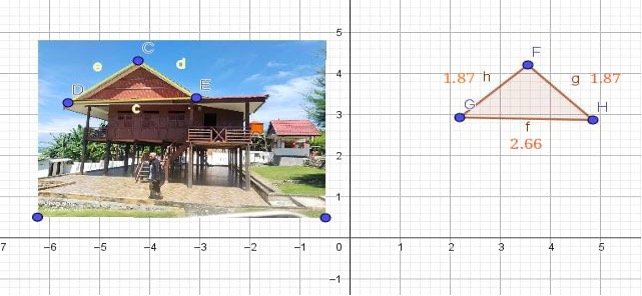
Mathematics learning is often delivered through procedural approaches that make mathematical concepts abstract and disconnected from students' cultural experiences, limiting meaningful learning. Integrating ethnomathematics into the Deep Learning curriculum offers a contextual approach that connects mathematics with local culture to promote meaningful, mindful, and joyful learning. This study aimed to identify the ethnomathematical concepts embedded in the Mandar Traditional House (Boyang) and explore their potential for Deep Learning–based mathematics instruction. A qualitative ethnographic approach was employed using one key informant, A'ba Tammalele, a traditional leader purposively selected for his extensive knowledge of Mandar culture and traditional architecture. Data were collected through participant observation, semi-structured interviews, architectural measurements, and documentation using observation guidelines, interview protocols, documentation sheets, and ethnographic field notes. Data were analyzed using Spradley's ethnographic model, including domain, taxonomic, componential, and cultural theme analyses. The findings revealed mathematical concepts related to geometry, measurement, spatial orientation, numerical symbolism, and geometric transformations embedded in the architectural elements of the Mandar Traditional House. These concepts reflect the cultural values and local knowledge of the Mandar community and provide authentic contexts for mathematics learning. The novelty of this study lies in integrating ethnographic findings with mathematical modeling and transforming them into a framework for Deep Learning–based mathematics instruction, thereby supporting both conceptual understanding and the preservation of local cultural heritage.
Downloads
References
Anindya, J. S., Napitupulu, S., Kadir, D., Anshor, A. S., Nasution, L. A., & Al-washliyah, U. M. N. (2026). Kontekstual. 2(1), 732–737. https://doi.org/10.65244/jgge.v2i1.534
Apriliyana, D. A., Masfu, S., & Riswari, L. A. (2023). Analisis Pemahaman Konsep Matematika Siswa Kelas V pada Materi Bangun Ruang. 6, 4166–4173. https://doi.org/10.54371/jiip.v6i6.2149
Aras, A., & B, F. Z. (2025). Exploring Buginese ethnomathematics in Saoraja La Tenri Bali to foster cultural intelligence. 10(4), 254–266. https://doi.org/10.23917/jramathedu.v10i4.11788
Arifin, M. (2025). Hubungan Antara Pemahaman Konsep dan Kemampuan Berpikir Kritis Siswa dalam Pembelajaran Matematika di Sekolah Dasar : Suatu Kajian Sistematis Literatur. 2(1), 1–14. https://doi.org/10.70152/genfabet.v2i1.31
Avila, R., & Caballes, D. O. (2024). Difficulties in Learning Mathematics : A Systematic Review. XI(2321), 401–405. https://doi.org/10.51244/IJRSI
Dari, S. W., & Jatmiko. (2024). Analisis Peran Etnomatematika dalam Pembelajaran Matematika. 269–278. https://doi.org/10.29407/wv109q65
Dhema, M., Cholily, Y. M., & Rahardjanto, A. (2025). Tracing local wisdom in the integration of ethnomathematics in vocational high school mathematics education : A Scopus systematic review Article history : Menelusuri kearifan lokal dalam integrasi etnomatematika pada pembelajaran matematika sekolah menengah kejuruan : Tinjauan sistematis Scopus This research contributes to : 08(July), 472–485. https://doi.org/10.24042/ijsme.v8i2.28208
Dhiki, Y. Y., Erigenia, M., Bara, S., Beatriks, H., Amur, D., Sabu, M. A., Wae, M. I., Yovandi, A., Ndewi, A. Y., & Flores, U. (2025). Geometri Dalam Arsitektur Rumah Adat Wologai. 8(2), 959–970. https://doi.org/10.36277/defermat.v8i2.2406
Dwiguningtyas, A. A., Agustito, D., Kusumaningrum, B., & Kuncoro, K. S. (2025). Persepsi Siswa terhadap Pembelajaran Matematika dan Kaitannya dengan Minat Serta Sikap Belajar Siswa. 9, 83–90. https://doi.org/10.30738/wacanaakademika.v9i1.19814
Efendi, D., Marian, F., Lestari, F., Zain, R. M., & Ramadhani, S. (2025). No Title. 5, 456–470. https://doi.org/10.29103/jpmm.v5i4.22987
Hayati, R., & Almuslim, U. (2025). Peran Deep Learning Dalam Meningkatkan. 6(1), 29–39. https://doi.org/10.61291/jpi.v6i2.39
Khaerani, Arismunandar, & Tolla, I. (2024). Peran Etnomatematika Dalam Meningkatkan Mutu Pembelajaran Matematika : Tinjauan Literatur The Role Of Ethnomathematics In Improving The Quality Of Mathematics Learning : Literature Review. 5(1), 20–26. https://doi.org/10.51577/ijipublication.v5i1.579
Maulida, L. K., Ana, K., & Zuliana, E. (2026). Etnomatematika Pada Rumah Adat Joglo Pencu Kudus 7(1), 697–713. https://doi.org/10.52266/el-muhbib.v9i1.3778
Mendrofa, R. N., & Mendrofa, N. K. (2026). Implementasi pendekatan etnomatematika berbasis budaya nias dalam pembelajaran matematika. 5, 140–154. https://doi.org/10.46773/dbseww71
Pratama, Z. F., Nurdini, S., Suyadi, M., & Parhan, M. (2025). DIALEKTIKA ISLAM DAN BUDAYA LOKAL : Basis Sosio-Kultural Pembentukan Islam Nusantara. 8(2), 222–242. https://doi.org/10.61941/iklila.v8i2.454
Purbaningrum, M., Ramadhan, S., & Thauzahra, R. (2023). Why is Math Difficult? : Beliefs That Affecting Students’ Mathematics Skills. 10(4), 1000–1009. https://doi.org/10.33394/jp.v10i4.8652
Qomaruddin, & Sa’diyah, H. (2024). Kajian Teoritis tentang Teknik Analisis Data dalam Penelitian Kualitatif : https://doi.org/10.52620/jomaa.v1i2.93
Rua, M. O. D., Fono, M. A., & Wewe, M. (2025). Pembelajaran matematika berbasis etnomatematika di satuan pendidikan. 3, 39–45. https://doi.org/10.38048/jcmp.v3i1.4402
Sahroni, M. A., Nurjanah, Sifaiyah, & Hidayati, D. (2024). Implementasi Pendidikan Matematika Realistik: Analisis Pengalaman Dan Dampaknya Terhadap Pembelajaran Siswa. 2(2), 229–236. https://doi.org/10.61798/get.v2i2.207
Saputra, A., & Suryandi, L. (n.d.). Perkembangan kognitif anak usia dini dalam perspektif vygotsky dan implikasinya dalam pembelajaran. 3(2).
Septiana, A., Amin, I. I., Soebagyo, J., & Nuriadin, I. (2022). Studi literatur: pendekatan pendidikan matematika realistik dalam pembelajaran matematika. 7(September), 343–350. http://dx.doi.org/10.25157/teorema.v7i2.7090
Serepinah, M., Maksum, A., & Nurhasanah, N. (2021). Kajian Etnomatematika Berbasis Budaya Lokal Tradisional Ditinjau Dari Perspektif Pendidikan Multikultural. 148–157. https://doi.org/10.24246/j.js.2023.v13.i2.p148-157
Sitompul, I., Juana, N. A., Sitompul, N. H., & Raya, U. T. (2025). Penerapan Model Deep Learning untuk Meningkatkan Kemampuan Konseptual Siswa dalam Pembelajaran Matematika Siswa Kelas V SDN 014628 App lication of Deep Learning Model to Improve Students ’ Conceptual Ability in Mathematics Learning for Grade V Students of SDN 014628. 5(2), 1287–1293. https://doi.org/10.54371/jiip.v6i6.2149
Wardani, G. V., & Budiarto, M. T. (2022). Etnomatematika : Konsep Matematika Pada Budaya Tulungagung Genata. 11(1). https://doi.org/10.26740/mathedunesa.v11n1.p210-218
Widodo, F., & Budi, S. (2025). Meningkatkan Motivasi Belajar Siswa melalui Materi yang Dekat dengan Kehidupan. 2(1), 1–13. https://doi.org/10.24176/2nfpst29
Yudhi, P., & Septiani, F. (2024). Pembelajaran dengan etnomatematika dalam meningkatkan pemahaman konsep matematika abstrak. 11(1), 59–64. https://doi.org/10.31869/ip.v11i1.5649
Downloads
Published
How to Cite
Issue
Section
License
Copyright (c) 2026 This is an open-access under the CC-BY-SA license

This work is licensed under a Creative Commons Attribution-ShareAlike 4.0 International License.
Education and Talent Development Center of Indonesia (ETDC Indonesia)
e-mail: kognitif@gmail.com, website : https://etdc-indonesia.com

Kognitif: Jurnal Riset HOTS Pendidikan Matematika dengan Situs: https://etdci.org/journal/kognitif berlisensi Creative Commons Attribution-ShareAlike 4.0 International License






.png)