ChatGPT-Assisted Discovery Learning on Junior High School Students' Mathematics Learning Anxiety: A Systematic Literature Review

https://doi.org/10.51574/kognitif.v6i2.4960
Keywords:
Anxiety Learning Math, ChatGPT , Discovery Learning , Junior High School Students , Systematic Literature ReviewAbstract
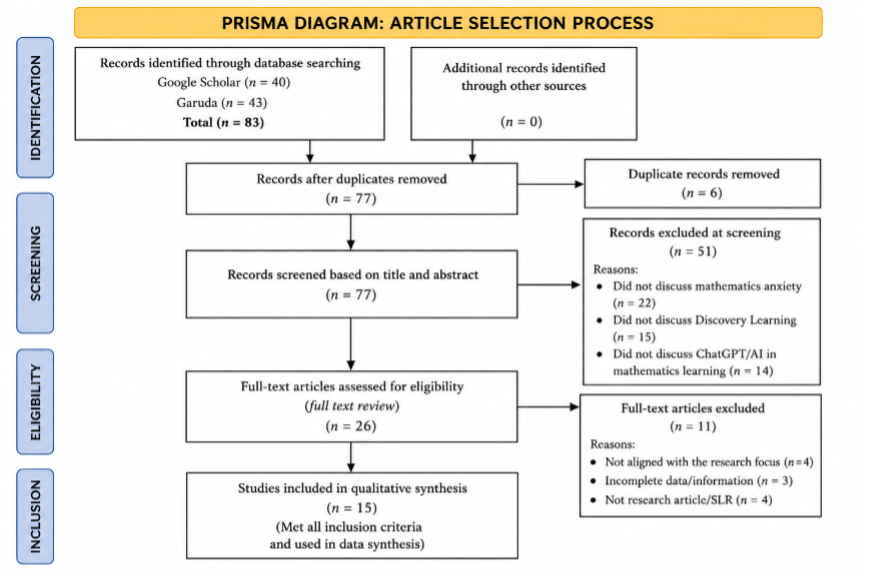
Math anxiety is an emotional factor that significantly affects students' learning processes and outcomes, particularly in junior high school. Children with this disorder may have difficulty concentrating, have low self-esteem, and are more likely to be passive learners. Therefore, learning innovations are needed that can encourage a more stimulating and enjoyable learning environment. The purpose of this study was to collect the findings of previous research on the integrative potential of ChatGPT-assisted Discovery Learning models in lowering mathematics-related junior high school students' anxiety. The PRISMA protocol was followed in the methodology of the Systematic Literature Review (SLR) of this study. Data for scientific publications published between 2019 and 2025 were collected from Google Scholar and Garuda databases. Regarding the year range, the articles studied focused on a combination of three variables, where articles in the period before the launch of ChatGPT (2019–2022) were netted based on the study of AI chatbots or similar artificial intelligence technologies in mathematics education, while the articles for the period 2023–2025 focused directly on the use of ChatGPT. A total of 15 articles that met the inclusion criteria were reviewed qualitatively based on the focus of mathematics anxiety, the use of Discovery Learning, and the use of AI/ChatGPT. The findings suggest that internal factors (fear and emotional stress) as well as environmental factors (monotonous learning) contribute to math anxiety. The application of Discovery Learning can increase students' freedom and activities, while ChatGPT offers potential support in the form of brief explanations, quick feedback, and personalized assistance. The findings show that the combination of Discovery Learning and ChatGPT has strong integrative potential as an alternative strategy to mitigate the math anxiety of junior high school students through the creation of interactive, independent, and adaptive learning spaces.
Downloads
References
Aini, I. N., Afifah, A., & Zahirah, I. N. (2024). Metode pembelajaran sebagai upaya menurunkan kecemasan matematika: systematic literature review. Cendikia Pendidikan, 12(6), 1–6. https://doi.org/10.9644/sindoro.v3i9.267
Aminuddin, Nurmila, Pramudya Asoka Syukur, Nurul Islamia, & Andi Dio Nurul Awalia. (2024). Integrasi ChatGPT dalam Blended Learning dalam Mengoptimalkan Pemahaman Materi Pembelajaran. Journal of Vocational, Informatics and Computer Education, 2(2), 134–141. https://doi.org/10.61220/voice.v2i2.20246
Anwari, A. M., & Soebagyo, J. (2025). Pemanfaatan ChatGPT sebagai Asisten Belajar Matematika: Tinjauan Kualitatif terhadap Pengalaman Siswa. Jurnal Pendidikan Matematika Undiksha, 16(2), 92–96. https://doi.org/10.23887/jjpm.v16i2.101099
Ardiansyah, M. (2025). Studi Komparatif Hasil Belajar Matematika Siswa antara Model Konvensional dan Model Discovery Learning. JIIBAS, 1(1), 31–38. https://doi.org/10.66371/jiibas.v1i1.30
Dina, A. S. (2022). Literature Review: Faktor Kecemasan Matematika Siswa dan Upaya Mengatasinya. J-PiMat : Jurnal Pendidikan Matematika, 4(1), 443–450. https://doi.org/10.31932/j-pimat.v4i1.1595
Fitriani, R., & Rully, P. (2021). Integrasi E-Modul dalam Pembelajaran Matematika : Systematic Literature Review. AKSIOMA: Jurnal Program Studi Pendidikan Matematika, 10(3), 1293–1307. https://edukatif.org/edukatif/article/view/4238
Fitriyani, A., Mutaqin, A., & Fakhrudin. (2025). Pengaruh pembelajaran discovery learning berbantuan artificial intellegence terhadap hasil. WILANGAN, 6(3), 220–229. https://eprints.untirta.ac.id/50946/
Haerunnisa, D., & Imami, A. I. (2022). Analisis Kecemasan Belajar Siswa SMP pada Pembelajaran Matematika. Didactical Mathematics, 4(1), 23–30. https://doi.org/10.31949/dm.v4i1.2015
Harahap, M. S., & Fauzi, R. (2025). Pengembangan Modul Pembelajaran Matematika Berbasis Web. Journal of Education and Development, 4(5), 13. https://doi.org/10.37081/ed.v4i5.153
Julya, D., & Nur, I. R. D. (2022). Studi Literatur Mengenai Kecemasan Matematis Terhadap Pembelajaran Matematika. Jurnal Didactical Mathematics Terhadap Pembelajaran Matematika, 4(April), 181–190. https://doi.org/10.31949/dm.v4i1.2006
Lita, I. M., & Pujiastuti, H. (2023). Pengaruh kecemasan matematika dan gender terhadap kemampuan pemahaman konsep matematika siswa kelas 8 sekolah menengah pertama. WILANGAN, 4(3), 259–265. https://dx.doi.org/10.62870/wjirpm.v4i3.20791
Merentek, T. C., Usih, E. J., & Lengkong, J. S. J. (2023). Implementasi Kecerdasan Buatan ChatGPT dalam Pembelajaran. Jurnal Pendidikan Tambusai, 7(3), 26862–26869. https://doi.org/10.31004/jptam.v7i3.10960
Muthmainnah, R. N., & Sumarsih, S. (2019). Penerapan metode discovery learning materi pola bilangan sebagai upaya mengurangi kecemasan siswa pada pelajaran matematika. FIBONACCI: Jurnal Pendidikan Matematika Dan Matematika, 5(2), 189. https://doi.org/10.24853/fbc.5.2.189-194
Nopela, L. A., Lestari, A., Lorenza, S., & Syafri, F. S. (2020). Pengaruh kecemasan matematika siswa kelas vii terhadap hasil belajar di smp negeri 3 kota bengkulu. Jurnal Derivat, 7(2), 75–84. https://doi.org/10.31316/j.derivat.v7i2.1050
Novianty, A., Chasanah, A. N., Pamungkas, M. D., & Tidar, U. (2023). Pengaruh pembelajaran matematika model problem based learning dan discovery learning terhadap kemampuan berpikir kritis siswa kelas. Lebesgue: Jurnal Ilmiah Pendidikan Matematika, Matematika Dan Statistika, 4(1), 596–602. https://doi.org/10.46306/lb.v4i1.303
Nuramin, A., & Rikayanti, R. (2025). Tantangan dan peluang penerapan chatgpt dalam pembelajaran matematika. Laplace : Jurnal Pendidikan Matematika, 8(1), 373–385. https://doi.org/10.31537/laplace.v8i1.2463
Pratamasari, G., Wahyuni, S., Yusmar, F., Taniati, R., & Bachtiar, Wahyu, R. (2025). Literatur review: analisis model discovery learning berbasis stem pada pembelajaran ipa terhadap keterampilan berpikir komputasi siswa SMP. Pendas : Jurnal Ilmiah Pendidikan Dasar, 10(2023), 240–250. https://doi.org/10.23969/jp.v10i02.27661
Putra, A., & Yulanda, Y. (2022). Kecemasan Matematika Siswa dan Pengaruhnya: Systematic Literature Review. Didaktika : Jurnal Kependidikan, 15(1), 1–14. https://doi.org/10.30863/didaktika.v15i1.1148
Reni Nuraeni, & Munandar, D. R. (2023). Analisis Kecemasan Matematis Siswa SMP Terhadap Hasil Belajar Matematika. Didactical Mathematics, 5(2), 361–368. https://doi.org/10.31949/dm.v5i2.5862
Sakti, Y., Fariz, Abadi, M., Hadi, M., & Putra, R. (2024). Tinjauan Literatur Sistematis : Pengaruh Penggunaan ChatGPT dalam Proses Pembelajaran Systematic Literature Review : The Effect of ChatGPT Utilization in the Learning. SITASI, 4(1), 15–37. https://doi.org/10.33005/sitasi.v4i1.718
Sindiana, M., Citroresmi, P. N., & Nurul, H. (2022). Model pembelajaran discovery learning terhadap kemampuan representasi dan kemampuan pemahaman konsep matematis siswa. Jurnal Pendidikan Matematika Undiksha, 13(2), 61–68. https://doi.org/10.23887/jjpm.v13i2.46667
Siregar, F. P., Wahyudi, S., Chandra, D. A., & Dwiana, A. A. (2024). ChatGPT Dalam Mendukung Pembelajaran di Sekolah. Jurnal Pendidikan Teknologi Informasi Dan Vokasional, 6(1), 24–34. http://dx.doi.org/10.23960/jpvti
Stiawan, D., Wardono, Waluya, B., & Prabowo, A. (2024). enurunan Kecemasan Matematika Melalui Model Pembelajaran : Systematic Literature Review. PRISMA, Prosiding Seminar Nasional Matematika, 7, 596–602. https://proceeding.unnes.ac.id/prisma/article/view/3009
Sumarna, M. S., Nindiasari, H., Pujiastuti, H., & Yuhana, Y. (2025). Systematic Literature Review: Penerapan Realistic Mathematics Education Meningkatkan Kemampuan Komunikasi dan Pemahaman Konsep Matematis Siswa. Edukasiana: Jurnal Inovasi Pendidikan, 4(3), 946–956. https://doi.org/10.56916/ejip.v4i3.1606
Suwarni, S. (2023). Pengaruh Tingkat Kecemasan Terhadap Prestasi Belajar Matematika Siswa Kelas Viii Smpn 1 Ngrampal Sragen Tahun 2021/2022. WIDYA DIDAKTIKA - Jurnal Ilmiah Kependidikan, 2(2), 1–5. https://doi.org/10.54840/juwita.v2i2.213
Umaroh, S., Yuhana, Y., & Hendrayana, A. (2020). Pengaruh Self-Efficacy Dan Kecemasan Matematika Terhadap Kemampuan Penalaran Matematis Siswa Smp. Wilangan: Jurnal Inovasi Dan Riset Pendidikan Matematika, 1(1), 1. http://www.jurnal.untirta.ac.id/index.php/wilangan
Umayah, Y. (2019). Penerapan Model Discovery Learning dalam Mengatasi Kecemasan Matematika Siswa SMP. GAUSS: Jurnal Pendidikan Matematika, 2(2), 74. https://doi.org/10.30656/gauss.v2i2.1778
Warisma, L., Zulkarnain, & Yuanita, P. (2020). The Implementation of Discovery Learning Model To Improve Mathematics Achievement From the Students At Class Xi Mia 1 Man 1 Pekanbaru. Jom Fkip-your, 7(2), 1–14. https://jom.unri.ac.id/index.php/JOMFKIP/article/view/22955
Downloads
Published
How to Cite
Issue
Section
License
Copyright (c) 2026 This is an open-access under the CC-BY-SA license

This work is licensed under a Creative Commons Attribution-ShareAlike 4.0 International License.
Education and Talent Development Center of Indonesia (ETDC Indonesia)
e-mail: kognitif@gmail.com, website : https://etdc-indonesia.com

Kognitif: Jurnal Riset HOTS Pendidikan Matematika dengan Situs: https://etdci.org/journal/kognitif berlisensi Creative Commons Attribution-ShareAlike 4.0 International License






.png)