Exploration of Ethnomathematics in Kobhung Madura

https://doi.org/10.51574/kognitif.v6i1.4491
Keywords:
Exploration , Ethnomathematics , Madura kobhungAbstract
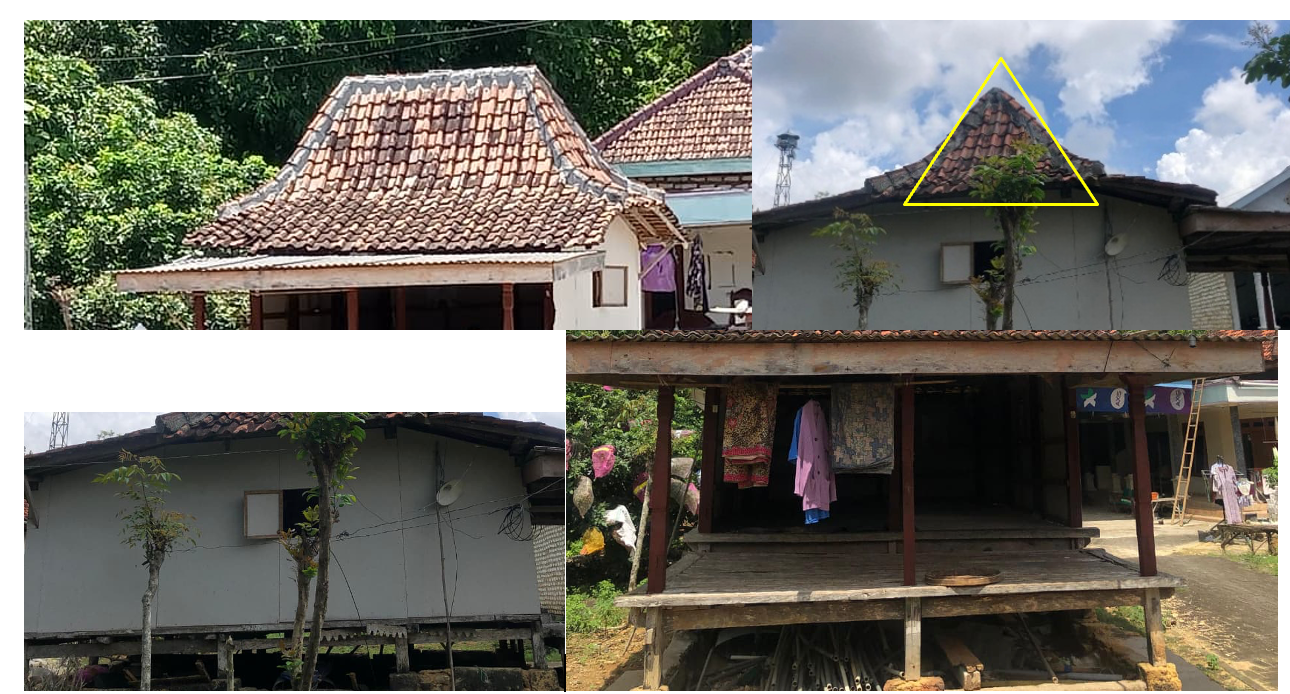
The integration of education and culture is one of the rapidly developing fields of mathematics research today, especially through studies of traditional architecture such as Madurese kobhung. This study aims to describe the forms and patterns of ethnomathematics contained in the kobhung structures of the Madurese community. This approach is important because it can help students understand abstract geometric concepts through their connection with Madurese local wisdom. This study aims to describe the mathematical concepts found in the structure and patterns of the Madurese kobhung and map out how these concepts can be used in the mathematics learning process. The method used is qualitative research with an ethnographic approach. The research subjects are 10 Madurese informants in Pamekasan and authentic kobhung structures as purposive samples. Data collection methods included direct participatory observation in the field, in-depth interviews, visual documentation, and literature study. The main instrument was the researcher as a human instrument. Data analysis followed the Miles and Huberman model, which included data reduction, data presentation, and conclusion drawing with source triangulation validation and reliability through retesting. The results of this study describe Madurese kobhung as containing mathematical elements, namely straight/parallel lines, acute/obtuse/right angles, flat shapes (rectangles, isosceles triangles, trapezoids), congruence, geometric transformations, and the Pythagorean theorem in the pracik structure. The ethnomathematical study of kobhung in geometry learning shows that this traditional architecture can be used as a context for mathematics learning, so that the material taught becomes more contextual and has cultural meaning. This study is still limited to identifying ethnomathematical elements in the Madurese kobhung structure and has not examined its application and effectiveness in classroom learning. Therefore, the researchers recommend further research on its implementation in mathematics classroom learning.
Downloads
References
Adha, I., Zulkardi, Z., & Putri, R. I. I. (2023). Systematic Literature Review: Pembelajaran Sudut Menggunakan Pendekatan Pendidikan Matematika Realistik. JOURNAL of MATHEMATICS SCIENCE and EDUCATION, 6(1), 46–55. https://doi.org/10.31540/jmse.v6i1.2640
Ahmad, R., & Kholis, R. A. N. (2021). Kobhung Dalam Tradisi Sosial, Agama, Dan Ekonomi Masyarakat Madura. JURNAL PUSAKA; Media Kajian Dan Pemikiran Islam, 11(2), 20–28. https://doi.org/10.35897/ps.v11i2.647
Cahyani, L., Rahayu, H., Erviana, R., & Sepriliani, S. P. (2025). Eksplorasi Etnomatematika Rumah Limas Di Desa Anyar, Sumatera Selatan. Journal Numeracy, 12(1), 37–50. https://ejournal.bbg.ac.id/numeracy
D’ambrosio, U. (1985). FLM Publishing Association Ethnomathematics and Its Place in the History and Pedagogy of Mathematics. FLM Publishing Association, 5(1), 44–48. http://www.jstor.org/stable/40247876
Fachrunnisa, Y. N., & Sari, C. K. (2023). Etnomatematika : Eksplorasi Konsep Transformasi Geometri Pada Batik Melati Desa Kebon, Bayat. AKSIOMA: Jurnal Program Studi Pendidikan Matematika, 12(1), 294. https://doi.org/10.24127/ajpm.v12i1.5961
Fajriyeh, L., & Zayyadi, M. (2023). Etnomatematika: Eksplorasi Budaya Rokat Tase’ Pantai Jumiang Pamekasan Madura. JEMS: Jurnal Edukasi Matematika Dan Sains, 11(2), 458–467. https://doi.org/10.25273/jems.v11i2.16280
Fathorrozy, F., Qomariyah, N., & Halik, Abd. (2025). Kobhung in the Perspective of Ethnomathematics and Ethnoscience: Representation of Science, Culture, and Islam in Madura. Proceedings of the 9th International Conference on Islamic Studies (ICONIS 2025), 9, 53–64. https://doi.org/10.2991/978-2-38476-464-8_5
Hasan, N. (2008). KOBUNG (Bangunan Tradisional Pewaris Nilai Masyarakat Madura Tempo Dulu). KARSA, 13(1), 71–80.
Hasanah, S. I., Zayyadi, M., Tafrilyanto, C. F., & Ningtyas, Y. D. W. K. (2024). Ethnomathematics of Madurese Cultural Characteristics in the Emancipated Curriculum. Journal of Innovation in Educational and Cultural Research, 5(3), 540–548. https://doi.org/10.46843/jiecr.v5i3.1147
Hotimah, & Salma, Y. (2023). Daya Nasional Jurnal Pendidikan Ilmu-Ilmu Sosial dan Humaniora Kobung Madura: Sejarah Perjalanan dan Kearifan Lokal dalam Be. Daya Nasional Jurnal Pendidikan Ilmu-Ilmu Sosial Dan Humaniora, 1(2), 66–78. https://doi.org/10.26418/jdn.v1i2.70467
Iffah, R. D. L., Subanti, S., Usodo, B., & Nurhasanah, F. (2025). Systematic literature review: Ethnomathematics research in Indonesia. Journal of Research and Advances in Mathematics Education, 10(1), 15–27. https://doi.org/10.23917/jramathedu.v10i1.5621
Marasabessy, R. (2021). Teorema Pythagoras: Aplikasinya terhadap Teorema Heron dan Dimensi Tiga. PRISMA, Prosiding Seminar Nasional Matematika, 4(4), 743–754. https://journal.unnes.ac.id/sju/index.php/prisma/
Miles, M. B., Huberman, A. M., & Saldana, J. (2014). Qualitative Data Analysis A Methods Sourcebook (3rd ed.). SAGE Publications.
Pangestu, I. A., & Ruqoyyah, S. (2023). Pembelajaran Daring Materi Bangun Ruang Pada Siswa KELAS V SD Menggunakan Pendekatan Realistic Mathematics Education (RME). Journal of Elementary Education, 06(2), 228–234. https://seminar.ustjogja.ac.id/index.php/semnas_ppg_ust/article/view/2237
Prakoso, F., & Rahmatunnisa, S. (2019). Upaya Meningkatkan Hasil Belajar Matematika Materi Bangun Datar Dengan Menggunakan Model Listen And Draw. HOLISTIKA : Jurnal Ilmiah PGSD, 3(1), 45–48. https://doi.org/10.24853/holistika.3.1.45-48
Putri, J. K., Agusdianita, N., & Oktariya, B. (2024). Pembelajaran Berbasis Etnomatematika Pada Hasil Belajar Siswa : Tinjauan Literatur Sistematis. Social, Humanities, and Education Studies (SHEs): Conference Series, 7(3), 903–912. https://jurnal.uns.ac.id/shes
Putri, N. F., & Zayyadi, M. (2023). Etnomatematika pada Rumah Bersejarah Peninggalan Belanda di Desa Ragung Kecamatan Pangarengan. JEMS: Jurnal Edukasi Matematika Dan Sains, 11(2), 431–437. https://doi.org/10.25273/jems.v11i2.16277
Safitri, D. I. N. (2020). Variasi Pemahaman Konsep Sebangun Dan KongruenVariasi Pemahaman Konsep Sebangun Dan Kongruen. PROSIDING: Seminar Nasional Pendidikan Dan Ilmu Matematika (SENANDIKA), 2(1), 327–333. https://new-conference.unisma.ac.id/index.php/senandika/article/view/664
Sari, A. K., Budiarto, M. T., & Ekawati, R. (2022). Ethnomathematics study: cultural values and geometric concepts in the traditional “tanean-lanjang” house in Madura - Indonesia. Journal of Research and Advances in Mathematics Education, 7(1), 46–54. https://doi.org/10.23917/jramathedu.v7i1.15660
Solikin, A. (2017). Konsep Kesejajaran Garis Dalam Geometri Euclid Dan Geometri Riemann Serta Aplikasinya Dalam Kajian Ilmu Falak. MUST: Journal of Mathematics Education, Science and Technology, 2, 243–254. https://doi.org/10.30651/must.v2i2.865
Sopyan, D. (2022). Desain Pembelajaran Kontekstual Berbasis Etnomatematika: Memahami Pola Bilangan Melalui Alat Tradisonal Ancak. EDUPEDIKA Jurnal Studi Pendidikan Dan Pembelajaran, 1(1), 35–44. https://journal.pelitanusa.or.id/index.php/edupedika
Susanto, F. P. K., Heryanto, D. R., & Rauta, D. A. U. (2022). Eksplorasi Etnomatematika Pada Rumah Adat Joglo Sinom Limas. Prosiding Seminar Nasional Matematika, 5, 483–491. https://journal.unnes.ac.id/sju/index.php/prisma/
Zayyadi, M., & Subaidi, A. (2017). Eksplorasi Etnomatematika Pada Masyarakat Madura. SIGMA. http://dx.doi.org/10.53712/sigma.v2i2.124
Downloads
Published
How to Cite
Issue
Section
License
Copyright (c) 2026 Ulfi Syamsiyatul Maghfiroh, Moh. Zayyadi, Sri Indriati Hasanah

This work is licensed under a Creative Commons Attribution-ShareAlike 4.0 International License.
Education and Talent Development Center of Indonesia (ETDC Indonesia)
e-mail: kognitif@gmail.com, website : https://etdc-indonesia.com

Kognitif: Jurnal Riset HOTS Pendidikan Matematika dengan Situs: https://etdci.org/journal/kognitif berlisensi Creative Commons Attribution-ShareAlike 4.0 International License







.png)