Exploring the School Environment Through an Ethnomathematics Approach

https://doi.org/10.51574/kognitif.v5i4.4016
Keywords:
Exploration , Ethnomathematics , School environment , Matrix , Contextual learningAbstract
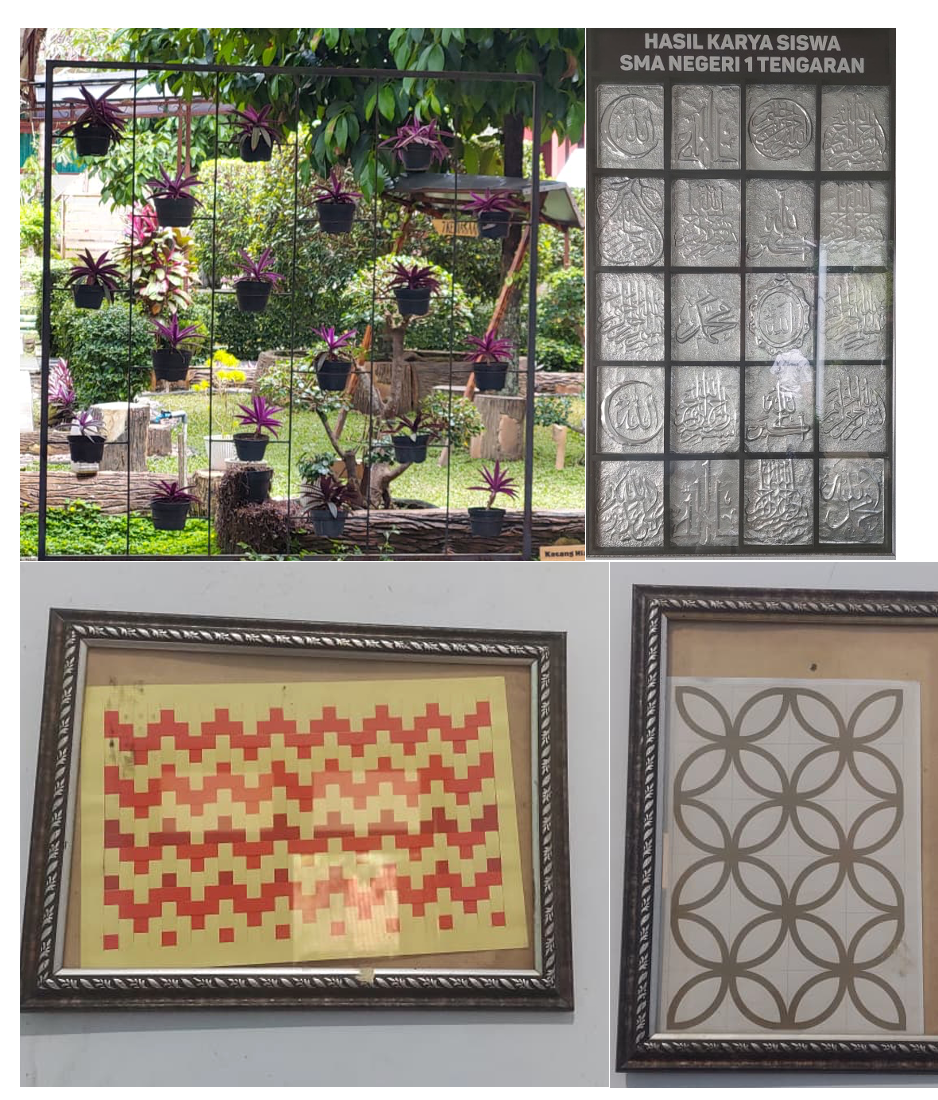
Mathematics is often perceived as abstract and disconnected from everyday life, causing students to struggle with topics requiring symbolic representation, such as matrices. This situation indicates the need for learning approaches that connect formal concepts with real experiences, highlighting the urgency to address students’ limited ability to link symbolic representations with real contexts. This study aims to describe the process and results of exploring the school environment as a source of mathematical representation for matrix topics through an ethnomathematics approach. This research employed a qualitative approach with a case study design. Participants included one mathematics teacher and two 11th-grade students from SMA Negeri 1 Tengaran. Data were collected through observation, interviews, and documentation; instruments consisted of observation sheets, interview guides, and student worksheets (LKPD). Data analysis used the Miles, Huberman, and Saldana model with technique and source triangulation to enhance credibility. The results indicate that environmental exploration helped students identify real-world patterns representable as matrices, such as flowerpot arrangements, floor patterns, and school artwork. The findings also show contributions to mathematical literacy and the Pancasila Student Profile dimensions particularly critical thinking, creativity, and collaboration. The novelty of this study lies in integrating ethnomathematics into algebra topics (matrix concepts), which are rarely examined, and utilizing a modern school environment as a local context. Implications for teaching include replicating exploration steps such as field observation, pattern recording, and matrix representation to support routine lessons or other topics requiring connections between real objects and mathematical structures.
Downloads
References
Agustina, D. T. (2020). Pendekatan CPA (Concret Pictorial Abstrak) dan Matematika Realistik Bagi Siswa SD. Maghza Pustaka.
Ambrosio, U. D. (1985). Ethnomathematics and its Place in the History and Pedagogy of Mathematics. February, 44–48.
Amelia, D., Rahmadani, F. J., Septiyani, M. N. R., Abdurrafi, M. A., & Maulidah, N. (2025). Peran Media Pembelajaran Etnomatematika dalam Meningkatkan Minat Belajar Matematika Siswa SD: Tinjauan Literatur. Jurnal Ilmiah Profesi Pendidikan, 10(1), 875–883. https://doi.org/10.29303/jipp.v10i1.2953
Berns, R. G., & Erickson, P. M. (2001). Contextual Teaching and Learning : Preparing Students for the New Economy. ERIC, 9.
Dalimunthe, D. A. (2021). Penerapan Model Pembelajaran Inkuiri Untuk Meningkatkan Hasil Belajar Siswa Kelas XI SMA Negeri 1 Dolok Sigompulon Tahun Ajaran 2019/2020. Jurnal Penelitian, Pendidikan Dan Pengajaran: JPPP, 2(2), 104–110. https://doi.org/10.30596/jppp.v2i2.7191
Damyanti, R., Aliani, & Syafruddin. (2025). Pengaruh Pendekatan Kontekstual terhadap Pemahaman Siswa dalam Pembelajaran Siswa Kelas V Sekolah Dasar. Jurnal Pesona Indonesia, 2(2), 37–41. https://doi.org/10.71436/jpi.v2i1.23
Danoebroto, S. W. (2020). Kaitan antara Etnomatematika dan Matematika Sekolah: Sebuah Kajian Konseptual. Idealmathedu: Indonesian Digital Journal of Mathematics and Education, 7(1), 37–48. https://doi.org/10.53717/idealmathedu.v7i1.171
Ekawati, M. (2017). TEORI BELAJAR MENURUT ALIRAN PSIKOLOGI KOGNITIF SERTA IMPLIKASINYA DALAM PROSES BELAJAR DAN PEMBELAJARAN. Seminar Nasional: Jambore Konseling 3, 00(00), XX–XX. https://doi.org/10.15548/atj.v3i2.528
Fyfe, E. R., & Nathan, M. J. (2018). Making “ concreteness fading ” more concrete as a theory of instruction for promoting transfer. Educational Review, 1911, 1–20. https://doi.org/10.1080/00131911.2018.1424116
Glasersfeld, E. von. (1995). Radical Contructivism (1st Editio). RoutkdgeFalmer. https://doi.org/10.4324/9780203454220
Hardiarti, S. (2017). Etnomatematika: Aplikasi Bangun Datar Segiempat Pada Candi Muaro Jambi. Aksioma, 8(2), 99. https://doi.org/10.26877/aks.v8i2.1707
Indari, R. (2019). Efektivitas Pengetahuan Sains Melalui Pendekatan Eksplorasi Lingkungan Sekitar Sekolah di Taman Kanak-Kanak Nurul Jami’ah Talise. Institut Agama Islam Negeri (IAIN) Palu. https://doi.org/10.24239/abulava.Vol1.Iss1.5
Kapitan, M. S., & Liliana, S. (2025). Kajian Etnomatematika pada Motif Kain Tenun Ikat Amarasi Kabupaten Kupang. Kognitif: Jurnal Riset HOTS Pendidikan Matematika, 5(June), 910–922. https://doi.org/https://doi.org/10.51574/kognitif.v5i2.3090
Kleshnina, M., Holden, M. H., Heneghan, R. F., & Helmstedt, K. J. (2025). Embedding Sustainability in Undergraduate Mathematics with Actionable Case Studies. 1–21. https://doi.org/10.48550/arXiv.2508.07594
Lestari, S. A. P., Kusumaningrum, D. S., & Nurapriani, F. (2024). Integrasi Etnomatematika dalam Pembelajaran Bangun Datar Segi Empat Berbasis Kearifan Lokal untuk Meningkatkan Pemahaman Matematika. Jurnal Inovasi Penelitian Dan Pengabdian Masyarakat, 4(2), 161–171. https://doi.org/10.53621/jippmas.v4i2.369
Maulida, A., Somakim, & Mulyono, B. (2025). Eksplorasi Etnomatematika Rumah Bari Pesirah Pangkalan Balai untuk Pembelajaran Matematika SMP. Kognitif: Jurnal Riset HOTS Pendidikan Matematika, 5(2), 481–493. https://doi.org/10.51574/kognitif.v5i2.2976
Miles, M. B., Huberman, A. M., & Saldana, J. (2014). Qualitative Data Analysis (3rd ed., Vol. 1, Issue 1). SAGE.
Novak, J. D. (2010). Learning, Creating, and Using Knowledge (2nd Editio). https://doi.org/https://doi.org/10.4324/9780203862001
OECD. (2023). PISA 2022 Results. In Factsheets: Vol. I.
Permatasari, Y., Hartatiana, & Wardani, A. K. (2024). Innovative Mathematics Learning : Designing Student Worksheet with Augmented Reality with Lempok Durian Context. Inomatika, 6(2), 83–92. https://doi.org/10.35438/inomatika.v6i2.458
Pinochet, J., & Cortada, W. B. (2022). Visualisation of matrix product : Using light to clarify an abstract mathematical concept. 1–8. https://doi.org/10.1088/1361-6552/ac6c6f
Rahmadayanti Rabbani, A., Artayasa, I. P., & Raksun, A. (2023). Pengaruh Model Contextual Teaching and Learning Dengan Metode Outdoor Learning Terhadap Hasil Belajar Biologi Siswa Kelas X IPA SMA Negeri 2 Labuapi. Jurnal Ilmiah Profesi Pendidikan, 8(3), 1297–1306. https://doi.org/10.29303/jipp.v8i3.1465
Rosa, M., & Orey, D. C. (2011). Ethnomathematics: the cultural aspects of mathematics Etnomatemática: os aspectos culturais da matemática. Revista Latinoamericana de Etnomatemática, 4(2), 32–54.
Septiani, F., & Yudhi, P. (2024). Pembelajaran Dengan Etnomatematika dalam Meningkatkan Pemahaman Konsep Matematika Abstrak. Inovasi Pendidikan, 11(1), 59–64. https://doi.org/10.31869/ip.v11i1.5649
Simonetti, M., Perri, D., Amato, N., & Gervasi, O. (2021). Teaching Math with the help of Virtual Reality. https://doi.org/10.1007/978-3-030-58820-5_57
Stake, R. E. (1995). The Art of Case Study Research. SAGE publication Ltd.
Sundari, S., & Fauziati, E. (2021). Implikasi teori belajar Bruner dalam model pembelajaran kurikulum 2013 [Implications of Bruner’s learning theory in the 2013 curriculum learning model]. Jurnal Papeda: Jurnal Publikasi Pendidikan Dasar, 3(2), 128–136. https://doi.org/10.36232/jurnalpendidikandasar.v3i2.1206
Suparlan, S. (2019). Teori konstruktivisme dalam pembelajaran. Islamika, 1(2), 79-88. In Jurnal Keislaman dan Ilmu Pendidikan (Vol. 1, Issue 2). Jurnal Keislaman Dan Ilmu Pendidikan, 1(2), 79–88. https://doi.org/10.36088/islamika.v1i2.208
Thalib, A., Putri, M. A., & Hamin, M. nur I. (2025). Eksplorasi Sejarah Matematika dengan Pendekatan Etnomatematika pada Bangun Geometri Arsitektur Benteng Fort Rotterdam Makassar. 5(June), 506–521. https://doi.org/10.51574/kognitif.v5i2.3151
W.Creswell, J., & N.Poth, C. (2018). Qualitative Inquiry Research Design. SAGE Publications Ltd.
Wahyuni, S., & Kusaeri, A. (2024). Kognitif. Kognitif: Jurnal Riset HOTS Pendidikan Matematika, 4(May), 281–297. https://doi.org/https://doi.org/10.51574/kognitif.v4i1.1464
Wathoni, N. (2024). Penggunaan Media Konkret Dalam Pembelajaran Konsep Matematika Abstrak. Jurnal Ilmiah IPA Dan Matematika (JIIM), 2(4), 101–105. https://doi.org/10.61116/jiim.v2i4.484
Wulansari, R., Effendi, A., & Zamnah, L. N. (2025). Peran Etnomatematika dalam Mengankat Kearifan Lokal ke dalam Dunia Pendidikan. Proceeding Galuh Mathematics National Conference, 5(1), 41–53. https://jurnal.unigal.ac.id/GAMMA-NC/article/view/19095
Yuanita, P., Id, H. Z., & Id, E. Z. (2018). The effectiveness of Realistic Mathematics Education approach : The role of mathematical representation as mediator between mathematical belief and problem solving. 1–20. https://doi.org/10.1371/journal.pone.0204847
Zidna, M. H. I. Q., Bakar, M. Y. A., & Zakariyah. (2025). Transformasi Pembelajaran Berbasis Kurikulum Merdeka Melalui Pendekatan Konstruktivistik. ANdragogi Jurnal Pendidikan Dan Pembelajaran, 5(2), 152–169. https://doi.org/10.31538/adrg.v5i2.2108
Downloads
Published
How to Cite
Issue
Section
License
Copyright (c) 2025 Rizqi Retno Asih, Unsiyah Nuzulah, Purnomo

This work is licensed under a Creative Commons Attribution-ShareAlike 4.0 International License.
Education and Talent Development Center of Indonesia (ETDC Indonesia)
e-mail: kognitif@gmail.com, website : https://etdc-indonesia.com

Kognitif: Jurnal Riset HOTS Pendidikan Matematika dengan Situs: https://etdci.org/journal/kognitif berlisensi Creative Commons Attribution-ShareAlike 4.0 International License






.png)