The Effect of Fishbowl-Based Concept Sentence Cooperative Models on Critical Thinking and Creativity Skills of Students

https://doi.org/10.51574/ijrer.v5i3.4771
Keywords:
Concept Sentence Model, Creativity, Critical Thinking, Fishbowl Method, Science LearningAbstract
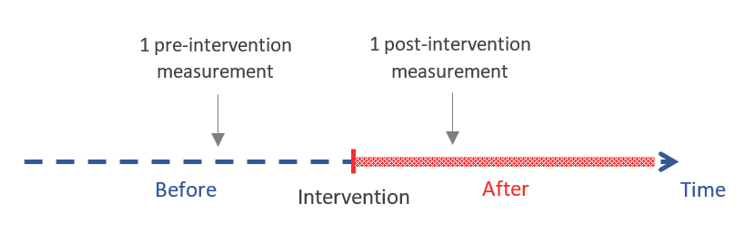
This research is motivated by the low critical thinking skills and creativity of elementary school students. This study aims to test the effectiveness of the implementation of the concept sentence learning model combined with the fishbowl method on improving students' critical thinking skills and creativity in natural science subjects. The method used is experimental research with a one-group pretest-posttest design involving 23 fourth-grade students at Elementary School Inpres Bira 2, Makassar. Data was gathered via questionnaires and examined utilizing paired samples tests and Wilcoxon signed ranks tests. The results showed a significant increase in the average critical thinking score from 68.86 to 88.73 (Sig. 0.000 < 0.05). Furthermore, student creativity scores increased from 51.17 to 75.08, supported by the Wilcoxon test results with an Asymp. Sig. (2-tailed) value of 0.000. The integration of these two methods effectively helps students’ structure logical concept sentences while providing a dynamic discussion space for expressing creative ideas. This research contributes an alternative active learning strategy for educators to create a more dynamic and solution-oriented classroom atmosphere.
References
Adeoye, M. A., Prastikawati, E. F., & Abimbowo, Y. O. (2024). Empowering learning: Pedagogical strategies for advancing 21st century skills and quality education. Journal of Nonformal Education, 10(1), 10-21. https://doi.org/10.15294/jone.v10i1.1451
Anggaini, D., & Sutrisno, T. (2025). Critical Thinking Skills of College Students in Solving Linear Algebra Problems Using the Problem-Based Learning Model. ETDC: Indonesian Journal of Research and Educational Review, 5(1), 231-245. https://doi.org/10.51574/ijrer.v5i1.4160
Anggraeni, D. M., Prahani, B. K., Suprapto, N., Shofiyah, N., & Jatmiko, B. (2023). Systematic review of problem based learning research in fostering critical thinking skills. Thinking Skills and Creativity, 49, 101334. https://doi.org/10.1016/j.tsc.2023.101334
Apriliana, A. C., & Hermawati, W. (2020). Penggunaan Model Pembelajaran Concept Sentence Untuk Meningkatkan Aktivitas Siswa Dan Keterampilan Menulis Karangan Narasi. Pendas: Jurnal Ilmiah Pendidikan Dasar, 5(1), 38-49. https://doi.org/10.23969/jp.v5i1.2862
Darling-Hammond, L., Schachner, A. C., Wojcikiewicz, S. K., & Flook, L. (2024). Educating teachers to enact the science of learning and development. Applied Developmental Science, 28(1), 1-21. https://doi.org/10.1080/10888691.2022.2130506
Ellerton, P., & Kelly, R. (2022). Creativity and critical thinking. In Education in the 21st century: STEM, creativity and critical thinking (pp. 9-27). Cham: Springer International Publishing. https://doi.org/10.1007/978-3-030-85300-6_2
Fadele, A. A., & Rocha, A. (2025). Introduction to the key features of quantitative research. In The art and science of quantitative research (pp. 1-27). Cham: Springer Nature Switzerland. https://doi.org/10.1007/978-3-031-91431-7_1
Filippou, D., Buchs, C., Quiamzade, A., & Pulfrey, C. (2022). Understanding motivation for implementing cooperative learning methods: a value-based approach. Social Psychology of Education, 25(1), 169-208. https://doi.org/10.1007/s11218-021-09666-3
González-Pérez, L. I., & Ramírez-Montoya, M. S. (2022). Components of Education 4.0 in 21st century skills frameworks: systematic review. Sustainability, 14(3), 1493. https://doi.org/10.3390/su14031493
Han, M., & Hamilton, E. R. (2023). Promoting engagement and learning: Using the fishbowl strategy in online and hybrid college courses. College Teaching, 71(4), 281-289. https://doi.org/10.1080/87567555.2021.2024127
Harahap, S., Lubis, I. S., & Rahimah, A. (2025). Pengaruh Model Pembelajaran Concept Sentence Terhadap Keterampilan Menulis Puisi Pada Siswa Kelas VIII SMP Negeri 2 Marancar. Jurnal Education and Development, 13(1), 299-305. https://doi.org/10.37081/ed.v13i1.6731
Herawaty, A., Rajagukguk, S., & Sitopu, J. W. (2023). The Effect of Concept Sentence Learning Model on Students' Learning Outcomes. Jurnal Penelitian Pendidikan IPA, 9(2), 843-849. https://doi.org/10.29303/jppipa.v9i2.2988
Hindman, A. H., Morrison, F. J., Connor, C. M., & Connor, J. A. (2020). Bringing the science of reading to preservice elementary teachers: Tools that bridge research and practice. Reading Research Quarterly, 55, S197-S206. https://doi.org/10.1002/rrq.345
Kartika, I., & Arifudin, O. (2022). Implementasi manajemen mutu pembelajaran sebagai upaya meningkatkan mutu pembelajaran di sekolah dasar. Jurnal Al-Amar: Ekonomi Syariah, Perbankan Syariah, Agama Islam, Manajemen Dan Pendidikan, 3(2), 144-157.
Leggett, N. (2023). Creative and critical thinking in early childhood. In Integrated education and learning (pp. 109-127). Cham: Springer International Publishing. https://doi.org/10.1007/978-3-031-15963-3_7
Li, S., Hong, Y. C., & Craig, S. D. (2023). A systematic literature review of social learning theory in online learning environments. Educational Psychology Review, 35(4), 108. https://doi.org/10.1007/s10648-023-09827-0
Lim, W. M. (2025). What is quantitative research? An overview and guidelines. Australasian Marketing Journal, 33(3), 325-348. https://doi.org/10.1177/14413582241264622
Liu, Z., Kong, X., Liu, S., Yang, Z., & Zhang, C. (2022). Looking at MOOC discussion data to uncover the relationship between discussion pacings, learners’ cognitive presence and learning achievements. Education and information technologies, 27(6), 8265-8288. https://doi.org/10.1007/s10639-022-10943-7
Ma, S., Bhagat, K. K., Spector, J. M., Lin-Lipsmeyer, L., Liu, D., Leng, J., ... & Mancini, J. (2023). Developing critical thinking: A review of past efforts as a framework for a new approach for childhood learning. Learning, Design, and Technology: An International Compendium of Theory, Research, Practice, and Policy, 4007-4034. https://doi.org/10.1007/978-3-319-17461-7_161
Mirasandi, I. P., Akhyar, M., & Widyastono, H. (2019). Media development on the concept sentence learning model based android for students with hearing impairment. Journal of Physics: Conference Series (Vol. 1339, No. 1, p. 012115). IOP Publishing. https://doi.org/10.1088/1742-6596/1339/1/012115
Parida, P., Irviana, I., & Afni, N. (2025). Cooperative Learning Model of Time Based Learning Type Assisted by Media Box: Elementary School Students' IPAS Learning Outcomes. ETDC: Indonesian Journal of Research and Educational Review, 4(4), 1466-1477. https://doi.org/10.51574/ijrer.v4i4.3875
Qudsiyah, B., Laila, F., Munir, B., Suprianto, W. D., & Nurhayati, N. (2023). Hakikat pendidikan dan manajemen pendidikan di sekolah. Jurnal Multidisiplin Indonesia, 2(6), 1297-1303. https://doi.org/10.58344/jmi.v2i6.283
Saka, N. T. (2025). Social learning theory. Exploring adult education through learning theory, 135-162. https://doi.org/ 10.4018/979-8-3693-5812-2.ch006
Soysal, Y. (2021). Exploring elementary and middle school science teachers’ metadiscourse moves: A Vygotskian analysis and interpretation. Learning: Research and Practice, 7(1), 70-104. https://doi.org/10.1080/23735082.2020.1761432
Susilo, M. J., Dewantoro, M. H., & Yuningsih, Y. (2022). Character education trend in Indonesia. Journal of Education and Learning (EduLearn), 16(2), 180-188. https://doi.org/10.11591/edulearn.v16i2.20411
Tang, K. H. D. (2023). Student-centered approach in teaching and learning: What does it really mean?. Acta Pedagogia Asiana, 2(2), 72-83. https://doi.org/10.53623/apga.v2i2.218
Thornhill-Miller, B., Camarda, A., Mercier, M., Burkhardt, J. M., Morisseau, T., Bourgeois-Bougrine, S., ... & Lubart, T. (2023). Creativity, critical thinking, communication, and collaboration: Assessment, certification, and promotion of 21st century skills for the future of work and education. Journal of Intelligence, 11(3), 54. https://doi.org/10.3390/jintelligence11030054
Tohani, E., & Aulia, I. (2022). Effects of 21st century learning on the development of critical thinking, creativity, communication, and collaboration skills. Journal of Nonformal Education, 8(1), 46-53. https://doi.org/10.15294/jne.v8i1.33334
Vrbin, C. M. (2022). Parametric or nonparametric statistical tests: Considerations when choosing the most appropriate option for your data. Cytopathology, 33(6), 663-667. https://doi.org/10.1111/cyt.13174
Wu, S. Y. (2020). Incorporation of collaborative problem solving and cognitive tools to improve higher cognitive processing in online discussion environments. Journal of Educational Computing Research, 58(1), 249-272. https://doi.org/10.1177/0735633119828044
Yao, J. X., Liu, Y. X., & Guo, Y. Y. (2023). Learning progression-based design: advancing the synergetic development of energy understanding and scientific explanation. Instructional Science, 51(3), 397-421. https://doi.org/10.1007/s11251-023-09620-0
Zhao, D. (2022). Systematic mode construction of mixed teaching from the perspective of deep learning. Mathematical Problems in Engineering, 2022(1), 7104587. https://doi.org/10.1155/2022/7104587
Downloads
Published
How to Cite
Issue
Section
License
Copyright (c) 2026 Nirfadillah Nirfadillah, Ira Irviana, Nurhayati Selvi

This work is licensed under a Creative Commons Attribution-ShareAlike 4.0 International License.