Simulation Method in Social Studies Learning: Student Learning Outcomes at Elementary School

https://doi.org/10.51574/ijrer.v5i2.4597
Keywords:
Elementary School, Learning Outcomes, Simulation Method, Social StudiesAbstract
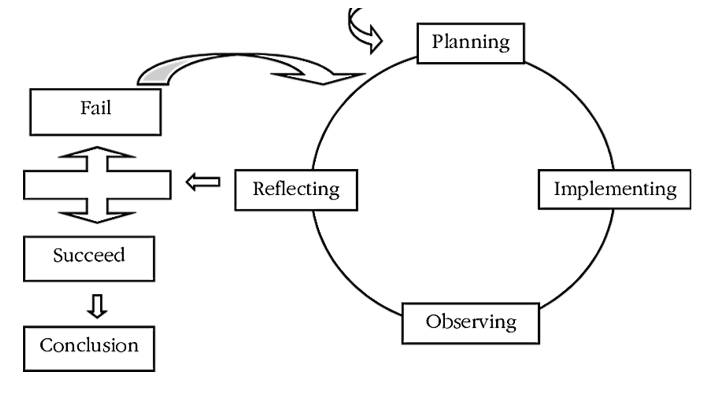
This research addresses the low social studies learning outcomes among fifth-grade students at Elementary School, primarily caused by conventional teaching methods that foster student passivity and difficulty in grasping abstract historical concepts. The study aims to improve learning outcomes by implementing the simulation method, specifically focusing on the history of Indonesian independence. Utilizing a Classroom Action Research (CAR) design across two cycles, the study involved 22 students (13 females and 9 males) at Elementary School Wakarleli. Data were collected through observation, achievement tests, and documentation, then analyzed using quantitative descriptive techniques and classical mastery benchmarks. The findings revealed significant improvements at every stage: in the pre-action phase, only 6 students (27.27%) achieved mastery with an average score of 54.44. Following the implementation of simulations in Cycle I, mastery rose to 17 students (77.27%), and reached 19 students (86.36%) in Cycle II after reflective refinements. The simulation method successfully transformed abstract history into concrete, contextual experiences, creating an active and enjoyable learning environment. Practically, this study recommends simulations as an effective strategy for elementary teachers to boost student motivation and contextual understanding. Academically, these results provide a foundation for further research into the effectiveness of simulation methods across broader social studies curricula or different grade levels.
References
Abdullah, A. N., & Boleng, B. (2022). Penerapan Model Pembelajaran Inkuiri dalam Meningkatkan Hasil Belajar IPA pada Siswa Sekolah Dasar. Jurnal Basicedu, 6(6). https://doi.org/10.31004/basicedu.v6i6.3779
Aini, I. N., Widyawati, Z. H., Shofiana, A. M., Noviana, F., Wulandari, Nabilah, E. R., & Hilyana, F. S. (2024). Analisis Faktor-Faktor Kesulitan Belajar IPAS Pada Peserta Didik Kelas V Sekolah Dasar. Dialektika: Jurnal Pemikiran Islam Dan Ilmu Sosial, 10(1). https://doi.org/10.36989/didaktik.v10i1.2691
Aopamonaim, N. H. (2025). Pembelajaran IPS sebagai Kunci Kecerdasan Sosial Siswa Sekolah Dasar. Journal of Humanities, Social Sciences, and Education, 1(3), 13–23. https://doi.org/10.64690/jhuse.v1i3.46
Ariadila, S. N., Silalahi, Y. F. N., Fadiyah, F. H., Jamaludin, U., & Setiawan, S. (2023). Analisis Pentingnya Keterampilan Berpikir Kritis Terhadap Pembelajaran Bagi Siswa. Jurnal Ilmiah Wahana Pendidikan, 9(20), 664–669. https://doi.org/10.5281/zenodo.8436970
Ayu Pitaloka, S. D., & Saputri, T. N. R. (2020). The Influence of Simulation Method At Social Science Learning As Disaster Mitigation Education of Mount Kelud in Kediri Elementary School. JURNAL PAJAR (Pendidikan Dan Pengajaran), 4(4), 653. https://doi.org/10.33578/pjr.v4i4.8010
Azizah, N. (2022). Pengaruh Penggunaan Metode Simulasi Terhadap Hasil Belajar Siswa Pada Pembelajaran IPS Kelas VII di SMP Negeri 1 Jenggawah Jember Tahun Ajaran 2022/2023. Universitas Islam Negeri Kiai Haji Achmad Siddiq Jember.
BK, M. K. U., & Hamna, H. (2023). Implementasi Model Pakemi Integrasi Blanded Learning Dalam Meningkatkan Hasil Belajar Sains Ipas Siswa Di Sekolah Dasar. Tolis Ilmiah: Jurnal Penelitian, 5(1), 44. https://doi.org/10.56630/jti.v5i1.329
Chiba, M., Sustarsic, M., Perriton, S., & Edwards Jr, D. B. (2021). Investigating effective teaching and learning for sustainable development and global citizenship: Implications from a systematic review of the literature. International Journal of Educational Development, 81, 102337. https://doi.org/10.1016/j.ijedudev.2020.102337
Destrini, H., Nirwana, N., & Sakti, I. (2018). Penerapan Model Pembelajaran Penemuan Terbimbing (Guided Discovery Learning) untuk Meningkatkan Hasil Belajar dan Keterampilan Proses Sains Siswa. Jurnal Kumparan Fisika, 1(1), 13–21. https://doi.org/10.33369/jkf.1.1.13-21
DiCamillo, L., & Gradwell, J. M. (2013). To simulate or not to simulate? Investigating myths about social studies simulations. The Social Studies, 104(4), 155-160. https://doi.org/10.1080/00377996.2012.716094
Fajrianti, R., & Meilana, S. F. (2022). Pengaruh Penggunaan Media Animaker terhadap Hasil Belajar Peserta Didik pada Mata Pelajaran IPS Sekolah Dasar. Jurnal Basicedu, 6(4). https://doi.org/10.31004/basicedu.v6i4.3325
Hartshorne, R., Waring, S. M., & Okraski, H. (2019). Developing well-informed, critically thinking, and active citizens through the connection of modeling & simulation and social studies education. The Clearing House: A Journal of Educational Strategies, Issues and Ideas, 92(1-2), 48-52. https://doi.org/10.1080/00098655.2019.1571988
Hidayah, U., Oktavia, M., & Ayurachmawati, P. (2023). Model Project Based Learning Penerapan Model Project Based Learning Terhadap Keaktifan Siswa Pada Pembelajaran Ips Di Kelas Iv Sekolah Dasar. Didaktik : Jurnal Ilmiah PGSD STKIP Subang, 9(3), 893–906. https://doi.org/10.36989/didaktik.v9i3.1349
Hopeman, T. A., Hidayah, N., & Anggraeni, W. A. (2022). Reality , Objectives , and Characteristics of Meaningful Social Studies Learning Application To. Kiprah Pendidikan, 1(3), 141–149. https://doi.org/10.33578/kpd.v1i3.25
Intang, N., Yunus, M., & Sulfaidah, S. (2022). Penerapan Metode Pembelajaran Simulasi Dalam Meningkatkan Hasil Belajar IPS Di SMPN 3 Bontolempangan. JUPEIS : Jurnal Pendidikan Dan Ilmu Sosial, 1(3), 102–108. https://doi.org/10.55784/jupeis.vol1.iss3.144
Lisnawati, T., Suroyo, & Pribadi, B. A. (2022). Efektivitas Model Pembelajaran Kelompok dan Problem Based Learning pada Studi Sosial terhadap Hasil Belajar Siswa Berdasarkan Gaya Belajar Siswa Sekolah Dasar. Jurnal Basicedu, 6(2), 2912–2921. https://doi.org/10.31004/basicedu.v6i2.2521
Munawir, Sofiyah, E. M., & Dwiratnawati, Y. (2023). Optimalisasi Peranan Metode Simulasi Terhadap Hasil Belajar Pada Pembelajaran Aqidah Akhlak Madrasah Ibtidaiyah. Al-Hasanah : Jurnal Pendidikan Agama Islam, 8(1), 155–167. https://doi.org/10.51729/81170
Nisriyana, D., & Hermanto, F. (2023). Upaya Guru IPS dalam Mengembangkan Keterampilan Sosial Peserta Didik pada Pembelajaran IPS di SMP Negeri 33 Semarang. Jurnal Sosiolium, 5(2), 125–134. http://journal.unnes.ac.id/sju/index.php/SOSIOLIUM
Novianti, A., Bentri, A., & Zikri, A. (2020). Pengaruh Penerapan Model Problem Based Learning (PBL) Terhadap Aktivitas dan Hasil Belajar Siswa Pada Pembelajaran Tematik Terpadu di Kelas V Sekolah Dasar. Jurnal Basicedu, 5(5), 3(2), 524–532. https://doi.org/10.31004/basicedu.v4i1.323
Ogheneakoke, C. E., Obro, S., & Benike, J. (2019). In search of a more effective strategy: Using simulation games instructional strategy for the teaching and learning of social studies in secondary school. Journal of International Social Studies, 9(1), 53-71. https://www.iajiss.org/index.php/iajiss/article/view/369
Rahmaniar, E., & Prastowo, A. (2022). Implikasi Model Simulasi berbasis Teknologi Informasi dan Komunikasi Terhadap Keaktifan Belajar Siswa di Sekolah Dasar. Edukatif : Jurnal Ilmu Pendidikan, 4(1), 639–647.
Rammayani, W. (2026). Analysis Of Educational Domain Objectives In Social Studies (IPS) For Student Competency Development: A Cognitive, Affective, And Psychomotor Approach. LANGGAM: International Journal of Social Science Education, Art and Culture, 5(1), 24-32. https://doi.org/10.24036/langgam.v5i1.280
Rokhmah, S. (2023). Penerapan Metode Simulasi Untuk Meningkatkan Aktivitas dan Hasil Belajar Siswa Pada Mata Pelajaran Fiqih Materi Jual Beli Dikelas IX-F MTs Negeri 2 Demak Tahun Pelajaran 2022/2023. Journal of Comprehensive Science, 2(1), 16–27. https://doi.org/10.59188/jcs.v2i1.179
Sanina, A., Kutergina, E., & Balashov, A. (2020). The Co-Creative approach to digital simulation games in social science education. Computers & education, 149, 103813. https://doi.org/10.1016/j.compedu.2020.103813
Setiawan, B., Habibah, E. H., Rahmadani, A. P., & Ardianti, D. F. N. (2023). Peran Teknologi dalam Peningkatan dan Efektivitas Proses Pembelajaran IPS. Jurnal Pendidikan Dan Ilmu Sosia, 2(1), 541–549. https://doi.org/10.58578/masaliq.v3i4.1209
Slameto. (2015). Belajar dan faktor-faktor yang mempengaruhinya (Revisi). Rineka Cipta.
Susilowati, A., & Sutama. (2022). Kesulitan belajar IPS pada siswa sekolah dasar: Studi pada SD Muhammadiyah Kota Bangun Kutai Kartanegara. JIPSINDO (Jurnal Pendidikan Ilmu Pengetahuan Sosial Indonesia), 9(1), 31–43.
Uzun, C., & Uygun, K. (2022). The effect of simulation-based experiential learning applications on problem solving skills in social studies education. International Journal of Contemporary Educational Research, 9(1), 28-38. https://doi.org/10.33200/ijcer.913068
Widodo, A., Indraswati, D., Sutisna, D., Nursaptini, N., & Anar, A. P. (2020). Pendidikan IPS Menjawab Tantangan Abad 21: Sebuah Kritik Atas Praktik Pembelajaran IPS di Sekolah Dasar. ENTITA: Jurnal Pendidikan Ilmu Pengetahuan Sosial Dan Ilmu-Ilmu Sosial, 2(2), 185–198. https://doi.org/10.19105/ejpis.v2i2.3868
Widoyo, H., Rofi’i, A., Jahrir, A. S., Rasimin, R., Purhanudin, M. V., & Sitopu, J. W. (2023). Penerapan Model Pembelajaran Aktif Inovatif Kreatif Dan Menyenangkan Untuk Meningkatkan Hasil Belajar Siswa. Journal on Education, 6(1), 1687–1699. https://doi.org/10.31004/joe.v6i1.3133
Wright-Maley, C. (2015). Beyond the “Babel problem”: Defining simulations for the social studies. The Journal of Social Studies Research, 39(2), 63-77. https://doi.org/10.1016/j.jssr.2014.10.001
Downloads
Published
How to Cite
Issue
Section
License
Copyright (c) 2026 Alestina Rommer, Fransheine Rumtutuly, Jekriel Septory

This work is licensed under a Creative Commons Attribution-ShareAlike 4.0 International License.