Transforming Social Studies Pedagogy: Artificial Intelligence-Based tool and Students’ Academic Performance in Ondo State, Nigeria

https://doi.org/10.51574/ijrer.v5i1.3988
Keywords:
Academic Performance, ICT Integration, Intelligent Tutoring System, Secondary Education, Social StudiesAbstract
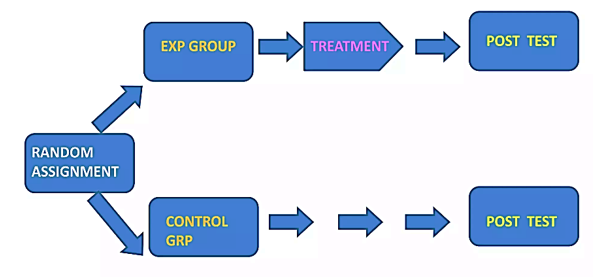
This study examined the transformation of social studies pedagogy through artificial intelligence-based tools and students’ academic performance in Ondo State, Nigeria. This study adopted a pre-test, post-test control group quasi-experimental research design. Three objectives were set for the study, and three research hypotheses were formulated to guide it. The population for the study consisted of all secondary students in Ondo State. The sample population comprised 163 Junior Secondary School (JSS II) students drawn from four public secondary schools randomly selected in the Ondo West Local Government Area of Ondo State, Nigeria. Two instruments were used in the study. They are the Social Studies Performance Test (SSPT) and the Modified Lesson Note (MLN). All the instruments were validated by experts. The reliability of the instrument (SSPT) was determined, and a reliability coefficient of 0.83 was obtained. Students' academic data was collected, and we analyzed covariances (ANCOVA). variance (ANCOVA). The social studies that students exposed to ITS demonstrated significantly higher academic performance than those taught by other methods (F (1,154) = 111.124, p < 0.05, partial η² = .419). The findings also revealed no significant effects of gender and school location on students' academic performance. This evidence suggests that intelligent tutoring systems (ITS) provide equitable learning opportunities. The study recommends increased investment in ICT infrastructure, teacher training, and policy interventions to enhance ITS integration into the teaching and learning of secondary schools’ subjects.
References
Abbott, G., Bievenue, L., Damarin, S., & Kramarae, C. (2014). Gender equity in the use of educational technology. In Handbook for achieving gender equity through education (pp. 221-244). Routledge. https://doi.org/10.4324/9781315759586-20
Adelokun A.K. & Abidoye, J., A. (2024) Assessment on the Use of Zoom Technology for Learning among Undergraduate Students of Adeyemi Federal University of Education, Ondo. Zamfara International Journal of Education, 4(2), 67-73.
Ahuja, N. J., Dutt, S., Choudhary, S. L., & Kumar, M. (2025). Intelligent tutoring system in education for disabled learners using human–computer interaction and augmented reality. International Journal of Human–Computer Interaction, 41(3), 1804-1816. https://doi.org/10.1080/10447318.2022.2124359
Alabi, A. J. Effectiveness of Video Blog Instructional Package and Senior Secondary School Academic Performance in Geography in Ondo State, Nigeria.
Alam, A. (2022). Employing adaptive learning and intelligent tutoring robots for virtual classrooms and smart campuses: reforming education in the age of artificial intelligence. In Advanced computing and intelligent technologies: Proceedings of ICACIT 2022 (pp. 395-406). Singapore: Springer Nature Singapore. https://doi.org/10.1007/978-981-19-2980-9_32
Alrakhawi, H. A., Jamiat, N. U. R. U. L. L. I. Z. A. M., & Abu-Naser, S. S. (2023). Intelligent tutoring systems in education: a systematic review of usage, tools, effects and evaluation. Journal of Theoretical and Applied Information Technology, 101(4), 1205-1226.
Alshammari, A., & Al-Enezi, S. (2024). Role of artificial intelligence in enhancing learning outcomes of pre-service social studies teachers. Journal of Social Studies Education Research, 15(4), 163-196. https://www.learntechlib.org/p/224777/
Anwar, A., Haq, I. U., Mian, I. A., Shah, F., Alroobaea, R., Hussain, S., ... & Umar, F. (2022). Applying Real‐Time Dynamic Scaffolding Techniques during Tutoring Sessions Using Intelligent Tutoring Systems. Mobile Information Systems, 2022(1), 6006467. https://doi.org/10.1155/2022/6006467
Becker–Blease, J. R., & Sohl, J. E. (2011). The effect of gender diversity on angel group investment. Entrepreneurship Theory and Practice, 35(4), 709-733. https://doi.org/10.1111/j.1540-6520.2010.00391.x
Busey, C. L., Duncan, K. E., & Dowie-Chin, T. (2023). Critical what what? A theoretical systematic review of 15 years of critical race theory research in social studies education, 2004–2019. Review of Educational Research, 93(3), 412-453. https://doi.org/10.3102/00346543221105551
Cheryan, S., Ziegler, S. A., Montoya, A. K., & Jiang, L. (2017). Why are some STEM fields more gender balanced than others?. Psychological bulletin, 143(1), 1. https://psycnet.apa.org/buy/2016-48466-001
Deflem, M. (2021). The right to teach in a hyper-digital age: Legal protections for (post-) pandemic concerns. Society, 58(3), 204-212. https://doi.org/10.1007/s12115-021-00584-w
Durães, D., Toala, R., Gonçalves, F., & Novais, P. (2019). Intelligent tutoring system to improve learning outcomes. Ai Communications, 32(3), 161-174. https://doi.org/10.3233/AIC-190624
Egan, H. E., Adie, H. I., Bisong, K. B., Ekpoto, A. E., Orji, E. I., Jelman, B. G. & Anyebe, M. (2025). Diversification of funding and students learning outcomes in economics in Calabar education zone, Cross River State. Irish Journal of Educational Practice, 8(3), 102-118.
González-Pérez, L. I., & Ramírez-Montoya, M. S. (2022). Components of Education 4.0 in 21st century skills frameworks: systematic review. Sustainability, 14(3), 1493. https://doi.org/10.3390/su14031493
Halkiopoulos, C., & Gkintoni, E. (2024). Leveraging AI in e-learning: Personalized learning and adaptive assessment through cognitive neuropsychology—A systematic analysis. Electronics, 13(18), 3762. https://doi.org/10.3390/electronics13183762
Haverback, H. R. (2017). Why don’t we teach social studies? Preservice teachers’ social studies self-efficacy. Social Studies Research and Practice, 12(3), 245-257. https://doi.org/10.1108/SSRP-07-2017-0034
Kistner, K., Sparck, E. M., Liu, A., Sayson, H. W., Levis-Fitzgerald, M., & Arnold, W. (2021). Academic and professional preparedness: Outcomes of undergraduate research in the humanities, arts, and social sciences. Scholarship and practice of undergraduate research, 4(4), 3-9.
Lampropoulos, G. (2023). Augmented reality and artificial intelligence in education: Toward immersive intelligent tutoring systems. In Augmented reality and artificial intelligence: The fusion of advanced technologies (pp. 137-146). Cham: Springer Nature Switzerland. https://doi.org/10.1007/978-3-031-27166-3_8
Lin, C. C., Huang, A. Y., & Lu, O. H. (2023). Artificial intelligence in intelligent tutoring systems toward sustainable education: a systematic review. Smart learning environments, 10(1), 41. https://doi.org/10.1186/s40561-023-00260-y
Ma, W., Adesope, O. O., Nesbit, J. C., & Liu, Q. (2014). Intelligent tutoring systems and learning outcomes: A meta-analysis. Journal of educational psychology, 106(4), 901. https://psycnet.apa.org/buy/2014-25074-001
Manjang, A. J., Umaru, R. J., & Egan, H. E. (2024). Effects of visual metaphor on pupils’ achievement in Social Studies in Bassa, Plateau State. International Journal of Education and Evaluation, 10(3), 243-249.
Meremikwu, A., Ekwueme, C. O., & Opoh, D. A. (2023). Modern teaching strategies and mathematics academic achievement among junior secondary school students in post–covid–19 era in calabar education zone, cross river state, nigeria. Global Journal of Educational Research, 22(1), 1-9. https://doi.org/10.4314/gjedr.v22i1.1
Mousavinasab, E., Zarifsanaiey, N., R. Niakan Kalhori, S., Rakhshan, M., Keikha, L., & Ghazi Saeedi, M. (2021). Intelligent tutoring systems: a systematic review of characteristics, applications, and evaluation methods. Interactive Learning Environments, 29(1), 142-163. https://doi.org/10.1080/10494820.2018.1558257
Myers, J. P. (2006). Rethinking the social studies curriculum in the context of globalization: Education for global citizenship in the US. Theory & Research in Social Education, 34(3), 370-394. https://doi.org/10.1080/00933104.2006.10473313
Nwosu, C., & Okeke, I. (2022). Gender disparities in technology-driven learning environments. Education and Gender Studies Journal, 17(3), 87-101.
Okeke, C. I. O., & Maduabuchi, O. P. (2018). The impact of school location on students’ academic achievement: A Nigerian perspective. Journal of Contemporary Issues in Education, 13(2), 78–93.
Orim, R. E., Opoh, F. A. & Igwe, B. I. (2018). Information and communication technology: The leading way for teaching and learning in Nigeria. Journal of Environmental and Tourism Education, 1(1), 240-246.
Oteng, B., Mensah, R. O., Adiza Babah, P., & Swanzy-Impraim, E. (2023). Social studies and history curriculum assessment in colleges of education in Ghana: Reflective practices of teacher educators. Cogent Education, 10(1), 2175515. https://doi.org/10.1080/2331186X.2023.2175515
Pandey, A. (2023). E-learning and education 4.0: revolution in education of 21st century. In International Conference on Digital Technologies and Applications (pp. 431-438). Cham: Springer Nature Switzerland. https://doi.org/10.1007/978-3-031-29860-8_44
Phillips, A., Pane, J. F., Reumann-Moore, R., & Shenbanjo, O. (2020). Implementing an adaptive intelligent tutoring system as an instructional supplement. Educational Technology Research and Development, 68(3), 1409-1437. https://doi.org/10.1007/s11423-020-09745-w
Rahimi, R. A., & Oh, G. S. (2024). Rethinking the role of educators in the 21st century: navigating globalization, technology, and pandemics. Journal of Marketing Analytics, 12(2), 182-197. https://doi.org/10.1057/s41270-024-00303-4
Reychav, I., & McHaney, R. (2017). The relationship between gender and mobile technology use in collaborative learning settings: An empirical investigation. Computers & Education, 113, 61-74. https://doi.org/10.1016/j.compedu.2017.05.005
Ribeiro, F. R., Silva, A., Silva, A. P., & Metrôlho, J. (2021). Literature Review of Location-Based Mobile Games in Education: Challenges, Impacts and Opportunities. Informatics, 8(3), 43. https://doi.org/10.3390/informatics8030043
Rigual, C., Prügl, E., & Kunz, R. (2022). Gender and the micro-dynamics of violent conflicts. International Feminist Journal of Politics, 24(3), 345-367. https://doi.org/10.1080/14616742.2022.2083652
Russell III, W. B. (2010). Teaching social studies in the 21st century: A research study of secondary social studies teachers' instructional methods and practices. Action in Teacher Education, 32(1), 65-72. https://doi.org/10.1080/01626620.2010.10463543
Sabandar, G., Supit, N., & Suryana, E. (2018). Kahoot!: Bring the fun Into the classroom!. Indonesian Journal of Informatics Education, 2(2), 127-134.
Salas-Pilco, S. Z., Xiao, K., & Oshima, J. (2022). Artificial intelligence and new technologies in inclusive education for minority students: A systematic review. Sustainability, 14(20), 13572. https://doi.org/10.3390/su142013572
Singh, N., Gunjan, V. K., Mishra, A. K., Mishra, R. K., & Nawaz, N. (2022). SeisTutor: a custom-tailored intelligent tutoring system and sustainable education. Sustainability, 14(7), 4167. https://doi.org/10.3390/su14074167
Unugo, L. O. (2023). Impact Of School Location on Students’academic Achievement in Social Studies Among Junior Secondary School Students in Abakaliki Education Zone of Ebonyi State. Ebonyi State College of Education, Ikwo Journal of Educational Research, 8(2). https://ebscoeijer.org/index.php/self/article/view/34
Wang, H., Tlili, A., Huang, R., Cai, Z., Li, M., Cheng, Z., ... & Fei, C. (2023). Examining the applications of intelligent tutoring systems in real educational contexts: A systematic literature review from the social experiment perspective. Education and information technologies, 28(7), 9113-9148. https://doi.org/10.1007/s10639-022-11555-x
Wyss, C., & Bäuerlein, K. (2024). Augmented Reality in the Classroom—Mentor Teachers’ Attitudes and Technology Use. Virtual Worlds, 3(4), 572-585. https://doi.org/10.3390/virtualworlds3040029
Yerbabuena Torres, C. F., Villagomez Cabezas, A. V., Yerbabuena Torres, A. R., & Mendoza Torres, N. A. (2024). Artificial Intelligence Tools Applied to Education: A Systematic Literature Review. International Journal of Interactive Mobile Technologies, 18(24). https://doi.org/10.3991/ijim.v18i24.50055
Zevin, J. (2015). Social studies for the twenty-first century: Methods and materials for teaching in middle and secondary schools. Routledge.
Downloads
Published
How to Cite
Issue
Section
License
Copyright (c) 2025 Abidoye James Alabi, Akeem Tunde Adelekan, Gbenga Olotu

This work is licensed under a Creative Commons Attribution-ShareAlike 4.0 International License.