The Effect of the Adiwiyata Program on Students' Environmental Awareness

https://doi.org/10.51574/ijrer.v5i3.4801
Keywords:
Adiwiyata Program, Ecological Education, Environmental Awareness, Junior High School, School CultureAbstract
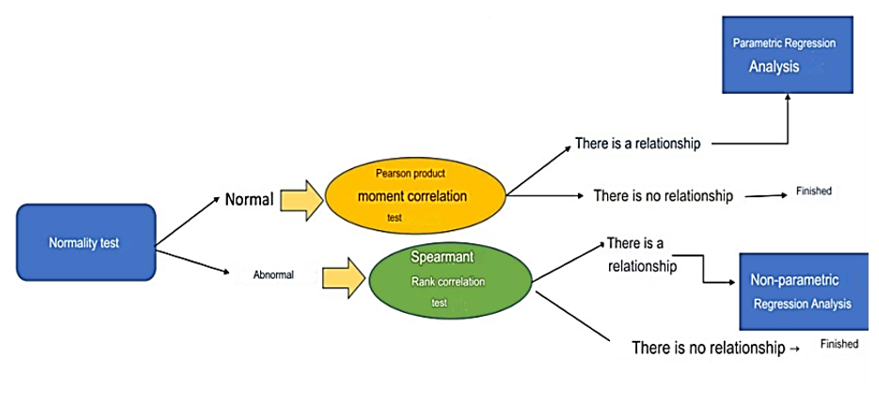
The Adiwiyata program at Junior High School 1 Adiluwih has been running with adequate support and has succeeded in forming an evenly distributed environmental awareness among students. This study aims to examine and analyze the effect of the implementation of the Adiwiyata program on students' environmental awareness at Junior High School 1 Adiluwih, Pringsewu Regency. This study used a quantitative approach with a correlational design on a sample of 194 students in grades VIII and IX. Data were collected through questionnaires and analyzed using simple linear regression techniques. The results showed that the implementation of the Adiwiyata program and the level of students' environmental awareness were in the "fairly good" category with a homogeneous data distribution. Statistical analysis confirmed a positive and significant effect of the Adiwiyata program on students' environmental awareness (p < 0.001) with a regression equation of Y = 9.756 + 0.694X. The coefficient of determination of 0.600 indicates that the Adiwiyata program provides a dominant contribution of 60% in forming students' environmental awareness. These findings provide empirical evidence that the quality of the Adiwiyata program implementation is a key factor in increasing ecological awareness and strengthening sustainable school culture practices.
References
Afla, N., & Sugiarto, L. (2024). Adiwiyata School Management In Improving Brand Image In Madrasah. Development: Studies in Educational Management and Leadership, 3(1), 51-64. https://doi.org/10.47766/development.v2i2.1118
Agbedahin, A. V. (2019). Sustainable development, Education for Sustainable Development, and the 2030 Agenda for Sustainable Development: Emergence, efficacy, eminence, and future. Sustainable development, 27(4), 669-680. https://doi.org/10.1002/sd.1931
Aikowe, L. D., & Mazancova, J. (2022). Pro-environmental awareness of university students – assessment through sustainability literacy test. International Journal of Sustainability in Higher Education, 24(3), 719–741. https://doi.org/10.1108/IJSHE-06-2021-0219
Ajzen, I., & Schmidt, P. (2020). Changing behavior using the theory of planned behavior. The handbook of behavior change, 23, 17-31.
Ambawono, G. P., Budiono, B., & Poerwanti, E. (2025). Fostering Environmental Awareness Through School-Based Programs: A Case Study of the Adiwiyata Initiative in Indonesian Elementary Education. AL-ISHLAH: Jurnal Pendidikan, 17(4). https://doi.org/10.35445/alishlah.v17i4.7785
Anggela, R., & Rina. (2024). Implementasi Kebijakan Program Adiwiyata Dalam Upaya Mewujudkan Pendidikan Lingkungan Hidup di Sekolah Dasar. Jurnal Pendidikan Ilmu Pengetahuan Sosial Indonesia, 9(2), 155–167. https://doi.org/10.26737/jpipsi.v9i2.5594
Brooks, S. D., Braun, S. M., & Prince, D. (2022). Critical consciousness in high school outdoor experiential environmental education. Journal of Experiential Education, 45(4), 392-412. https://doi.org/10.1177/10538259211068800
El Zaatari, W., & Maalouf, I. (2022). How the Bronfenbrenner bio-ecological system theory explains the development of students’ sense of belonging to school?. Sage Open, 12(4), 21582440221134089. https://doi.org/10.1177/21582440221134089
Fedrya, U. D. A., & Frinaldi, A. (2025). Building Environmental Governance Knowledge through Environmental Culture in Schools: The Role of the Adiwiyata Program. Journal of Educational Management Research, 4(6), 2611-2624. https://doi.org/10.61987/jemr.v4i6.1360
Ghozali, I., Kardoyo, & Oktarina. (2024). The Effect of Principal Leadership and School Culture through the Adiwiyata Program on the Environmental Awareness Character of SMAN 2 Blora Students. Educational Management, 13(3), 58–64. https://journal.unnes.ac.id/journals/eduman/article/view/10835
He, Z., Liu, Y., Liu, X., Wang, F., & Zhu, H. (2022). Influence of multi-dimensional environmental knowledge on residents' waste sorting intention: Moderating effect of environmental concern. Frontiers in psychology, 13, 957683. https://doi.org/10.3389/fpsyg.2022.957683
Jalal, A., Pratiwi2, M. A., Firdiyansyah3, I., Paramita4, B., & Wulandari5, K. (2025). Membangun Kesadaran Lingkungan Melalui Budaya Organisasi Hijau Di Sekolah Adiwiyata SDS Toan Hwa Tanjungpinang. Jurnal Bahtera Inovasi, Vol. 9. https://doi.org/10.31629/bi.v9i1.7398
Lee, J., Evans, K., & Pereira, A. (2025). Challenges facing immigrant students in US public schools from Bronfenbrenner’s ecological systems framework: A systematic review. Journal of Education, 00220574251379017. https://doi.org/10.1177/00220574251379017
Maghfiroh, Z., & Kartijono, N. E. (2024). Analysis of Students' Enviromental Literacy Skill in Adiwiyata High Schools in Semarang. Journal of Biology Education, 13(1), 91-104. https://journal.unnes.ac.id/journals/ujbe/article/view/4106
Mahendrartha, A., Bangsa, U. K., & Tabula, R. V. (2020). Adiwiyata-Based School Management in Indonesia. Journal of Social Work and Science Education, 1(1), 1–7. https://doi.org/10.52690/jswse.v1i1.4
Morse, B. A., Carman, J. P., & Zint, M. T. (2019). Fostering environmental behaviors through observational learning. Journal of Sustainable Tourism, 27(10), 1530-1552. https://doi.org/10.1080/09669582.2019.1647219
Mujahidah, N., & Yusdiana, Y. (2023). Application of Albert Bandura’ s social-cognitive theories in teaching and learning. Edukasi Islami: Jurnal Pendidikan Islam, 12(02). https://doi.org/10.30868/ei.v12i02.4585
Murzyn, D., Mroczek, T., Czyżewska, M., & Jezierska, K. (2025). Environmental awareness and responsibility: A machine learning analysis of polish university students. Sustainability, 17(19), 8577. https://doi.org/10.3390/su17198577
Nada, H. N., Fajarningsih, R. U., & Astirin, O. P. (2021). Adiwiyata ( Green School ) Program Optimization Strategy in Malang Regency to Realize Environmentally Friendly School Citizens. International Journal of Recent Educational Research, 2(2), 121–137. https://doi.org/10.46245/ijorer.v2i2.83
Notrilauvia, N., Marhamah, I., & Nanda, R. (2022). Adiwiyata as an Instrument of Social Transformation in Environmental Education: Literature Analysis of Concept, Implementation, and Challenges. JPASDEV: Journal of Public Administration and Sociology of Development, 6(1), 814-827. https://doi.org/10.26418/jpasdev.v6i1.92493
Permata, I., Cahyani, D. K., Rukmi, P. A., & Roshayanti, F. (2025). Prespektif Siswa Terhadap Program Sekolah Adiwiyata Ditinjau dari Education for Sustainable Development di SMAN 1 Wirosari. PENDIPA Journal of Science Education, 9(1), 10–17. https://doi.org/10.33369/pendipa.9.1.10-17
Ramadany, L. D., Sujana, A., Sopandi, W., & Hidayat, F. A. (2025). Profiling Sustainable Environmental Awareness of Primary School Students in Sorong District by Gender and School Location. Journal of Science Education Research, 9(2), 106–113. https://doi.org/10.21831/jser.v9i2.80466
Rozi, F., Sekarsari, P. A., & Faizin, F. (2026). Building Environmentally Conscious Character through the Adiwiyata Program: A Green School Implementation Model. ISLAMIKA, 8(1), 253-270. https://doi.org/10.36088/islamika.v8i1.6018
Rumjaun, A., & Narod, F. (2025). Social learning theory—albert bandura. In Science education in theory and practice: An introductory guide to learning theory (pp. 65-82). Cham: Springer Nature Switzerland. https://doi.org/10.1007/978-3-031-81351-1_5
Santosa, H. (2024). The Dynamics of Community Participation in Establishing a Sustainable School Culture: Exploring the Role of Environmental Values in Adiwiyata Schools. Indonesian Values and Character Education Journal, 7(2). https://doi.org/10.23887/ivcej.v7i2.81015
Sianturi, G. R., Susanti, A., Yulisna, & Hadiyanto. (2024). Peran Pendidikan Berbasis Lingkungan Dalam Membentuk Generasi Berkelanjutan. Pendas : Jurnal Ilmiah Pendidikan Dasar, 09(04), 234–245. https://doi.org/10.23969/jp.v9i04.21553
Stern, M. J., Powell, R. B., & Hill, D. (2014). Environmental education program evaluation in the new millennium: What do we measure and what have we learned?. Environmental Education Research, 20(5), 581-611. https://doi.org/10.1080/13504622.2013.838749
Suarlin, S. (2023). Integrating environmental education to form environmental care characters in schools. Advances in Community Services Research, 1(2), 44-53. https://doi.org/10.60079/acsr.v1i2.335
Van De Wetering, J., Leijten, P., Spitzer, J., & Thomaes, S. (2022). Does environmental education benefit environmental outcomes in children and adolescents? A meta-analysis. Journal of Environmental Psychology, 81, 101782. https://doi.org/10.1016/j.jenvp.2022.101782
Widodo, A., & Astuti, B. (2024). Critical analysis of social cognitive learning theory and its implementation in elementary schools. MANDALIKA: Journal of Social Science, 2(1), 6-12. https://doi.org/10.56566/mandalika.v2i1.148
Yadav, S. (2023). Cultivating sustainable behavior and critical consciousness towards the environment: environmental education for sustainability. The impact of climate change and sustainability standards on the insurance market, 333-348. https://doi.org/10.1002/9781394167944.ch21
Zhang, J., & Cao, A. (2025). The psychological mechanisms of education for sustainable development: environmental attitudes, self-efficacy, and social norms as mediators of pro-environmental behavior among university students. Sustainability, 17(3), 933. https://doi.org/10.3390/su17030933
Downloads
Published
How to Cite
Issue
Section
License
Copyright (c) 2026 Dina Nur Istikomah, Nirva Diana , Yetri Hasan

This work is licensed under a Creative Commons Attribution-ShareAlike 4.0 International License.