Community Awareness towards Inclusive Education for Children with Learning Disabilities in Myanmar Educational Context

https://doi.org/10.51574/ijrer.v5i3.4542
Keywords:
Community Awareness, Education Policy, Inclusive education, Learning Barriers, Public AwarenessAbstract
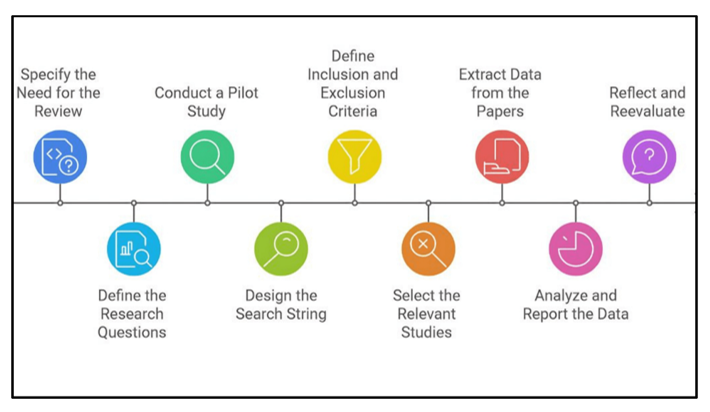
Although Myanmar has adopted an international legal framework through the Education Law (2007) and the Child Rights Law (2019), significant gaps exist between formal policies and practical implementation. Public awareness is still hampered by negative stigma, infrastructure constraints, and the influence of certain cultural and religious beliefs that contribute to the exclusion of children with learning disabilities. This literature review aims to explore the level of public awareness of inclusive education for children with learning disabilities in Myanmar and identify factors that hinder the transition from policy to practical inclusion. This study used a literature review method by analyzing various policy documents, previous studies, and reports on the educational context in Myanmar, including its impact on ethnic minority groups and children with disabilities. Findings indicate that the main challenges to inclusion in Myanmar include sociocultural factors such as the concept of "karma" that reinforces stigma, as well as a lack of school preparedness. Although school stakeholders generally support inclusion, they are hampered by a lack of specialized training, a rigid curriculum, overcrowded classes, language barriers, and uncertainty resulting from the ongoing political conflict. This leads many families to still choose special schools (separate) over inclusive schools. This article provides strategic recommendations for policymakers and education practitioners in Myanmar to focus not only on legal aspects but also on investing in teacher training, providing adequate infrastructure, and community engagement campaigns. The study emphasizes the importance of viewing disability as part of human diversity to create an equitable education ecosystem for all children.
References
Ahmed, S., Rahman, M. S., Kaiser, M. S., & Hosen, A. S. (2025). Advancing personalized and inclusive education for students with disability through artificial intelligence: perspectives, challenges, and opportunities. Digital, 5(2), 11. https://doi.org/10.3390/digital5020011
Aung, P. & Sakurai, R. (2023). Factors Influencing Teachers’ Attitudes Towards Inclusive Education in Myanmar. World journal of educational research. https://doi.org/10.22158/wjer.v10n3p24
Badrasawi, K. J., Ahmed, I. O., & Eid, I. M. (2018). Exploring ways to provide education in conflict zones: Implementation and challenges. Intellectual Discourse, 26(2), 567-594. https://doi.org/10.31436/id.v26i2.1221
Chander, N., Siow, M. L., Ramachandran, S., Kunasekaran, P., & Rathakrishnan, T. (2020). Conceptualizing inclusive learning and development: A framework towards entrepreneurial competency practices for sustainability. Sustainability, 12(17), 6905. https://doi.org/10.3390/su12176905
Chang, A., & Brewer, G. A. (2023). Street-level bureaucracy in public administration: A systematic literature review. Public management review, 25(11), 2191-2211. https://doi.org/10.1080/14719037.2022.2065517
Charitaki, G., Kourti, I., Gregory, J. L., Ozturk, M., Ismail, Z., Alevriadou, A., ... & Demirel, C. (2024). Teachers’ attitudes towards inclusive education: A cross-national exploration. Trends in Psychology, 32(4), 1120-1147. https://doi.org/10.1007/s43076-022-00240-0
Falb, K., Asghar, K., Pardo, N. M., Hategekimana, J. D. D., Kakay, H., Roth, D., & O’Connor, M. (2022). Developing an inclusive conceptual model for preventing violence in the home in humanitarian settings: Qualitative findings from Myanmar and the Democratic Republic of Congo. Journal of interpersonal violence, 37(3-4), 1076-1105. https://doi.org/10.1177/0886260520922358
Guimarães, T. C. D. A., Bernado, E. D. S., & Borde, A. M. (2022). Street-level Bureaucracy in Teacher Discretionary Power. Educação & Realidade, 47, e110669. https://doi.org/10.1590/2175-6236110669vs02
Jayasinghe, N. M. A., Kanthilatha, N., & Karunarathna, M. M. S. A. (2023). Creating equal opportunities: evaluating physical facilities for undergraduate students with special needs. Vidyodaya Journal of Humanities and Social Sciences, 8(02). https://journals.sjp.ac.lk/index.php/vjhss/article/view/6459
Kamran, M., Siddiqui, S., & Adil, M. S. (2023). Breaking barriers: The influence of teachers’ attitudes on inclusive education for students with mild learning disabilities (MLDs). Education Sciences, 13(6), 606. https://doi.org/10.3390/educsci13060606
Kelly, O., Buckley, K., Lieberman, L. J., & Arndt, K. (2022). Universal Design for Learning-A framework for inclusion in Outdoor Learning. Journal of outdoor and environmental education, 25(1), 75-89. https://doi.org/10.1007/s42322-022-00096-z
Kenny, N., McCoy, S., & O’Higgins Norman, J. (2023). A whole education approach to inclusive education: An integrated model to guide planning, policy, and provision. Education Sciences, 13(9), 959. https://doi.org/10.3390/educsci13090959
Lat, K. Z., Johnston, C., Namit, K., & Costa, A. (2025). Community teachers in ethnic education systems: A struggle for fair compensation. Education and Conflict Review, 5, 27-34. https://doi.org/10.14324/000.ch.10207901
Lindner, K. T., Schwab, S., Emara, M., & Avramidis, E. (2023). Do teachers favor the inclusion of all students? A systematic review of primary schoolteachers’ attitudes towards inclusive education. European Journal of Special Needs Education, 38(6), 766-787. https://doi.org/10.1080/08856257.2023.2172894
Maber, E. J., Oo, H. W. M., & Higgins, S. (2018). Understanding the changing roles of teachers in transitional Myanmar. In Sustainable peacebuilding and social justice in times of transition: Findings on the role of education in Myanmar (pp. 117-139). Cham: Springer International Publishing. https://doi.org/10.1007/978-3-319-93812-7_6
Maber, E. J., Aung, K. M., Oo, H. W. M., & Win, M. M. (2022). The precarious politics of teacher education in Myanmar. In Handbook of research on teacher education: Innovations and practices in Asia (pp. 847-863). Singapore: Springer Nature Singapore. https://doi.org/10.1007/978-981-16-9785-2_43
Mendoza, M., & Heymann, J. (2024). Implementation of inclusive education: A systematic review of studies of inclusive education interventions in low-and lower-middle-income countries. International Journal of Disability, Development and Education, 71(3), 299-316. https://doi.org/10.1080/1034912X.2022.2095359
Oo, Z. W., Adams, D., Pov, S., & Nguyen, N. (2025). Shaping leadership and inclusive education: insights from Cambodia, Myanmar, and Vietnam. International Journal of Developmental Disabilities, 71(6), 824-836. https://doi.org/10.1080/20473869.2025.2504444
Ouyang, R. G., Long, Y., Zhang, J. Q., & Cao, Z. (2023). Interventions for improving self-efficacy in patients after stroke based on self-efficacy-related principles of Bandura’s cognition theory: a systematic review and meta-analysis. Topics in stroke rehabilitation, 30(8), 820-832. https://doi.org/10.1080/10749357.2023.2172832
Phyo, S. Y., & Kopp, E. (2026). Teacher resilience through the eyes of preservice teachers in Myanmar. The Australian Educational Researcher, 53(1), 25. https://doi.org/10.1007/s13384-025-00926-1
Poluektova, O., Kappas, A., & Smith, C. A. (2023). Using Bandura's self-efficacy theory to explain individual differences in the appraisal of problem-focused coping potential. Emotion Review, 15(4), 302-312. https://doi.org/10.1177/17540739231164367
Roski, M., Sebastian, R., Ewerth, R., Hoppe, A., & Nehring, A. (2024). Learning analytics and the Universal Design for Learning (UDL): A clustering approach. Computers & Education, 214, 105028. https://doi.org/10.1016/j.compedu.2024.105028
Rusconi, L., & Squillaci, M. (2023). Effects of a universal design for learning (UDL) training course on the development teachers’ competences: A systematic review. Education Sciences, 13(5), 466. https://doi.org/10.3390/educsci13050466
Shaeffer, S. (2019). Inclusive education: a prerequisite for equity and social justice. Asia Pacific Education Review, 20(2), 181-192. https://doi.org/10.1007/s12564-019-09598-w
Sigalla, L. E., & Kimario, H. F. (2025). Customizing classrooms: How teachers can adapt education to fit student needs. European Journal of Contemporary Education and E-Learning, 3(3), 38-59. https://doi.org/10.59324/ejceel.2025.3(3).04
Soe, T. T., & Nwe, K. H. (2019). Teachers' Attitudes Towards Inclusion of Children with Disabilities (Doctoral dissertation, MERAL Portal).
Thwin, K. P., Soe, Y., & Moe, M. H. T. (2025). Examining psychosocial support interventions and resilience-building in Myanmar: A case study of female teachers working with parallel education providers. Education and Conflict Review, 5, 35-43. https://doi.org/10.14324/000.ch.10207902
Tonegawa, Y. (2021). Contextualization of inclusive education: Education for children with disabilities in Myanmar. International Journal of Instruction 15 (1) 365-380.
Tukan, G. M. M., & Susandi, D. G. (2025). The Impact of Inclusive Education on School Performance: Managerial Perspectives and Financial Outcomes. PESHUM: Jurnal Pendidikan, Sosial dan Humaniora, 4(5), 7390-7396. https://doi.org/10.56799/peshum.v4i5.10561
Vlachou, A., & Tsirantonaki, S. S. (2023). The importance of school principals’ values towards the inclusive education of disabled students: Associations between their values and knowledge, beliefs, attitudes and practices. Education Sciences, 13(4), 360. https://doi.org/10.3390/educsci13040360
Waite, M. (2015). A space to learn for all children? Inclusive education and children with disabilities in Yangon, Myanmar. Global Studies of Childhood, 5(4), 381-394. https://doi.org/10.1177/2043610615612948
Woodcock, S., & Tournaki, N. (2023). Bandura’s Triadic Reciprocal Determinism model and teacher self-efficacy scales: a revisit. Teacher Development, 27(1), 75-91. https://doi.org/10.1080/13664530.2022.2150285
Zaks, Z. (2024). Changing the medical model of disability to the normalization model of disability: Clarifying the past to create a new future direction. Disability & Society, 39(12), 3233-3260. https://doi.org/10.1080/09687599.2023.2255926
Downloads
Published
How to Cite
Issue
Section
License
Copyright (c) 2026 Lum Pan, Thea Czaireena T. Dizon

This work is licensed under a Creative Commons Attribution-ShareAlike 4.0 International License.