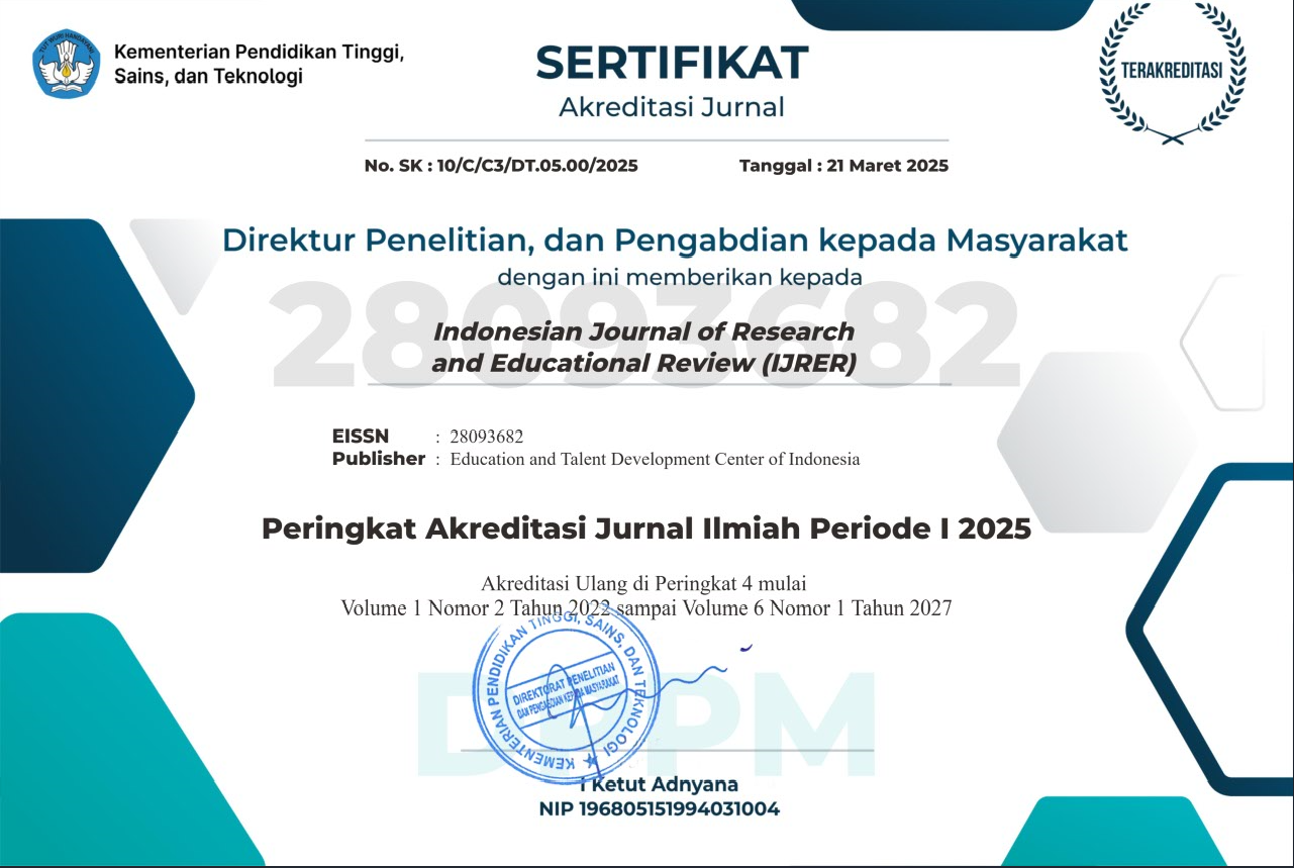
ACREDITATION
The worldwide halal business is growing exponentially, yet Islamic Higher Education Institutions (PTI) graduates lack the skills needed to handle sharia, science, and halal. Current courses typically overemphasize normative knowledge without appropriately integrating global industrial standards, accreditation, and technology. This study examines PTI's strategic role in growing global halal sector human resources and develops a curriculum synchronization model to meet market expectations in halal assurance systems, Islamic finance, and halal tourism. This study uses a descriptive qualitative method with a case study approach at several leading PTI with halal-related study programs. Data were collected through analysis of curriculum documents (syllabus, RPS), in-depth interviews with stakeholders (academics, halal industry practitioners, and the Halal Product Assurance Agency/BPJPH), and FGDs (focus group discussions) for data triangulation. The results of the study indicate that effective curriculum synchronization requires modification of three main pillars: (1) integration of professional certification courses (such as Halal Slaughterer and Halal Auditor) into the compulsory curriculum, (2) increasing the portion of internships and project-based Field Work Practices (PKL) in global halal-certified companies, and (3) implementation of the "Triple Helix Model" (Campus-Industry-Halal Institution) in learning design. It was found that PTI, that implemented this model, produced graduates with a much higher employment rate in the halal sector. This article enhances the literature on higher education and Islamic economics and proposes an integrated curriculum model for Islamic universities in Indonesia and worldwide to produce competitive halal industry human resources.
Wafiyah, U. (2025). The Role of Islamic Higher Education in Developing Human Resources for the Global Halal Industry: Synchronizing Curriculum. ETDC: Indonesian Journal of Research and Educational Review , 4(4), 1778–1790. https://doi.org/10.51574/ijrer.v4i4.4073
Downloads
Download data is not yet available.
- Ab Halim, M. A., Salleh, M. M. M., Ahmad, A. A., Ab Rahman, S., & Nusran, M. (2022). Economic growth of halal industry: Enhancing governance and halal legal framework in the ASEAN (Goal 12). In Good governance and the sustainable development goals in Southeast Asia (pp. 140-154). Routledge. https://doi.org/10.4324/9781003230724-13
- Afrizal, A. (2022). Perkembangan Perguruan Tinggi Islam Di Indonesia (Kasus STAIN, IAIN, UIN Dan Perguruan Tinggi Islam). Berkala Ilmiah Pendidikan, 2(1), 18-32.
- Ahmadova, L. E. O. (2019). Global Islamic Economy: Current state and future perspectives. 2. ERASMUS Uluslararası Akademik Araştırmalar Sempozyumu, 55.
- Aljohani, N. R., Aslam, A., Khadidos, A. O., & Hassan, S. U. (2022). Bridging the skill gap between the acquired university curriculum and the requirements of the job market: A data-driven analysis of scientific literature. Journal of Innovation & Knowledge, 7(3), 100190. https://doi.org/10.1016/j.jik.2022.100190
- Arifudin, Y. F. (2023). Strategi Implementasi Kurikulum Pendidikan Islam di Era Digital. Manajemen Pendidikan Islam di Era Digital, 127.
- Asnawi, A., & Rahmawati, N. L. (2024). Perencanaan Kurikulum Perguruan Tinggi di era Industri 4.0. AL-MIKRAJ Jurnal Studi Islam dan Humaniora (E-ISSN 2745-4584), 4(02), 647-655. https://ejournal.insuriponorogo.ac.id/index.php/almikraj/article/view/4854
- Bahrudin, M., Iqbal, M., Saefurrohman, G. U., & Walsh, J. (2024). Halal food industry: Reinforcing the Halal Product Assurance Organizing Body (bpjph) in the development of the among urban Muslim community in Indonesia. Akademika: Jurnal Pemikiran Islam, 29(1), 61-72. https://doi.org/10.32332/akademika.v29i1.9039
- BPJPH (Badan Penyelenggara Jaminan Produk Halal). (2023). Laporan Tahunan dan Roadmap Sertifikasi Halal Nasional 2023-2029. Jakarta: Kementerian Agama RI.
- Dian, C., Lestari, S., & Hasan, S. H. (2022). Sinergisitas Kurikulum Ekonomi Islam Dan Potensi Industri Halal di Indonesia. Journal Of Economic Science (JECS), 8(1), 37-51. https://doi.org/10.33143/jecs.v8i1.3379
- Firdaus, R., Hakam, K. A., Somad, M. A., & Rizal, A. S. (2021). The Concept of Triple Helix Mohammad Natsir as a Character Education Strategy in the Era of Merdeka Belajar-Kampus Merdeka.”. In The 1st Virtual Conference on Social Science in Law, Political Issue and Economic Development (pp. 128-32).
- Firdaus, D. H., Ma’arif, A. S., & Rouf, A. (2025). The Role of Islamic Higher Education in Strengthening the Halal Ecosystem in Indonesia. Peradaban Journal of Religion and Society, 4(1), 1-14. https://doi.org/10.59001/pjrs.v4i1.277
- Galvao, A., Mascarenhas, C., Marques, C., Ferreira, J., & Ratten, V. (2019). Triple helix and its evolution: a systematic literature review. Journal of Science and Technology Policy Management, 10(3), 812-833. https://doi.org/10.1108/JSTPM-10-2018-0103
- Gumanti, M., Maisaroh, I., Warisno, A., Andari, A. A., & Anshori, M. A. (2023). Development of Islamic Higher Education in Indonesia. JMKSP (Jurnal Manajemen, Kepemimpinan, Dan Supervisi Pendidikan), 8(1), 237-252. https://jurnal.univpgri-palembang.ac.id/index.php/JMKSP/article/view/11079
- Hamizar, A., Hunsouw, M. T., & Roup, M. M. (2024). From Certification to Consumption: Shariah-Compliant Postmarket Halal Assurance. Hikmatuna: Journal for Integrative Islamic Studies, 10(2), 176-186. https://e-journal.uingusdur.ac.id/hikmatuna/article/view/pps1025
- Harahap, A. K. Z., Ramadhan, M., & Harahap, I. (2024). Enhancing human resource development as a strategic imperative for halal certification in food MSMEs. al-Uqud: Journal of Islamic Economics, 8(2), 227-238. https://doi.org/10.26740/al-uqud.v8n2.p227-238
- Ismanto, K. (2022). The Role of Islamic Universities in the Development of the Halal Industry Case Study in Central Java Province of Indonesia. Proceeding International Conference on Islam and Education (ICONIE) (Vol. 2, No. 1, pp. 955-970). https://proceeding.uingusdur.ac.id/index.php/iconie/article/view/744
- Izberk-Bilgin, E., & Nakata, C. C. (2016). A new look at faith-based marketing: The global halal market. Business horizons, 59(3), 285-292. https://doi.org/10.1016/j.bushor.2016.01.005
- Jalili, I., & Syukri, I. (2025). Utilizing Qawā’id Fiqhiyyah In Legal Analysis: A Review Of Their Evolution And Application In Indonesian Islamic Jurisprudence. istinbath, 24(1), 51-65. https://istinbath.or.id/index.php/ijhi/article/view/776
- Lawton Smith, H., & Leydesdorff, L. (2014). The Triple Helix in the context of global change: dynamics and challenges. Prometheus, 32(4), 321-336. https://doi.org/10.1080/08109028.2014.972135
- Nuryana, Z. (2022). Academic reform and sustainability of Islamic higher education in Indonesia. International Journal of Educational Development, 89, 102534. https://doi.org/10.1016/j.ijedudev.2021.102534
- O’Dwyer, M., Filieri, R., & O’Malley, L. (2023). Establishing successful university–industry collaborations: barriers and enablers deconstructed. The Journal of Technology Transfer, 48(3), 900-931. https://doi.org/10.1007/s10961-022-09932-2
- Permana, T. W., Yudoko, G., & Prasetio, E. A. (2023). Forecasting the potential output and growth of the manufacturing industry: a case study of Indonesia's manufacturing sector. Jurnal Ekonomi & Studi Pembangunan, 24(2), 368-389. https://doi.org/10.18196/jesp.v24i2.18716
- Ranga, M., Mroczkowski, T., & Araiso, T. (2017). University–industry cooperation and the transition to innovation ecosystems in Japan. Industry and Higher Education, 31(6), 373-387. https://doi.org/10.1177/0950422217738588
- Riofita, H., & Iqbal, M. A. (2022). Enhancing Islamic higher education image as the halal industry driving Indonesian halal industries. Journal of Digital Marketing and Halal Industry, 4(1), 77-90. https://doi.org/10.21580/jdmhi.2022.4.1.12439
- Risza, H. (2024). The role of universities in pioneering halal product innovation and education in Indonesia. AL-ISHLAH: Jurnal Pendidikan, 16(2), 821-829. http://journal.staihubbulwathan.id/index.php/alishlah/article/view/5218
- Saa, S. (2025). The Role of MBKM Policy in Enhancing Higher Education Quality in Indonesia. Side: Scientific Development Journal, 2(4), 127-135. https://ojs.arbain.co.id/index.php/side/article/view/191
- Sapsuha, M. U., Siradjuddin, S., & Lutfi, M. (2025). Halal Industry Development Strategy in The Cosmetics Sector: A Study of Islamic Business Ethics. J-CEKI: Jurnal Cendekia Ilmiah, 4(3), 248-268. https://ulilalbabinstitute.co.id/index.php/J-CEKI/article/view/7677
- Shvetsova, O. A., & Lee, S. K. (2021). Living labs in university-industry cooperation as a part of innovation ecosystem: Case study of South Korea. Sustainability, 13(11), 5793. https://doi.org/10.3390/su13115793
- Syaifuddin, M., & Annur, A. F. (2025). Kurikulum Berbasis MBKM dan Moderasi Beragama di Perguruan Tinggi Islam. Penerbit NEM.
- Syarnubi, S., Syarifuddin, A., & Sukirman, S. (2023). Curriculum Design for the Islamic Religious Education Study Program in the Era of the Industrial Revolution 4.0. Al-Ishlah: Jurnal Pendidikan, 15(4), 6333-6341. http://www.journal.staihubbulwathan.id/index.php/alishlah/article/view/3421
- Sun, D., Kinney, J., Hintz, A., Beck, M., & Chen, A. M. (2023). Advancing pharmacy education by moving from sequenced “integration” to true curricular integration. American Journal of Pharmaceutical Education, 87(6), 100056. https://doi.org/10.1016/j.ajpe.2023.100056
- Wibisono, E., & Umiyati, E. (2023). Kampus Merdeka (Independent Campus) Policy in Indonesia: An Evidence-Based Critical Review. Jurnal Teknologi Pendidikan, 11(01).
- Yusup, M., & Sulaiman, N. S. (2025). Islamic Finance and Halal Industry: Building a Sustainable Shariah Ecosystem. In Implementing Halal Principles and Regulations in Business Governance (pp. 61-80). IGI Global Scientific Publishing. https://doi.org/10.4018/979-8-3373-3917-7.ch003
- Zhou, C., & Etzkowitz, H. (2021). Triple helix twins: a framework for achieving innovation and UN sustainable development goals. Sustainability, 13(12), 6535. https://doi.org/10.3390/su13126535
Copyright (c) 2025 Ummul Wafiyah

This work is licensed under a Creative Commons Attribution-ShareAlike 4.0 International License.
Most read articles by the same author(s)
- Ayustiawati Dasir, Ummul Wafiyah, Review of Sharia Economic Law Regarding Prices and Sizes in Buying and Selling Empang Crabs , ETDC: Indonesian Journal of Research and Educational Review : Vol. 3 No. 1 (2023): December
Similar Articles
- Mansur Mansur, Andi Najamuddin, Alias Alias, The Implementation of the Merdeka Curriculum in Islamic Education Learning at Senior High School , ETDC: Indonesian Journal of Research and Educational Review : Vol. 3 No. 2 (2024): March
- Hasriadi Hasriadi, Siswanto Siswanto, Ahmad Muktamar, Islamic Religious Education Curriculum Development Model , ETDC: Indonesian Journal of Research and Educational Review : Vol. 2 No. 4 (2023): September
- Ummul Khaer, Mansur Mansur, Baso Syafaruddin, Holistic Pedagogical Strategies: Combating Bullying in Islamic Secondary Schools Through Religious Education , ETDC: Indonesian Journal of Research and Educational Review : Vol. 5 No. 4 (2026): September
- Ahmad Yamany Arsyad, Arya Nirwansyah Dwi Putra, Mukhtar Latif, Amiruddin K, Reconstructing the Epistemology of Islamic Economic Education: Resolving the Mechanistic Curriculum Crisis Through an Integrative Philosophy , ETDC: Indonesian Journal of Research and Educational Review : Vol. 6 No. 1 (2026): September - December
- Pitra Ariya Oktama, Ruswanto Ruswanto, Ais Isti’ana, Transforming Islamic and Character Education: Enhancing Active Participation via Independent Curriculum in the Digital Era , ETDC: Indonesian Journal of Research and Educational Review : Vol. 5 No. 3 (2026): June
- Nurdalia Nurdalia, Learning Islamic Religious Education Through Contextual Learning Models: Islamic Moderation Studies , ETDC: Indonesian Journal of Research and Educational Review : Vol. 2 No. 3 (2023): June
- Harling Danil, Baso Syafaruddin, Muh Sarda, Insertion of a Love-Based Curriculum in Multicultural Islamic Religious Education , ETDC: Indonesian Journal of Research and Educational Review : Vol. 4 No. 4 (2025): September
- Baso Syafaruddin, Muh Sarda, Nurul Mawaddah, Baso Agustinanda, Integration of Love-Based Curriculum and Deep Learning in Madrasahs: A Holistic Approach to Islamic Education , ETDC: Indonesian Journal of Research and Educational Review : Vol. 5 No. 1 (2025): December
- Liana Novita Sari, Khusnul Laely, Febru Puji Astuti, The Implementation of Inclusive Education in Early Childhood Education: Challenges and Solutions , ETDC: Indonesian Journal of Research and Educational Review : Vol. 4 No. 4 (2025): September
- Nuriski Hairuniska, Siti Zulaikhah, Zahra Rahmatika, Emotional Intelligence and Learning Interest in Islamic Religious Education and Character Building among Students at High School , ETDC: Indonesian Journal of Research and Educational Review : Vol. 5 No. 4 (2026): September
You may also start an advanced similarity search for this article.
Dimension Badge
Crossmark Badge

Section
Articles