Pedagogical Renewal to Achieve Peace Education Curriculum: Artificial Intelligience as Path in Nigeria

https://doi.org/10.51574/ijrer.v5i1.4477
Keywords:
Artificial Intelligence, Curriculum Development, Pedagogical Renewal, Peace EducationAbstract
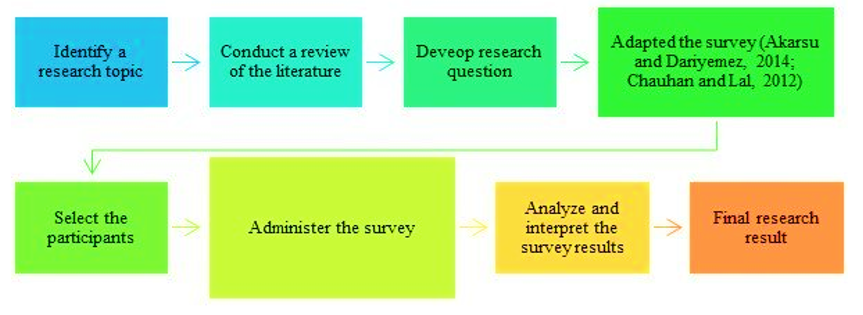
The study investigates pedagogical renewal to achieve a peace education curriculum through the integration of artificial intelligence (AI) in Nigerian universities. Despite the critical role of peace education in fostering national stability, traditional teaching methods often struggle to engage students effectively in the digital age. This study aimed to explore how AI can serve as a transformative path for pedagogical renewal in this field. A descriptive survey research design was employed, focusing on a population of peace education lecturers. Using a purposive sampling technique, a sample size of 180 respondents was selected. Data were collected via a self-structured instrument titled "Questionnaire on Pedagogical Renewal to Achieve Peace Education: Artificial Intelligence as Path in Nigeria (QPRAPEIAPN)," which utilized a four-point Likert scale. The instrument was validated by experts in measurement and evaluation, achieving a reliability coefficient of 0.72 through the test-retest method. Data were analyzed using descriptive statistics, including simple percentages, frequency counts, and mean scores. The results revealed that AI significantly enhances the efficiency of lesson planning and the delivery of peace education, offering personalized and interactive learning experiences. Consequently, it was concluded that AI is a viable tool for revitalizing the curriculum. The study contributes to the field by providing empirical evidence for digital transformation in social sciences. Based on these findings, it is recommended that universities prioritize the provision of AI infrastructure and implement mandatory AI literacy programs for educators to ensure a seamless pedagogical transition.
References
Akinbi, J. O. (2015). Examining the Boko Haram insurgency in Northern Nigeria and the quest for a permanent resolution of the crisis. Global Journal of Arts, Humanities and Social Sciences, 3(8), 32-45.
Aluko, O. A., Odewale, A. T., Taiwo, K., & Adefeso, H. (2024). Unlocking inclusive growth and sustainable development in Nigeria: A roadmap through challenges and opportunities. African Journal of Applied Research, 10(1), 201-223. https://doi.org/10.26437/ajar.v10i1.683
Awodoyin, F. O., & Emmanuel, J. (2024). Reconceptualization Of Education In Basic Schools In Nigeria: Integrating Peace And Security Studies In Colleges Of Education For Teachers'pedagogical Subject Knowledge. Advance Journal of Education and Social Sciences, 9(12), 171-183. https://doi.org/10.5281/zenodo.17276628
Cromwell, A. (2022). Peace education as a peacemaking tool in conflict zones. In Contemporary Peacemaking: Peace Processes, Peacebuilding and Conflict (pp. 507-532). Cham: Springer International Publishing. https://doi.org/10.1007/978-3-030-82962-9_24
Goodyear, V. A., Casey, A., & Kirk, D. (2017). Practice architectures and sustainable curriculum renewal. Journal of Curriculum Studies, 49(2), 235-254. https://doi.org/10.1080/00220272.2016.1149223
Huang, A. Y., Lu, O. H., & Yang, S. J. (2023). Effects of artificial Intelligence–Enabled personalized recommendations on learners’ learning engagement, motivation, and outcomes in a flipped classroom. Computers & Education, 194, 104684. https://doi.org/10.1016/j.compedu.2022.104684
Justine, I. I. C., Ighodalo, A., & Okpo, O. C. (2012). Poverty and sustainable socio-economic development in Africa: the Nigerian Experience. Asian economic and financial review, 2(2), 367.
Kamalov, F., Santandreu Calonge, D., & Gurrib, I. (2023). New era of artificial intelligence in education: Towards a sustainable multifaceted revolution. Sustainability, 15(16), 12451. https://doi.org/10.3390/su151612451
Khurramov, A. J., Axmedshaeva, M. A., Mukhitdinova, F. A., Xudayberdiyeva, G. A., Almosova, S. S., Makhamatov, M. M., & Khayitov, S. R. (2025). Artificial Intelligence in Education: Analysis and Assessment of Legal Knowledge Using AI Tools. Qubahan Academic Journal, 5(3), 264-293. https://doi.org/10.48161/qaj.v5n3a2022
Masunda, O. C. (2024). Artificial Intelligence and Peace Education in Zimbabwe: A Curriculum Perspective. African Journal of Information Science, Fine Arts & Speech Studies (AJISFASS), 1(2). https://doi.org/10.31920/2753-3166/2024/v1n2a1
Nkoro, A. E., Emoruwa, F. O., & Erinsakin, M. O. (2014). The Prospects and Challenges of Multigrade Teaching Approach in Secondary Schools in Nigeria. In International Conference on Arts, Economics and Management (Vol. 5, No. 14, pp. 22-23).
Ndwandwe, N. D. (2024). Barriers to implementing peace education in secondary schools in South Africa. Journal of Peace Education, 21(2), 164-184. https://doi.org/10.1080/17400201.2024.2367966
Nwankwo, S. C., & Odunuga, J. O. (2024). Boko Haram insurgency in Northern States and challenges of national security for sustainable development in Nigeria. NIU Journal of Humanities, 9(4), 29-36. https://doi.org/10.58709/niujhu.v9i4.2046
Odalonu, B. H., & Egbogu, D. U. (2023). Implications of escalating banditry on national security in Nigeria. African Journal of Humanities and Contemporary Education Research, 10(1). https://publications.afropolitanjournals.com/index.php/ajhcer/article/view/409
Ojo, J. S., Oyewole, S., & Aina, F. (2023). Forces of terror: Armed banditry and insecurity in North-west Nigeria. Democracy and Security, 19(4), 319-346. https://doi.org/10.1080/17419166.2023.2164924
Park, J., Teo, T. W., Teo, A., Chang, J., Huang, J. S., & Koo, S. (2023). Integrating artificial intelligence into science lessons: Teachers’ experiences and views. International Journal of STEM Education, 10(1), 61. https://doi.org/10.1186/s40594-023-00454-3
Purwanto, Y., Suprapto, Munaf, D. R., Albana, H., Marifataini, L. D., Siregar, I., & Sumarni. (2023). The peace education concept and practice at universities: A systematic review. Cogent education, 10(2), 2260724. https://doi.org/10.1080/2331186X.2023.2260724
Rahiman, H. U., & Kodikal, R. (2024). Revolutionizing education: Artificial intelligence empowered learning in higher education. Cogent Education, 11(1), 2293431. https://doi.org/10.1080/2331186X.2023.2293431
Scogin, S. C., Dorantes, M., Couwenhoven, A., Vander Kolk, J., Schuen, A., Grimmer, C., ... & Bowers, S. (2023). The relationship between pre-service teachers’ ideologies and learner-centered approaches in STEM classrooms. Journal of Science Teacher Education, 34(2), 181-200. https://doi.org/10.1080/1046560X.2022.2039344
Vieriu, A. M., & Petrea, G. (2025). The impact of artificial intelligence (AI) on students’ academic development. Education Sciences, 15(3), 343. https://doi.org/10.3390/educsci15030343
Downloads
Published
How to Cite
Issue
Section
License
Copyright (c) 2025 Erinsakin Martins Ojo, Olaniyan Olaolu Damilola

This work is licensed under a Creative Commons Attribution-ShareAlike 4.0 International License.