Cooperative Learning Model on Group Work Ability of Vocational High School Students: Learning Basic Electronics

https://doi.org/10.51574/ijrer.v5i1.4277
Keywords:
Basic Electronics, Cooperative Learning, Group Work Ability, Learning Models, Vocational High SchoolAbstract
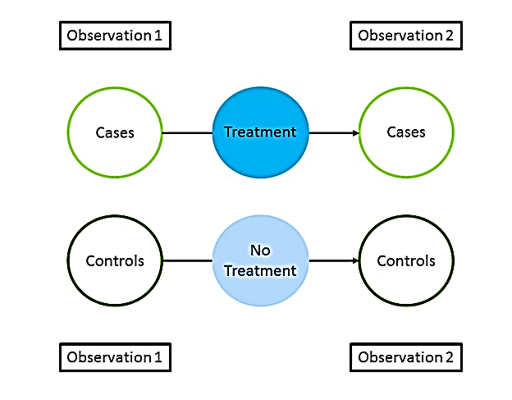
The ability to work together in groups is a crucial soft skill for vocational high school students, but conventional learning methods are often less effective in honing this collaborative competence in complex technical subjects. This study aims to test the effectiveness of the Cooperative Learning (CL) learning model on improving students' group work skills in Basic Electronics. This study used a quasi-experimental method with a nonequivalent control group pretest-posttest design. The sample consisted of 50 students of grade XI TAV Vocational High School 4 Gowa who were divided into an experimental group (CL implementation) and a control group (conventional learning). The research instruments included a validated learning outcome test and a group work ability questionnaire. Data were analyzed using Normalized Gain Score (N-Gain) and Analysis of Covariance (ANCOVA). The findings showed that the N-Gain value of the experimental group reached 61.77%, higher than the control group, which was only 44.06%. The effectiveness difference of 17.71% indicates an increase in group skills in the moderate category but significantly outperformed the control class. The ANCOVA test results confirmed this finding with a significant value of 0.001 (p < 0.05), proving a significant influence of the CL model on students' collaboration skills. This study confirms that cooperative learning is an effective strategy for strengthening collaboration soft skills in vocational education environments while also providing practical recommendations for educators on integrating teamwork into technical curricula.
References
Abtahi, Y. (2018). Pupils, tools and the Zone of Proximal Development. Research in Mathematics Education, 20(1), 1-13. https://doi.org/10.1080/14794802.2017.1390691
Akbari, M., Taheri, M., Tabaeian, S. P., Karimi, M., Fayazi, H., & Fayazi, N. (2021). The effect of E-learning on self-efficacy and sense of coherence of cancer caregivers: application of the bandura and antonovsky social cognitive theory. Current Health Sciences Journal, 47(4), 539. https://doi.org/10.12865/CHSJ.47.04.09
Baker, T., & Clark, J. (2010). Cooperative learning–a double‐edged sword: a cooperative learning model for use with diverse student groups. Intercultural Education, 21(3), 257-268. https://doi.org/10.1080/14675981003760440
Baloche, L., & Brody, C. M. (2017). Cooperative learning: Exploring challenges, crafting innovations. Journal of education for teaching, 43(3), 274-283. https://doi.org/10.1080/02607476.2017.1319513
Barutha, P. J., Jeong, H. D., Gransberg, D. D., & Touran, A. (2021). Evaluation of the impact of collaboration and integration on performance of industrial projects. Journal of Management in Engineering, 37(4), 04021037. https://doi.org/10.1061/(ASCE)ME.1943-5479.000092
Curiel-Ramirez, L. A., Bautista-Montesano, R., Galluzzi, R., Izquierdo-Reyes, J., Ramírez-Mendoza, R. A., & Bustamante-Bello, R. (2022). Smart automotive E-Mobility—A proposal for a new curricula for engineering education. Education Sciences, 12(5), 316. https://doi.org/10.3390/educsci12050316
Danković, D., Marjanović, M., Mitrović, N., Živanović, E., Danković, M., Prijić, A., & Prijić, Z. (2022). The importance of students’ practical work in high schools for higher education in electronic engineering. IEEE Transactions on Education, 66(2), 146-155. https://doi.org/10.1109/TE.2022.3202629
Erbil, D. G. (2020). A review of flipped classroom and cooperative learning method within the context of Vygotsky theory. Frontiers in psychology, 11, 1157. https://doi.org/10.3389/fpsyg.2020.01157
Eun, B. (2019). The zone of proximal development as an overarching concept: A framework for synthesizing Vygotsky’s theories. Educational philosophy and theory, 51(1), 18-30. https://doi.org/10.1080/00131857.2017.1421941
Geletu, G. M. (2022). The effects of teachers’ professional and pedagogical competencies on implementing cooperative learning and enhancing students’ learning engagement and outcomes in science: Practices and changes. Cogent Education, 9(1), 2153434. https://doi.org/10.1080/2331186X.2022.2153434
Gumartifa, A., Syahri, I., Siroj, R. A., Nurrahmi, M., & Yusof, N. (2023). Perception of Teachers Regarding Problem-Based Learning and Traditional Method in the Classroom Learning Innovation Proces. Indonesian Journal on Learning and Advanced Education (IJOLAE), 151-166. https://doi.org/10.23917/ijolae.v5i2.20714
Hitka, M., Kucharčíková, A., Štarchoň, P., Balážová, Ž., Lukáč, M., & Stacho, Z. (2019). Knowledge and human capital as sustainable competitive advantage in human resource management. Sustainability, 11(18), 4985. https://doi.org/10.3390/su11184985
Indrawati, S. M., & Kuncoro, A. (2021). Improving competitiveness through vocational and higher education: Indonesia’s vision for human capital development in 2019–2024. Bulletin of Indonesian Economic Studies, 57(1), 29-59. https://doi.org/10.1080/00074918.2021.1909692
Johnson, D. W., & Johnson, R. T. (2018). Cooperative learning: The foundation for active learning. Active learning—Beyond the future, 59-71. http://dx.doi.org/10.5772/intechopen.81086
Kautsar, A., Marzuki, M., & Sadrina, S. (2018). Pengaruh penerapan model pembelajaran kooperatif tipe jigsaw terhadap hasil belajar siswa pada mata pelajaran teknik instalasi penerangan listrik rumah sederhana di SMKN 1 Darul Kamal. CIRCUIT: Jurnal Ilmiah Pendidikan Teknik Elektro, 2(2).
Lambright, K. (2024). The effect of a teacher’s mindset on the cascading zones of proximal development: A systematic review. Technology, Knowledge and Learning, 29(3), 1313-1329. https://doi.org/10.1007/s10758-023-09696-0
Lenkauskaitė, J., Colomer, J., & Bubnys, R. (2020). Students’ social construction of knowledge through cooperative learning. Sustainability, 12(22), 9606. https://doi.org/10.3390/su12229606
Maulana, M. R. (2023). Pengaruh Kualitas Tenaga Pendidik Terhadap Pendidikan. Journal Sains and Education, 1(3), 102-109. https://journal.sabajayapublisher.com/index.php/jse/article/view/113
Masnawati, E., Mardikaningsih, R., Hariani, M., al Hasani, D. F., Irawan, A. I., & Safitri, S. M. (2024). Strategi Kolaboratif dalam Pengembangan Lingkungan Pembelajaran Kreatif. Jurnal Pendidikan, Penelitian, dan Pengabdian Masyarakat, 4(2), 49-62. https://jurnalnala.id/index.php/nala/article/view/50
Mendo-Lázaro, S., León-del-Barco, B., Polo-del-Río, M. I., & López-Ramos, V. M. (2022). The impact of cooperative learning on university students’ academic goals. Frontiers in Psychology, 12, 787210. https://doi.org/10.3389/fpsyg.2021.787210
Munir, F. (2022). More than technical experts: Engineering professionals’ perspectives on the role of soft skills in their practice. Industry and Higher Education, 36(3), 294-305. https://doi.org/10.1177/09504222211034725
Myllymaki, S. (2012). Cooperative learning in lectures of an advanced electrical engineering course. International Journal of Electrical Engineering Education, 49(2), 146-156. https://doi.org/10.7227/IJEEE.49.2.5
Nugroho, S. (2022). Pembelajaran Berkarakteristik Inovatif Abad 21 pada Materi K3lh dengan Model Pembelajaran Ceramah di Sekolah SMK Negeri 1 Dukuhturi. Cakrawala: Jurnal Pendidikan, 9300(17), 70-77.
Pohan, A. E., Nasution, F., & Mery, S. (2023). Link and Match Program Implementation: A Case Study at Vocational High School 1 Batam. Edcomtech: Jurnal Kajian Teknologi Pendidikan, 8(2), 89-101. https://doi.org/10.17977/edcomtech.v8i2.3849
Putri, K. M. F., Ranti, L. R., & Ringkat, G. H. F. (2024). Artikel Model Pembelajaran Cooperative Learning. Dewantara: Jurnal Pendidikan Sosial Humaniora, 3(3), 01-06. https://doi.org/10.30640/dewantara.v3i3.2770
Rafique, A., Khan, M. S., Jamal, M. H., Tasadduq, M., Rustam, F., Lee, E., ... & Ashraf, I. (2021). Integrating learning analytics and collaborative learning for improving student’s academic performance. IEEE Access, 9, 167812-167826. https://doi.org/10.1109/ACCESS.2021.3135309
Rahmadhani, S., & Suryati, L. (2022). Vocational high school students' competency needs to the world of work. Mimbar Ilmu, 27(2), 349-355. https://doi.org/10.23887/mi.v27i1.42161
Satria, H. (2021). Pengaruh Teknik Cooperative Learning Berbasis Metode Think Pair Share Untuk Meningkatkan Pemahaman Materi Dasar-Dasar Elektronika. CIRCUIT: Jurnal Ilmiah Pendidikan Teknik Elektro, 5(1), 17-23. https://doi.org/10.22373/crc.v5i1.8085
Schunk, D. H., & DiBenedetto, M. K. (2020). Motivation and social cognitive theory. Contemporary educational psychology, 60, 101832. https://doi.org/10.1016/j.cedpsych.2019.101832
Talkhan, E., Alhubaidah, S., Muthanna, A., & Qadhi, S. (2025). The effect of cooperative learning toward mathematics achievement of primary students: A systematic review using meta-analysis. Social Sciences & Humanities Open, 12, 102247. https://doi.org/10.1016/j.ssaho.2025.102247
Thapa, H. S. (2024). Development of employability skills through work-based learning. Journal of Technical and Vocational Education and Training, 18(1), 102-111. https://nepjol.info/index.php/tvet/article/view/62750
Turulja, L., & Bajgoric, N. (2018). Information technology, knowledge management and human resource management: Investigating mutual interactions towards better organizational performance. VINE Journal of Information and Knowledge Management Systems, 48(2), 255-276. https://doi.org/10.1108/VJIKMS-06-2017-0035
Wolfinbarger, K. G., Shehab, R. L., Trytten, D. A., & Walden, S. E. (2021). The influence of engineering competition team participation on students' leadership identity development. Journal of Engineering Education, 110(4), 925-948. https://doi.org/10.1002/jee.20418
Xi, J., & Lantolf, J. P. (2021). Scaffolding and the zone of proximal development: A problematic relationship. Journal for the Theory of Social Behaviour, 51(1), 25-48. https://doi.org/10.1111/jtsb.12260
Yang, X. (2023). A historical review of collaborative learning and cooperative learning. TechTrends, 67(4), 718-728. https://doi.org/10.1007/s11528-022-00823-9
Yin, H., Tam, W. W. Y., & Lau, E. (2022). Examining the relationships between teachers’ affective states, self-efficacy, and teacher-child relationships in kindergartens: An integration of social cognitive theory and positive psychology. Studies in Educational Evaluation, 74, 101188. https://doi.org/10.1016/j.stueduc.2022.101188
Downloads
Published
How to Cite
Issue
Section
License
Copyright (c) 2025 Marlina Rande, Mustamin Mustamin, Lu’mu Lu’mu

This work is licensed under a Creative Commons Attribution-ShareAlike 4.0 International License.