Principals' Strategies in Improving Student Achievement: A Multi-Site Study

https://doi.org/10.51574/ijrer.v5i1.4205
Keywords:
Elementary Schools, Instructional Leadership, Madrasah Ibtidaiyah, Principal Strategy, Student AchievementAbstract
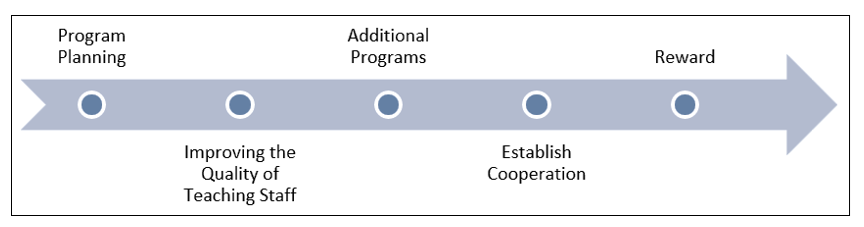
Improving student achievement is a complex challenge that requires an adaptive leadership approach, especially in educational institutions with different environmental and curricular characteristics. This phenomenon demands a profound understanding of how instructional leadership strategies are effectively implemented in the field. Therefore, this study aims to analyze and compare the principals' strategies in improving student achievement in two educational institutions with different characteristics: Madrasah Ibtidaiyah (MI) IMAMI Kepanjen and Elementary School 4 Panggungrejo. This study used a qualitative approach with a multi-site study design. Data was collected through in-depth interviews, participant observation, and documentation studies to obtain a comprehensive picture of the policies and program implementation in both locations. The findings indicate that at MI IMAMI, the strategy focused on six integrated approaches: developing collaborative programs based on the Independent Curriculum, improving teacher quality through academic supervision, systematic learning evaluation, providing adequate facilities, developing interests and talents, and intensive communication with parents. Meanwhile, at Elementary School 4 Panggungrejo, the strategy emphasized integrated program planning, improving teaching staff competencies, supplementary and remedial programs, strategic partnerships, and a comprehensive reward system. The results of this study indicate that a contextual approach and strong instructional leadership are key to successfully improving student achievement across multiple dimensions. This study provides theoretical and practical contributions regarding the importance of adapting leadership strategies that are responsive to institutional characteristics and the specific needs of students at the elementary school level.
References
Anand, B., Mishra, I., Beri, G., & Chaudhary, K. L. (2024). Types of learning: Domains of learning–Cognitive, affective, and psychomotor, learning theories, experiential learning. Extension methods, ICT and educational technology, 53-82.
Anwar, K., Lubis, S. A., & Siahaan, A. (2023). Peran Strategis Kepala Madrasah Diniyah Takmiliyah Awaliyah Dalam Meningkatkan Mutu Kinerja Madrasah Di Kabupaten Deli Serdang. Edukasi Islami: Jurnal Pendidikan Islam, 12(001). https://doi.org/10.30868/ei.v12i001.6263
Arar, K., Sawalhi, R., & Yilmaz, M. (2022). The research on Islamic-based educational leadership since 1990: An international review of empirical evidence and a future research agenda. Religions, 13(1), 42. https://doi.org/10.3390/rel13010042
Brooks, M. C., & Mutohar, A. (2018). Islamic school leadership: A conceptual framework. Journal of Educational Administration and History, 50(2), 54-68. https://doi.org/10.1080/00220620.2018.1426558
Chang, H. B., & Huang, W. J. (2022). Stakeholder workshops as a pedagogical method for experiential learning in collaborative planning education. Planning Practice & Research, 37(4), 427-445. https://doi.org/10.1080/02697459.2021.2019523
Darmawan, I. G. N., Suryadi, A., Budimansyah, D., & Susilo, S. (2024). Indonesian Education: Past, Present, and Future. Taylor & Francis.
Day, C., Gu, Q., & Sammons, P. (2016). The impact of leadership on student outcomes: How successful school leaders use transformational and instructional strategies to make a difference. Educational administration quarterly, 52(2), 221-258. https://doi.org/10.1177/0013161X15616863
Dewi, K., Erlisnawati, E., & Marhadi, H. (2025). Desain Kepemimpinan Kepala Sekolah dalam Menerapkan Budaya Positif untuk Meningkatkan Karakter Peduli Lingkungan di Sekolah Dasar. JIIP-Jurnal Ilmiah Ilmu Pendidikan, 8(6), 6614-6619. http://www.jiip.stkipyapisdompu.ac.id/jiip/index.php/JIIP/article/view/8189
Erdem, C., & Kaya, M. (2023). Socioeconomic status and wellbeing as predictors of students’ academic achievement: Evidence from a developing country. Journal of Psychologists and Counsellors in Schools, 33(2), 202-220. https://doi.org/10.1017/jgc.2021.10
Fakhretdinova, G. N., Osipov, P., & Dulalaeva, L. P. (2020). Extracurricular activities as an important tool in developing soft skills. In International Conference on Interactive Collaborative Learning (pp. 480-487). Cham: Springer International Publishing. https://doi.org/10.1007/978-3-030-68201-9_47
Gamage, K. A., Dehideniya, D. M. S. C. P. K., & Ekanayake, S. Y. (2021). The role of personal values in learning approaches and student achievements. Behavioral sciences, 11(7), 102. https://doi.org/10.3390/bs11070102
Hamidah, H., Syahrani, S., & Dzaky, A. (2023). Pengaruh Sumber Belajar Terhadap Hasil Belajar Siswa Pada Mata Pelajaran Akidah Akhlak Di MTsN 8 Hulu Sungai Utara. FIKRUNA: Jurnal Ilmiah Kependidikan dan Kemasyarakatan, 5(2), 223-239. https://doi.org/10.56489/fik.v6i2.126
He, P., Guo, F., & Abazie, G. A. (2024). School principals’ instructional leadership as a predictor of teacher’s professional development. Asian-Pacific Journal of Second and Foreign Language Education, 9(1), 63. https://doi.org/10.1186/s40862-024-00290-0
Indriyanti, L., Setiadi, M. C., Bakti, N. W. S. A., Suriansyah, A., & Cinantya, C. (2024). Pentingnya peran kepala sekolah dan guru dalam meningkatkan prestasi siswa di sekolah dasar. Journal Educational Research and Development| E-ISSN: 3063-9158, 1(2), 273-283. https://doi.org/10.62379/jerd.v1i2.149
Issah, I., Appiah, O., Appiahene, P., & Inusah, F. (2023). A systematic review of the literature on machine learning application of determining the attributes influencing academic performance. Decision analytics journal, 7, 100204. https://doi.org/10.1016/j.dajour.2023.100204
Izzah, N. L. R. (2018). Pola asuh orang tua dalam menumbuhkan karakter cinta damai pada Siswa di MI Imami Kepanjen (Doctoral dissertation, Universitas Islam Negeri Maulana Malik Ibrahim).
Karim, A., Fathurohman, O., Sulaiman, S., Marliani, L., Muhammadun, M., & Firmansyah, B. (2025). How do principals act as leaders and managers in boarding and public schools in Indonesia?. Cogent Education, 12(1), 2445354. https://doi.org/10.1080/2331186X.2024.2445354
Kartikasari, E., & Nuryasana, E. (2022). School literacy movement program in elementary school, Indonesia: Literature review. Journal of Education and Learning (EduLearn), 16(3), 336-341. https://doi.org/10.11591/edulearn.v16i3.20383
Kusumawati, M. D., Fauziddin, M., & Ananda, R. (2023). The impact of reward and punishment on the extrinsic motivation of elementary school students. Al-Ishlah: Jurnal Pendidikan, 15(1), 183-192. https://doi.org/10.35445/alishlah.v15i1.2856
Mallillin, L. L. D., Cabaluna, J. C., Laurel, R. D., Arroyo, P. A. C., Señoron Jr, T. M., & Mallillin, J. B. (2021). Structural domain of learning and teaching strategies in the academic performance of students. European Journal of Education Studies, 8(9). http://dx.doi.org/10.46827/ejes.v8i9.3902
Marfán, J. (2025). Comparing the Role of Attitudes on the Enactment of Academic and Non-Academic Education Performance Indicators. Educational Policy, 39(6), 1139-1170. https://doi.org/10.1177/08959048241288505
Mubarok, R., Nursalim, E., & Hasan, H. (2024). Eksplorasi gaya kepemimpinan partisipatif kepala madrasah dalam mendorong peningkatan mutu madrasah ibtidaiyah. Al-Madrasah: Jurnal Ilmiah Pendidikan Madrasah Ibtidaiyah, 8(2), 480-494. http://jurnal.stiq-amuntai.ac.id/index.php/al-madrasah/article/view/3419
Pan, H. L. W., & Chen, W. Y. (2021). How principal leadership facilitates teacher learning through teacher leadership: Determining the critical path. Educational Management Administration & Leadership, 49(3), 454-470. https://doi.org/10.1177/1741143220913553
Pasaribu, A. (2017). Implementasi manajemen berbasis sekolah dalam pencapaian tujuan pendidikan nasional di madrasah. EduTech: Jurnal Ilmu Pendidikan Dan Ilmu Sosial, 3(1). https://doi.org/10.30596/edutech.v3i1.984
Prihatin, E., Kadarsah, D., & IZFS, R. D. (2025). Kebijakan Pendidikan Nasional: Transformasi Digital untuk Sistem yang Inklusif. Indonesia Emas Group.
Rahmat, A. (2021). Hubungan sekolah dan masyarakat: mengelola partisipasi masyarakat dalam peningkatan mutu sekolah. Zahir Publishing.
Ramli, M. (2025). Kajian Teoretis tentang Faktor Internal dan Eksternal dalam Perkembangan Peserta Didik: Penelitian. Jurnal Pengabdian Masyarakat dan Riset Pendidikan, 4(2), 13894-13904. https://doi.org/10.31004/jerkin.v4i2.4037
Rasdiana, Wiyono, B. B., Imron, A., Rahma, L., Arifah, N., Azhari, R., ... & Maharmawan, M. A. (2024). Elevating teachers’ professional digital competence: synergies of principals’ instructional e-supervision, technology leadership and digital culture for educational excellence in digital-savvy era. Education Sciences, 14(3), 266. https://doi.org/10.3390/educsci14030266
Ridha, A. R., Rahmatullah, N. A., Firdaus, A. N. N., & Wicaksono, Y. (2025). Hasil Belajar Sebagai Objek Penilaian. INOVASI: Jurnal Ilmiah Pengembangan Pendidikan, 3(3), 1-8. https://backup-ejournal.lpipb.com/index.php/inovasi/article/view/524
Roksa, J., & Kinsley, P. (2019). The role of family support in facilitating academic success of low-income students. Research in Higher Education, 60(4), 415-436. https://doi.org/10.1007/s11162-018-9517-z
Salas, M. K., & Masluhah, M. (2024). The Influence of Principal Leadership on The Quality of Islamic Education. Jurnal Ilmiah Edukatif, 10(2), 248-259. https://doi.org/10.37567/jie.v10i2.3320
Sasaki, H., Sari, D. P., Warnaini, C., Andiwijaya, F. R., Takeuchi, R., Kadriyan, H., ... & Kobayashi, J. (2024). Leadership of school principals for school health implementation among primary schools in Mataram, Indonesia: a qualitative study. Tropical Medicine and Health, 52(1), 5. https://doi.org/10.1186/s41182-023-00568-y
Selvia, N. L. (2024). Sistem Penyelenggaraan Pendidikan Islam pada Era Reformasi: di Sekolah Umum, Madrasah, Pondok Pesantren dan Majlis Taklim. Al-Madrasah: Jurnal Ilmiah Pendidikan Madrasah Ibtidaiyah, 8(2), 792-808. http://dx.doi.org/10.35931/am.v8i2.3465
Sisk, V. F., Burgoyne, A. P., Sun, J., Butler, J. L., & Macnamara, B. N. (2018). To what extent and under which circumstances are growth mind-sets important to academic achievement? Two meta-analyses. Psychological science, 29(4), 549-571. https://doi.org/10.1177/0956797617739704
Suleiman, I. B., Okunade, O. A., Dada, E. G., & Ezeanya, U. C. (2024). Key factors influencing students’ academic performance. Journal of Electrical Systems and Information Technology, 11(1), 41. https://doi.org/10.1186/s43067-024-00166-w
Swan Sein, A., Rashid, H., Meka, J., Amiel, J., & Pluta, W. (2021). Twelve tips for embedding assessment for and as learning practices in a programmatic assessment system. Medical Teacher, 43(3), 300-306. https://doi.org/10.1080/0142159X.2020.1789081
Wulandari, Y. N., Aslamiah, A., Noorhafizah, N., & Novitawati, N. (2025). Manajemen Kepemimpinan Kepala Sekolah untuk Meningkatkan Mutu Pendidikan dan Menciptakan Lingkungan Belajar yang Kondusif. LEARNING: Jurnal Inovasi Penelitian Pendidikan dan Pembelajaran, 5(1), 312-321. https://doi.org/10.51878/learning.v5i1.4336
Zeng, W., Huang, F., Yu, L., & Chen, S. (2018). Towards a learning-oriented assessment to improve students’ learning—a critical review of literature. Educational Assessment, Evaluation and Accountability, 30(3), 211-250. https://doi.org/10.1007/s11092-018-9281-9
Downloads
Published
How to Cite
Issue
Section
License
Copyright (c) 2025 Hasyisyatun Nurun Nisa’, Moh. Padil, Ahmad Barizi

This work is licensed under a Creative Commons Attribution-ShareAlike 4.0 International License.