Critical Thinking Skills of College Students in Solving Linear Algebra Problems Using the Problem-Based Learning Model

https://doi.org/10.51574/ijrer.v5i1.4160
Keywords:
College Students, Critical Thinking, Electrical Engineering, Linear Algebra, Problem-Based LearningAbstract
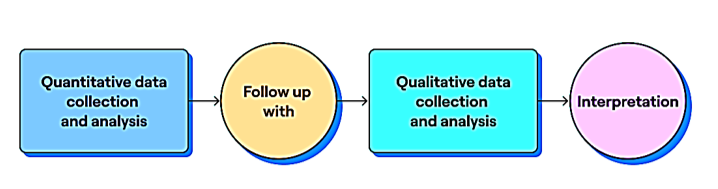
Third-semester electrical engineering students taking linear algebra had an average pretest of 54.2, indicating poor conceptual mastery of critical thinking skills (CTS). They struggled with variable analysis, mathematical inferences, and logical engineering problem solutions. This report suggests an innovative learning model that bridges mathematical theory and engineering applications. This study examines whether Problem-Based Learning (PBL) improves students' CTS and explains the qualitative mechanisms. This study employs an explanatory sequential mixed-methods approach. To measure CTS pre- and post-test scores using Facione indicators (interpretation, analysis, evaluation, inference, and explanation), 42 electrical engineering students were tested. In the second stage (quantitative), the researchers explained the quantitative results through observation of the learning process, in-depth interviews, and document analysis. The findings indicate the CTS score increased 31.2% from 54.2 to 71.1. The paired t-test (T (41) = 8.72; p < 0.001) confirmed statistical significance, while the Cohen’s d Effect Size value of 1.39 indicated significant practical impact. 10 The Inference (44%) and Analysis (38%) indicators increased most. The qualitative results indicated that PBL forced students to think investigatively instead of procedurally. High group activity also improved students' explanation and evaluation skills (p = 0.006) by encouraging coherent arguments. With PBL, electrical engineering students' CTS, especially higher order thinking skills like analysis and inference, improved greatly. Positive group dynamics and changes in students' learning experiences, which PBL promotes to develop critical thinking and engineering-relevant problem-solving skills, supported this effectiveness.
References
Adhelacahya, K., Sukarmin, S., & Sarwanto, S. (2023). The impact of problem-based learning electronics module integrated with STEM on students' critical thinking skills. Jurnal Penelitian Pendidikan IPA, 9(7), 4869-4878. https://doi.org/10.29303/jppipa.v9i7.3931
Akcaoğlu, M. Ö., Mor, E., & Külekçi, E. (2023). The mediating role of metacognitive awareness in the relationship between critical thinking and self-regulation. Thinking skills and creativity, 47, 101187. https://doi.org/10.1016/j.tsc.2022.101187
Altun, E., & Yildirim, N. (2023). What does critical thinking mean? Examination of pre-service teachers’ cognitive structures and definitions for critical thinking. Thinking Skills and Creativity, 49, 101367. https://doi.org/10.1016/j.tsc.2023.101367
Anggaini, D. (2016). Pengaruh Evaluasi Tes Formatif Terhadap Hasil Belajar Matematika Ditinjau Dari Tingkat Kemandirian Belajar. Jurnal Penelitian dan Penilaian Pendidikan, 1(1), 1-15. https://doi.org/10.22236/jppp.v1i1.1244
Anggaini, D. (2020). Pengaruh Mata Kuliah Pengukuran Besaran Listrik (PBL) Teori Terhadap Hasil Praktikum Pengukuran Besaran Listrik (PBL) Ditinjau dari Motivasi Belajar Mahasiswa IT-PLN. Energi dan Kelistrikan, 12(2), 392080. https://doi.org/10.33322/energi.v12i2.1083
Anggaini, D., Fikri, M., & Setiawan, D. (2018). Pengaruh Evaluasi Tes Formatif Terhadap Hasil Belajar Matematika Ditinjau Dari Tingkat Kemandirian Belajar Mahasiswa Stt-Pln Jakarta Dengan Menggunakan Analisis Varian Anova. Kilat, 7(2). https://doi.org/10.33322/kilat.v7i2.353
Anggraeni, D. M., Prahani, B. K., Suprapto, N., Shofiyah, N., & Jatmiko, B. (2023). Systematic review of problem based learning research in fostering critical thinking skills. Thinking Skills and Creativity, 49, 101334. https://doi.org/10.1016/j.tsc.2023.101334
Arikunto. (2018). Dasar-Dasar Evaluasi Pendidikan. Bumi Aksara.
Ayyıldız Altınbaş, A., Solak, S., & Ertekin, E. (2025). The effect of multiple representations-based and problem-based instruction in linear algebra on pre-service teachers' dimensions of understanding and self-efficacy perceptions. Journal of Mathematics Teacher Education, 1-28. https://doi.org/10.1007/s10857-025-09696-0
Bayro-Corrochano, E. (2021). A survey on quaternion algebra and geometric algebra applications in engineering and computer science 1995–2020. IEEE Access, 9, 104326-104355. https://doi.org/10.1109/ACCESS.2021.3097756
Benedicto, P. N., & Andrade, R. (2022). Problem-based learning strategies and critical thinking skills among pre-service teachers. International Journal of Science, Technology, Engineering and Mathematics, 2(2). https://papers.ssrn.com/sol3/papers.cfm?abstract_id=4190124
Broo, D. G., Kaynak, O., & Sait, S. M. (2022). Rethinking engineering education at the age of industry 5.0. Journal of Industrial Information Integration, 25, 100311. https://doi.org/10.1016/j.jii.2021.100311
Busahdiar, Karimah, U., & Tamin, S. (2023). Total Quality Management (TQM) and Basic Education: Its Application to Islamic Education in Muhammadiyah Elementary Schools. Jurnal Pendidikan Agama Islam, 20(2), 215–232. https://doi.org/10.14421/jpai.v20i2.8015
Cahyono, A. E. Y. (2017). Pengembangan perangkat pembelajaran dengan model PBL berorientasi pada kemampuan berpikir kreatif dan inisiatif siswa. PYTHAGORAS: Jurnal Matematika dan Pendidikan Matematika, 12(1), 1-11. https://doi.org/10.21831/pg.v12i1.14052
Chen, P. Y., & Hwang, G. J. (2019). An empirical examination of the effect of self-regulation and the Unified Theory of Acceptance and Use of Technology (UTAUT) factors on the online learning behavioural intention of college students. Asia Pacific Journal of Education, 39(1), 79–95. https://doi.org/10.1080/02188791.2019.1575184
Cho, Y., & Brown, C. (2013). Project-based learning in education: Integrating business needs and student learning. European Journal of Training and Development, 37(8), 744–765. https://doi.org/10.1108/EJTD-01-2013-0006
Conde-Carmona, R. J., Díaz, S., Gómez Muñoz, J. L., Jiménez-Consuegra, M. A., & Buelvas, Y. O. (2024). Integration of the steam approach in teaching linear algebra to engineering students. Ingeniería y competitividad, 26(3). http://www.scielo.org.co/scielo.php?pid=S0123-30332024000300014&script=sci_arttext
Condliffe, B. (2017). Project-Based Learning: A Literature Review. Working Paper. MDRC. https://eric.ed.gov/?id=ED578933
Devika, S. V., Siddapuram, A., Kaur, R., & Bollampally, A. (2024). From lecture-based learning to problem-based learning: A review on navigating the transformation in engineering education. Journal of Engineering Education Transformations, 179-183. https://journaleet.in/index.php/jeet/article/view/2272
Dwi Anggaini, Ratnasari, T., & Fikri, M. (2020). The Effect of Theoretical University Courses Towards Practical Work Result Based on Learning Motivation. Ilomata International Journal of Social Science, 1(3), 82-87. https://doi.org/10.52728/ijss.v1i3.106
Fatayan, A., Setiani, O. I., Ghani, A. R. A., & Firdausya, B. T. W. (2024). Technology Based Interactive Media Development (Issue Icnsse 2023). Atlantis Press SARL. https://doi.org/10.2991/978-2-38476-242-2_33
Hasbi, M., & Fitri, F. (2023). Pre-Service Teachers with Courses in Problem-Based Learning in Mathematics. ETDC: Indonesian Journal of Research and Educational Review, 2(2), 51-60. https://doi.org/10.51574/ijrer.v2i2.588
Hsbollah, H. M., & Hassan, H. (2022). Creating meaningful learning experiences with active, fun, and technology elements in the problem-based learning approach and its implications. Malaysian Journal of Learning and Instruction (MJLI), 19(1), 147-181. https://doi.org/10.32890/mjli2022.19.1.6
Hussin, M., Usmledi, U., Masdi, H., Simatupang, W., Fadhilah, F., & Hendriyani, Y. (2025). Project-based problem learning: Improving problem-solving skills in higher education engineering students. RISE, 14(1), 62-84. http://dx.doi.org/10.17583/rise.15125
Jaelani, A. K., Hasbi, M., & Baharullah, B. (2023). A critical thinking profile of mathematics education students in solving ill-structured problem based on mathematical ability. JTAM (Jurnal Teori dan Aplikasi Matematika), 7(2), 545-559. https://doi.org/10.31764/jtam.v7i2.13378
Kadek D M, D., & Nugraha, I. nyoman P. (2019). Penerapan Model Project Based Learning Untuk Meningkatkan Hasil Belajar Mata Pelajaran. Jurnal Teknik Elektronika Undiksha, 1(1), 40–51. https://ejournal.undiksha.ac.id/index.php/JJTE/article/view/31675
Kalnins, A. (2024). Should moderated regressions include or exclude quadratic terms? Present both! Then apply our linear algebraic analysis to identify the preferable specification. Organizational Research Methods, 27(1), 29-63. https://doi.org/10.1177/10944281221124945
Kim, J., & Lee, K. S. S. (2022). Conceptual model to predict Filipino teachers’ adoption of ICT-based instruction in class: using the UTAUT model. Asia Pacific Journal of Education, 42(4), 699–713. https://doi.org/10.1080/02188791.2020.1776213
Li, M., & Chen, H. (2024). Exploring Effective Pedagogical Approaches for Teaching Linear Algebra to Engineering Students: A Literature Review. In 2024 ASEE Annual Conference & Exposition. https://doi.org/10.18260/1-2--47407
Muzaini, M., Hasbi, M., Ernawati, E., & Kristiawati, K. (2022). The empowerment of problem-based learning models to improve students’ quantitative reasoning. Formatif: Jurnal Ilmiah Pendidikan MIPA, 12(1), 11-24. http://dx.doi.org/10.30998/formatif.v12i1.8502
Pahmi, S. (2020). Meningkatkan Kemampuan Mathematical Reasoning dalam Pembelajaran Matematika Siswa Sekolah Menengah Menggunakan Discovery Learning. Jurnal BELAINDIKA (Pembelajaran Dan Inovasi Pendidikan), 2(1), 32–40. https://doi.org/10.52005/BELAINDIKA.V2I1.28
Prasojo, L. D., & Yuliana, L. (2021). How is social media used by indonesian school principals for instructional leadership? Cakrawala Pendidikan, 40(1), 70–80. https://doi.org/10.21831/cp.v40i1.32925
Prosser, M., & Sze, D. (2014). Problem-based learning: Student learning experiences and outcomes. Clinical linguistics & phonetics, 28(1-2), 131-142. https://doi.org/10.3109/02699206.2013.820351
Purnomo, A. R., Yulianto, B., Mahdiannur, M. A., & Subekti, H. (2023). Embedding Sustainable Development Goals to Support Curriculum Merdeka Using Projects in Biotechnology. International Journal of Learning, Teaching and Educational Research, 22(1), 406–433. https://doi.org/10.26803/ijlter.22.1.23
Puspitarini, D. (2022). Blended Learning sebagai Model Pembelajaran Abad 21. Ideguru: Jurnal Karya Ilmiah Guru, 7(1), 1–6. https://doi.org/10.51169/ideguru.v7i1.307
Qurohman, M. T., Wijayanto, Z., & Suwarto, S. (2025). Investigating Critical Thinking Indicators in the Context of Algebra Problem Solving: A Study in Indonesia. Utamax: Journal of Ultimate Research and Trends in Education, 7(2), 99-110. https://doi.org/10.31849/3psjs798
Sari, H. P., Ilhami, A., & Rasool, S. (2025). Implementation of Project Based Learning Based Local Wisdom to Enhance Students’ Critical Thinking in Higher Education. Journal of Contemporary Islamic Education, 5(1), 15–27. https://doi.org/10.25217/jcie.v5i1.5157
Semenova, M., Bebikhov, Y., Yakushev, I., Popova, U., & Sabychikova, A. (2022). Solving Electrical Engineering Problems Using Mathematical Simulation. In International School on Neural Networks, Initiated by IIASS and EMFCSC (pp. 1149-1158). Cham: Springer International Publishing. https://doi.org/10.1007/978-3-031-11058-0_117
Septiani, R., Handayani, P. W., & Azzahro, F. (2017). Factors that Affecting Behavioral Intention in Online Transportation Service: Case study of GO-JEK. Procedia Computer Science, 124, 504–512. https://doi.org/10.1016/j.procs.2017.12.183
Siregar, I., & Sari, V. T. A. (2020). Strategi Motivasi Green’s, Gaya Baru Pembelajaran Matematika pada Siswa Kemampuan Rendah di Indonesia. Mosharafa: Jurnal Pendidikan Matematika, 9(3), 383–394. https://doi.org/10.31980/MOSHARAFA.V9I3.620
Sutrisno, T. (2023). Aplikasi penyelesaian numerik pencarian akar persamaan non-linier dan penerapannya dalam menyelesaikan analisis break even point. Computatio: Journal of Computer Science and Information Systems, 7(1), 37-49. https://doi.org/10.24912/computatio.v7i1.23438
Suyedi, S. S., & Idrus, Y. (2019). Hambatan-Hambatan Belajar Yang Mempengaruhi Hasil Belajar Mahasiswa Dalam Pembelajaran Mata Kuliah Dasar Desain Jurusan Ikk Fpp Unp. Gorga : Jurnal Seni Rupa, 8(1), 120. https://doi.org/10.24114/gr.v8i1.12878
Thornhill-Miller, B., Camarda, A., Mercier, M., Burkhardt, J. M., Morisseau, T., Bourgeois-Bougrine, S., ... & Lubart, T. (2023). Creativity, critical thinking, communication, and collaboration: Assessment, certification, and promotion of 21st century skills for the future of work and education. Journal of Intelligence, 11(3), 54. https://doi.org/10.3390/jintelligence11030054
Umam, K., Khotimah, H., Purwanto, S. E., Azhar, E., Fatayan, A., & Nuriadin, I. (2024). Augmented Reality dan Artificial Intelegence untuk Pemeblajaran dalam Persepektif Guru Matematika. JagoMIPA: Jurnal Pendidikan Matematika Dan IPA, 4(2), 273–279. https://doi.org/10.53299/jagomipa.v4i2.595
Varveris, D., Saltas, V., & Tsiantos, V. (2023). Exploring the role of metacognition in measuring students’ critical thinking and knowledge in mathematics: a comparative study of regression and neural networks. Knowledge, 3(3), 333-348. https://doi.org/10.3390/knowledge3030023
Wijngaards-de Meij, L., & Merx, S. (2018). Improving curriculum alignment and achieving learning goals by making the curriculum visible. International Journal for Academic Development, 23(3), 219–231. https://doi.org/10.1080/1360144X.2018.1462187
Wirawan. (2016). Evaluasi, teori, model, metodologi, standar, aplikasi dan profesi. Rajawali Pers.
Xin, Y. P. (2019). The effect of a conceptual model-based approach on ‘additive’ word problem solving of elementary students struggling in mathematics. ZDM - Mathematics Education, 51(1), 139–150. https://doi.org/10.1007/s11858-018-1002-9
Downloads
Published
How to Cite
Issue
Section
License
Copyright (c) 2025 Dwi Anggaini, Tri Sutrisno

This work is licensed under a Creative Commons Attribution-ShareAlike 4.0 International License.